Learning to ride a motorcycle is an exciting experience. It gives you a sense of freedom, makes daily travel convenient, and can turn an ordinary journey into an enjoyable adventure. However, riding a motorcycle also requires responsibility, patience, and good judgment. Beginners need to understand that safe riding is not only about controlling the bike. It is also about recognizing road hazards, following traffic rules, wearing protective equipment, and making sensible decisions.
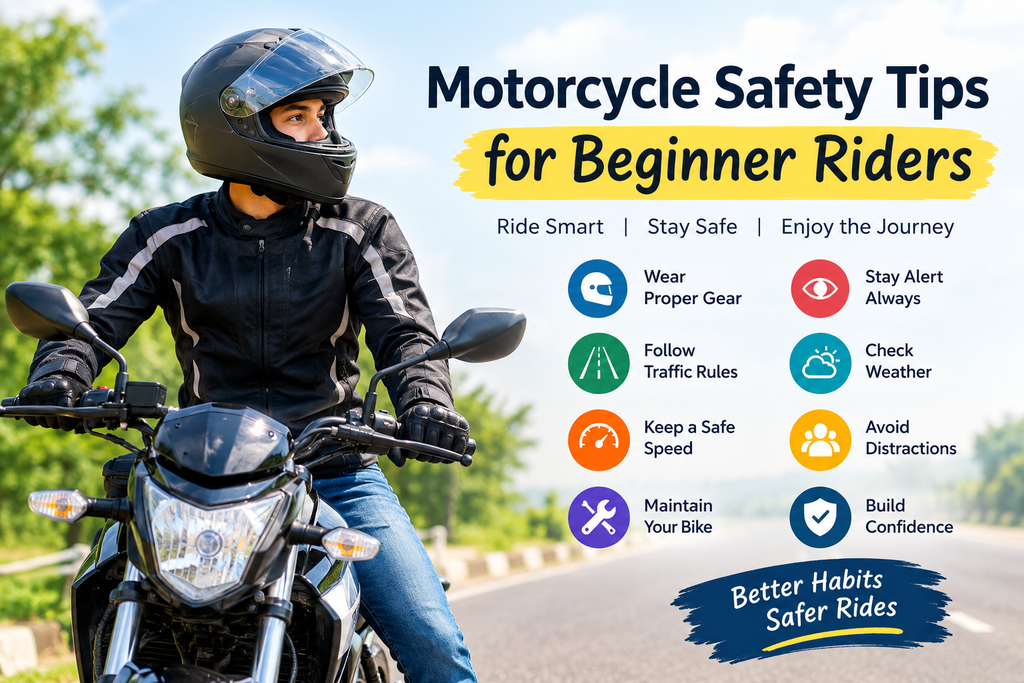
In my opinion, the best way to become a confident motorcycle rider is to develop safe habits from the very beginning. Good riding habits can help reduce avoidable risks and make every journey more comfortable. Whether you are learning to ride your first motorcycle or have recently started riding on public roads, these motorcycle safety tips for beginner riders can help you prepare for safer journeys.
1. Always Wear a Proper Motorcycle Helmet
Wearing a helmet is one of the most important motorcycle safety tips for beginners. A suitable helmet protects your head during a crash and can significantly reduce the risk of serious head injuries.
I believe every rider should make helmet use a non negotiable habit, even when traveling a short distance. Many accidents happen close to home, so a short journey should never be an excuse to ride without protection.
Choose a properly fitting helmet that meets recognized safety standards and is suitable for your type of riding. A full face helmet offers protection for the head, face, and chin. Make sure the chin strap is fastened securely before starting the engine.
Your helmet should not move excessively when you shake your head. Check it regularly for cracks, damaged straps, or other signs of deterioration. If it has experienced a significant impact, follow the manufacturer’s replacement guidance.
2. Wear the Right Motorcycle Safety Gear
A helmet is essential, but it is not the only piece of protective equipment beginners should consider. Appropriate motorcycle safety gear helps protect your body from injuries, abrasions, and changing weather conditions.
For safer riding, consider wearing the following items.
- A protective motorcycle jacket with suitable impact protection
- Durable riding trousers that cover your legs
- Full finger motorcycle gloves with secure wrist closures
- Over the ankle motorcycle boots with good grip
- Reflective clothing or high visibility elements
Ordinary clothing may feel comfortable, but it often provides less protection against road abrasion than purpose designed riding gear.
From my point of view, beginners should prioritize protection and a comfortable fit when purchasing riding equipment. You do not need to buy the most expensive products immediately. Start with essential safety gear that meets recognized standards and fits properly.
3. Learn the Motorcycle Controls Before Riding
Before riding on public roads, take time to understand your motorcycle’s controls. Beginners should know how to operate the throttle, front and rear brakes, clutch, gears, indicators, horn, headlights, and engine stop switch.
Spend time learning how these controls work while the motorcycle is stationary and safely secured. If you are learning to use a manual motorcycle, practice clutch control and smooth gear changes in a suitable training area.
A beginner should also understand how to start and stop the motorcycle safely. Practice moving away slowly, braking smoothly, and stopping without losing balance.
Do not rush into busy traffic simply because you can make the motorcycle move. Confidence comes from understanding the controls and practicing consistently. Professional instruction can help you develop these skills correctly.
4. Follow Traffic Rules and Road Signs
Following traffic rules is essential for every motorcyclist. Traffic signals, road signs, speed limits, lane markings, and right of way rules help road users understand what to expect from one another.
As a beginner, learn the traffic laws that apply in your area before riding independently. Always obey speed limits, stop at red lights, use indicators before turning, and give pedestrians appropriate priority.
Avoid wrong way riding, dangerous overtaking, and sudden lane changes. Never assume another driver will stop or give you space simply because you have the right of way.
In my opinion, defensive riding is one of the most valuable skills a beginner can develop. Follow the rules while remaining prepared for other road users to make mistakes. This approach helps you respond more calmly when unexpected situations occur.
5. Maintain a Safe Speed
Speed management is another important part of motorcycle safety. Beginners may feel tempted to accelerate quickly, especially when riding on an open road. However, excessive speed reduces the time available to react to hazards and makes it harder to stop safely.
Always choose a speed that matches the road conditions, traffic, visibility, and your riding experience. A speed that feels manageable on a dry, open road may be unsafe on a wet street or a road filled with pedestrians.
Remember that posted speed limits are maximum limits, not instructions to travel at that speed in every situation.
Keep acceleration smooth and avoid sudden braking whenever possible. When approaching a sharp turn, reduce your speed before entering the curve rather than braking aggressively while leaning.
Beginners should focus on maintaining control instead of trying to impress other riders. Reaching your destination safely is more important than arriving a few minutes earlier.
6. Practice Braking and Emergency Stops
Knowing how to brake properly can make a significant difference when an unexpected hazard appears. New riders should practice controlled braking in a safe, open area under suitable conditions.
Learn how your motorcycle’s front and rear brakes work together. On most motorcycles, the front brake provides a substantial share of stopping power, but braking technique depends on the motorcycle, road surface, and situation. Apply the brakes progressively and avoid grabbing them suddenly.
Practice stopping at different speeds under the guidance of a qualified instructor. If your motorcycle has an anti lock braking system, understand how it operates and follow the manufacturer’s instructions.
Keep in mind that wet roads, loose gravel, sand, oil, and uneven surfaces can reduce tire grip. Increase your following distance when traction is limited.
Never practice emergency maneuvers in busy traffic. A controlled training environment gives you a better opportunity to learn without exposing yourself or other road users to unnecessary danger.
7. Keep a Safe Following Distance
Maintaining enough distance between your motorcycle and the vehicle ahead gives you more time to react if traffic suddenly slows down.
Beginners should avoid following cars, buses, trucks, and other motorcycles too closely. A vehicle in front may brake suddenly, turn unexpectedly, or stop for a pedestrian.
Choose a following distance that allows you to see the road ahead and stop safely. Increase that distance in rain, poor visibility, heavy traffic, or on slippery roads.
Also, pay attention to vehicles behind you. If another driver follows too closely, avoid sudden braking and look for a safe opportunity to allow more space between you.
A good following distance is especially useful when riding in unfamiliar areas. It gives you additional time to notice potholes, road debris, traffic signals, and other potential hazards.
8. Stay Alert and Avoid Distractions
Motorcycle riders need to pay attention to their surroundings continuously. Unlike drivers inside cars, motorcyclists have less physical protection if a collision occurs.
Keep your eyes moving and scan the road ahead, your mirrors, intersections, and nearby vehicles. Watch for pedestrians, cyclists, animals, parked cars, and vehicles entering the road from side streets.
Never use a mobile phone while riding. Avoid adjusting navigation devices, searching through luggage, or performing other distracting tasks while the motorcycle is moving.
If you need to answer a call, check directions, or change your route, stop somewhere safe first.
Fatigue can also affect concentration and reaction time. If you feel sleepy, unwell, or mentally distracted, postpone your journey or take a break.
In my view, staying alert is just as important as wearing protective equipment because good awareness helps you identify potential dangers before they become emergencies.
9. Check Your Motorcycle Before Every Ride
Regular motorcycle maintenance is essential for safety and reliability. Even a well maintained motorcycle can develop problems, so beginners should make simple pre ride inspections part of their routine.
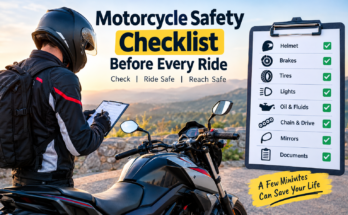
Before setting off, check the following items.
- Tires: Look for damage, unusual wear, and correct tire pressure according to the manufacturer’s recommendations.
- Brakes: Make sure the brakes feel normal and inspect the brake fluid or other relevant components as directed by the manual.
- Lights: Check the headlight, brake light, indicators, and rear light.
- Mirrors: Adjust them to provide a clear view of traffic behind you.
- Chain: If your motorcycle uses a chain, check its condition, lubrication, and tension according to the manual.
- Fuel: Ensure you have enough fuel for your planned journey.
- Leaks: Look for unusual oil, fuel, or other fluid leaks.
If something feels or sounds unusual, investigate the problem before riding. Seek professional help when you are unsure how to inspect or repair a component.
A few minutes of preparation can help identify problems before they create a dangerous situation on the road.
10. Learn to Ride in Different Weather Conditions
Weather can affect motorcycle handling, visibility, and stopping distance. Beginners should gain experience gradually instead of immediately attempting difficult conditions.
Rain can make road surfaces slippery, particularly near painted lines, metal covers, oil patches, and areas where water collects. Reduce speed, increase following distance, and use smooth steering, braking, and acceleration.
Strong winds can affect balance, especially on exposed roads and near large vehicles. Keep a relaxed grip on the handlebars and avoid sudden movements.
Fog and darkness can reduce visibility. Make sure your lights work correctly, wear visible clothing, and avoid riding when conditions are beyond your ability.
If the weather becomes severe, find a safe place to stop and wait for conditions to improve. There is no need to continue a journey when doing so would create unnecessary risk.
11. Be Careful at Intersections and While Overtaking
Intersections are important areas of concern because vehicles may turn, cross your path, or enter the road unexpectedly.
Approach intersections at a controlled speed and look carefully for vehicles coming from different directions. Even when your signal is green, check that the road ahead is clear before proceeding.
When overtaking, make sure it is legal and that you have sufficient visibility and space to complete the maneuver safely. Never overtake near blind corners, oncoming traffic, or locations where road markings prohibit it.
Avoid riding in another vehicle’s blind spot. Position yourself where you can see and be seen without sacrificing a safe escape route.
Remember that larger vehicles may have substantial blind spots and require more room to turn or stop. Give buses and trucks plenty of space.
12. Avoid Carrying Passengers Before You Are Ready
Carrying a passenger changes the motorcycle’s weight, balance, acceleration, and braking behavior. Beginners should first develop reliable control while riding alone.
Only carry a passenger when your motorcycle is designed and equipped for it, local laws permit it, and you have the necessary experience. Your passenger should wear an appropriate helmet and protective clothing.
Before starting, explain how to sit securely, keep their feet on the passenger footrests, and avoid sudden movements. Both rider and passenger should understand how to behave when the motorcycle turns or stops.
Never carry more passengers than the motorcycle is designed to accommodate. Extra weight can make handling more difficult and may increase stopping distances.
13. Build Confidence Through Regular Practice
Confidence should develop through experience, not through taking unnecessary risks. Beginners can improve their riding skills by practicing basic maneuvers regularly in suitable training areas.
Start with low speed control, smooth braking, turning, shoulder checks, and gear changes. Gradually progress to more challenging conditions as your skills improve.
A recognized motorcycle training course can help you learn proper techniques and understand common road hazards. It can also help identify mistakes before they become established habits.
Avoid comparing your progress with experienced riders. Everyone learns at a different pace, and there is no benefit in attempting maneuvers you cannot perform safely.
I believe patient practice is one of the best investments a new rider can make. Every ride should help you become more observant, controlled, and responsible.
14. Never Ride Under the Influence
Alcohol, recreational drugs, and some medications can affect judgment, coordination, concentration, and reaction time. These effects can make motorcycle riding especially dangerous.
Never ride after consuming alcohol or using impairing substances. Check medication warnings and ask a qualified healthcare professional or pharmacist whether a medicine may affect your ability to ride safely.
If you are tired, dizzy, or unable to concentrate properly, do not start your journey.
Plan your travel ahead of time so you have a safe alternative when you cannot ride. Protecting yourself and other road users should always come before convenience.
Conclusion
Motorcycle safety tips for beginner riders are not complicated, but they require consistent attention and practice. Wearing a suitable helmet, using protective clothing, learning the controls, following traffic rules, maintaining a safe speed, and checking your motorcycle are essential steps toward safer riding.
From my point of view, becoming a responsible motorcyclist is a gradual process. You do not need to master every skill in a single day. Focus on learning the basics, practicing in suitable conditions, and making thoughtful decisions whenever you ride.
Always remember that road conditions can change quickly, and other road users may behave unpredictably. Stay alert, maintain your motorcycle properly, and never let excitement or peer pressure influence your judgment.
By following these motorcycle safety tips for beginners, you can develop better riding habits, improve your confidence, and make your journeys more enjoyable while reducing avoidable risks. The most important goal is not simply to become a skilled rider, but to become a safe rider who reaches every destination responsibly.