Introduction
Riding a motorcycle is an enjoyable experience that gives me a sense of freedom and independence. Whether I am riding to work, visiting friends, running errands, or planning a long road trip, I believe safety should always come first. A motorcycle offers less physical protection than a car, so even a small mechanical problem can become dangerous if I ignore it.
This is why following a motorcycle safety checklist before every ride is such an important habit. Checking a few essential things before starting the engine can help identify potential problems, improve confidence, and reduce the risk of accidents caused by preventable mechanical failures.
In my view, motorcycle safety is not only about wearing a helmet or following traffic rules. It also means understanding the condition of the motorcycle, wearing suitable riding gear, checking the weather, and preparing mentally for the journey. In this guide, I will explain the most important motorcycle safety checks every rider should perform before heading onto the road.
1. Check Your Helmet and Protective Gear
The first thing I consider before riding is my personal safety equipment. A properly fitted motorcycle helmet is one of the most important pieces of protective gear because it helps protect the head during a crash.
I always recommend using a certified motorcycle helmet that fits securely and is appropriate for the type of riding involved. The chin strap should be fastened correctly, and the helmet should not move excessively when I shake my head gently.
I also inspect the visor for scratches, cracks, and dirt that could affect visibility. A clean visor makes it easier to identify road hazards, especially in bright sunlight or changing weather conditions.
Along with a helmet, I check the following protective equipment:
- Gloves that provide a secure grip and protect the hands.
- A motorcycle jacket with suitable protective padding.
- Long riding trousers made from abrasion resistant material.
- Sturdy footwear that covers the ankles.
- Reflective clothing or reflective accessories when visibility is limited.
I believe wearing protective gear before every ride is a simple habit that can make a meaningful difference in rider safety.
2. Inspect Motorcycle Tires and Tire Pressure
Tires are the only parts of a motorcycle that maintain direct contact with the road. Their condition affects braking, cornering, stability, and overall control. For this reason, checking motorcycle tires should always be part of my pre ride safety checklist.
I look for visible cuts, cracks, bulges, embedded objects, and unusual wear. These signs may indicate that a tire needs professional inspection or replacement.
Tire pressure is equally important. Underinflated or overinflated tires can affect handling and tire performance. I check the pressure with a reliable gauge when the tires are cold and compare the reading with the motorcycle manufacturer’s recommended figures.
I also inspect the tread depth and make sure the tires are suitable for the expected road conditions. If I notice severe damage, exposed cords, or a tire that repeatedly loses pressure, I avoid riding until the problem has been properly addressed.
A quick tire inspection takes little time, but it can help prevent serious problems during a journey.
3. Test the Front and Rear Brakes
Reliable brakes are essential for safe motorcycle riding. Before every ride, I check whether the front and rear brakes feel normal and respond correctly.
I inspect the brake levers and pedals for obvious damage or looseness. When operating them, I pay attention to unusual resistance, excessive travel, a spongy feeling, or any sign that braking performance has changed.
I also look for signs of brake fluid leakage around accessible components and check the brake fluid level according to the owner’s manual. If the motorcycle uses a hydraulic braking system, low fluid or a leak should never be ignored.
Unusual grinding noises, persistent squealing, or visible brake component damage can also indicate a problem that requires attention.
I never assume that the brakes are safe simply because they worked during my previous ride. If braking feels abnormal or the motorcycle does not stop as expected during a cautious test, I do not continue riding until the issue has been inspected and repaired.
4. Check Headlights, Indicators, and Brake Lights
Visibility is a major part of motorcycle safety. Other road users need to see me clearly, and I need to communicate my intentions before turning or slowing down.
Before starting a journey, I check the headlight, tail light, front and rear indicators, and brake light. I also inspect the number plate light if the motorcycle is equipped with one.
I test the high and low beam settings and make sure the lights illuminate properly. To check the brake light, I apply the front and rear brakes separately and confirm that the light responds.
If an indicator flashes unusually quickly or a light does not work, I investigate the problem before riding.
This step becomes particularly important when travelling early in the morning, after sunset, in rain, or through areas with poor street lighting. Properly functioning lights help other drivers understand my movements and give them more time to react.
5. Inspect Engine Oil and Other Fluids
Engine oil helps lubricate moving components and supports reliable engine operation. Running a motorcycle with an insufficient oil level can cause serious mechanical damage.
I check the engine oil level using the procedure recommended in the owner’s manual. Depending on the motorcycle, this may involve a sight glass or a dipstick. I also look for signs of oil leakage around the engine and beneath the parked motorcycle.
If my motorcycle has a liquid cooling system, I check the coolant level when the engine is cold and follow the manufacturer’s instructions. I never open a hot radiator cap because pressurized coolant can cause serious burns.
Other checks may include brake fluid and hydraulic clutch fluid, where applicable.
I use only the fluids specified for my motorcycle and avoid guessing when topping them up. If I notice a sudden drop in fluid level, an unusual smell, or a persistent leak, I arrange an inspection instead of treating the symptom as normal.
6. Examine the Chain, Belt, or Drive System
The motorcycle’s drive system transfers power from the engine to the rear wheel. Its condition can affect smooth operation and safe riding.
For a chain driven motorcycle, I look for excessive dirt, rust, damaged links, and signs of unusual wear. I also check chain slack according to the owner’s manual. A chain that is too loose or too tight can create mechanical problems.
If lubrication is required, I use a suitable motorcycle chain lubricant and follow the recommended maintenance schedule.
Motorcycles with belt or shaft drives require different inspections. I follow the manufacturer’s instructions for checking visible damage, unusual noises, or maintenance needs.
I never place my fingers near moving chain components while the engine is running. Any adjustment or repair should be carried out with the motorcycle safely secured and the engine switched off.
7. Test the Throttle, Clutch, and Controls
The motorcycle’s controls should operate smoothly and predictably. Before riding, I check that the throttle moves freely and returns to its closed position when released.
I also inspect the clutch lever and confirm that it operates normally. On motorcycles with manual transmissions, I make sure the gear lever is not visibly damaged or obstructed.
The handlebars should move freely from side to side without unusual resistance, interference, or looseness. I check that the mirrors are secure and positioned to provide a useful view of traffic behind me.
If a control sticks, feels unusually loose, or behaves differently from normal, I do not ignore it. A problem with the throttle, steering, clutch, or controls can make the motorcycle difficult to manage when quick reactions are needed.
8. Check Mirrors and Remove Distractions
Good awareness begins before the motorcycle moves. I adjust both mirrors so that I can see the road behind me while minimizing blind spots.
Mirrors cannot show every area around the motorcycle, so I also remember to perform appropriate shoulder checks before changing lanes or moving into traffic.
I secure loose items, check that luggage is properly fastened, and make sure nothing can interfere with the wheels, chain, exhaust, or controls.
I avoid checking messages or handling a phone while riding. If I need navigation, I set it up before departure and use a secure mount or suitable audio system without allowing it to distract me.
A clear view, properly secured equipment, and full attention to the road are essential parts of a responsible motorcycle safety routine.
9. Check Fuel, Battery, and Warning Lights
Before leaving, I check whether there is enough fuel for the planned journey. I do not wait until the tank is nearly empty because fuel availability may be limited in unfamiliar areas.
I also look for signs of fuel leakage or a strong unexplained fuel smell. If I suspect a leak, I avoid starting the engine and seek professional assistance.
If the motorcycle has a battery, I check for obvious signs of damage, loose connections, or corrosion where it is safe to do so. I follow the manufacturer’s guidance and avoid touching exposed electrical connections unnecessarily.
When I turn on the ignition, I pay attention to the dashboard warning lights. Some lights appear briefly during the normal startup check, but a warning that remains illuminated may require investigation.
I consult the owner’s manual instead of assuming every warning is harmless. A persistent oil pressure, overheating, brake, or other critical warning should be taken seriously.
10. Review Weather and Road Conditions
Even a mechanically sound motorcycle can become difficult to control when road conditions change. Before riding, I consider the weather, traffic, visibility, and route.
Rain can reduce tire grip and increase stopping distances. Strong winds can affect stability, especially on exposed roads or near large vehicles. Fog and darkness can reduce the time available to identify hazards.
I also watch for loose gravel, potholes, oil spills, wet leaves, road construction, and uneven surfaces.
If conditions are unsafe for my experience level or the capabilities of my motorcycle, I delay the trip or choose a safer route.
Planning ahead helps me make better decisions and avoid unnecessary risks.
11. Assess Your Physical and Mental Condition
Motorcycle safety depends on the rider as much as the machine. Before riding, I consider whether I am alert, calm, and physically ready for the journey.
Fatigue can slow reaction times and make it harder to notice hazards. I avoid riding when I am severely tired, dizzy, unwell, or unable to concentrate.
I never ride under the influence of alcohol or recreational drugs, and I understand that some medicines can cause drowsiness or impair coordination. If I am unsure about a medication’s effects, I seek advice from a qualified healthcare professional.
I also make sure I have enough time to reach my destination without rushing. Leaving a little earlier can reduce pressure and encourage safer decisions on the road.
12. Carry Essential Documents and Emergency Items
A final motorcycle safety check includes making sure I have the documents and equipment required for my journey.
Depending on local law, this may include a valid driving licence, vehicle registration, and required insurance documents. I check the rules that apply in my area before travelling.
For longer trips, I consider carrying a charged phone, basic first aid supplies, a small tool kit appropriate for my motorcycle, and emergency contact information.
A puncture repair kit or portable tire inflator may also be useful if it is suitable for the tires and the rider knows how to use it safely.
I keep luggage secure and avoid carrying items that are too heavy or interfere with balance. Emergency equipment cannot replace proper maintenance, but it can make an unexpected situation easier to manage.
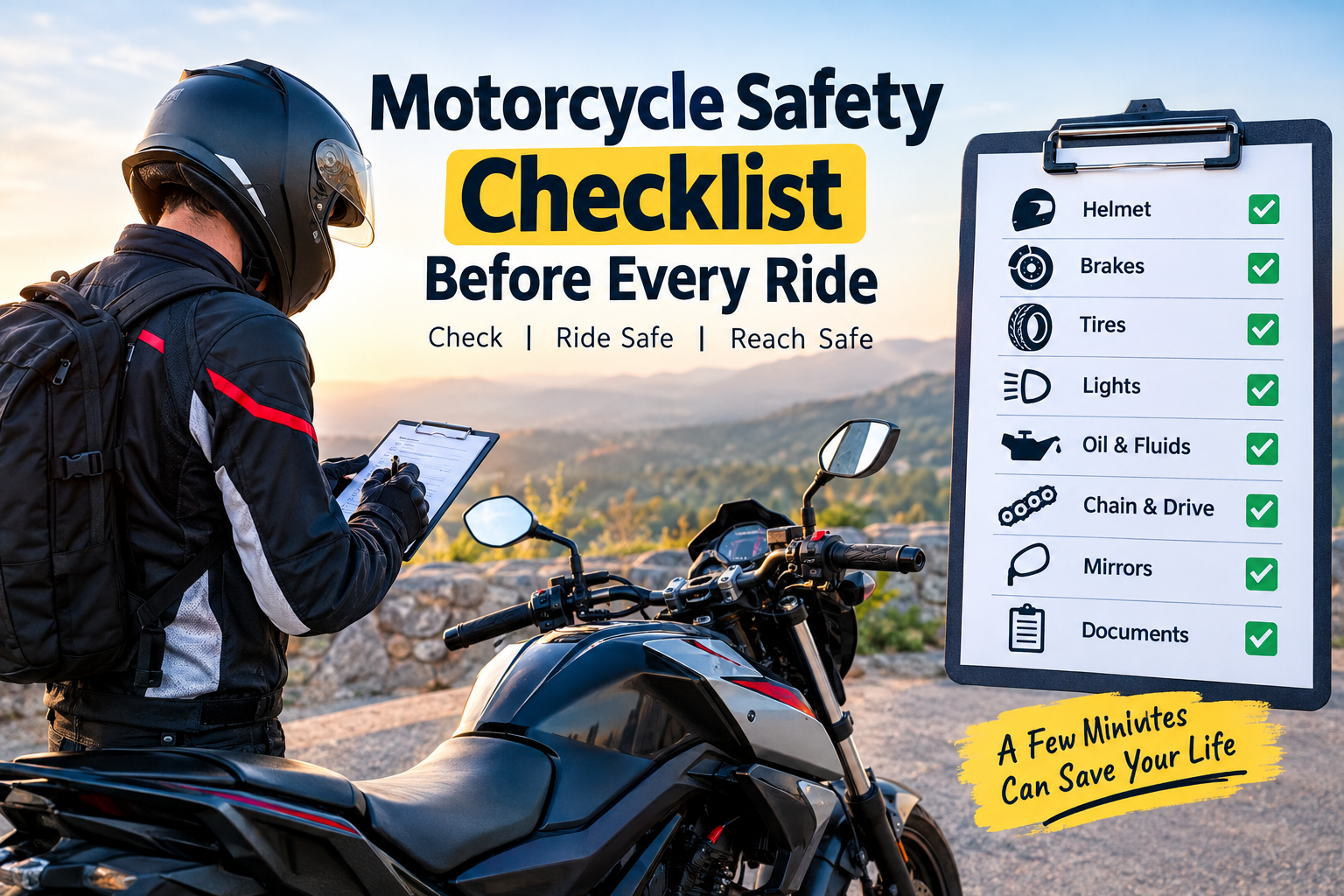
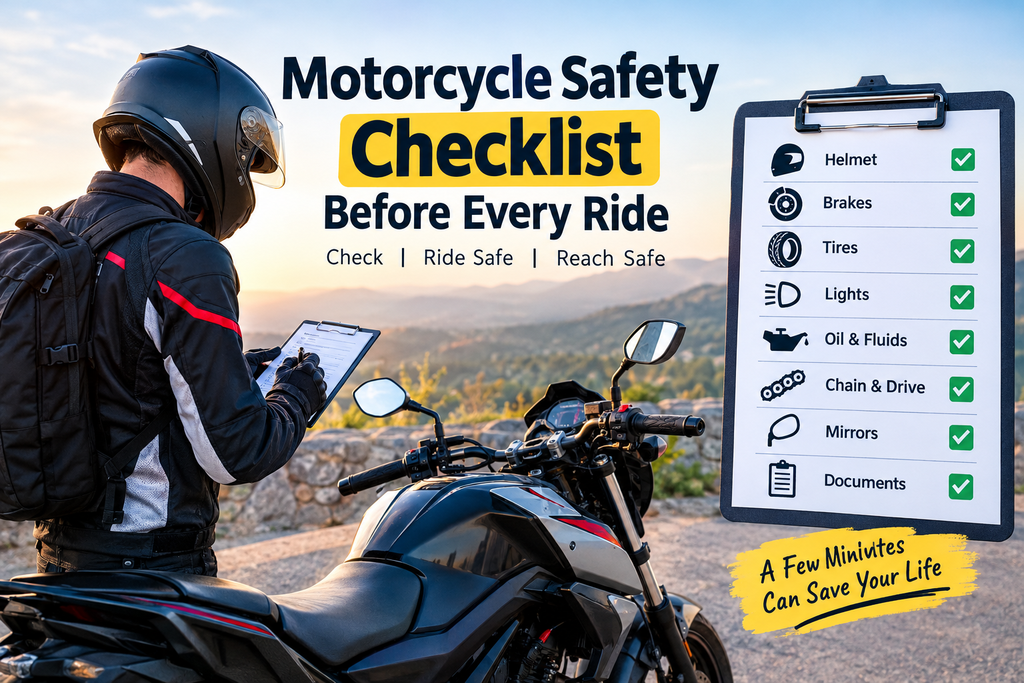
Quick Motorcycle Safety Checklist Before Every Ride
Before starting the engine, I review these essential points:
- Helmet fits properly and the chin strap is secured.
- Protective clothing and footwear are ready.
- Tires have suitable pressure and no obvious damage.
- Front and rear brakes operate normally.
- Headlights, indicators, tail light, and brake light work.
- Engine oil and other required fluids are at suitable levels.
- Chain, belt, or drive system appears to be in good condition.
- Throttle, clutch, steering, and controls operate correctly.
- Mirrors are adjusted and luggage is secure.
- Fuel level and dashboard warnings have been checked.
- Weather and road conditions are suitable for the trip.
- Required documents and essential emergency items are available.
If any critical item fails inspection, I deal with the problem before riding. A checklist is useful only when I take its findings seriously.
Conclusion
In my opinion, a motorcycle safety checklist before every ride is one of the simplest habits any rider can develop. It helps me pay attention to the condition of my motorcycle, prepare my protective gear, and think about the road conditions I may face.
Checking tires, brakes, lights, fluids, controls, and protective equipment does not need to take a long time once the routine becomes familiar. More importantly, these checks can help identify problems before they become dangerous.
I also believe safe riding requires patience, awareness, and responsible decision making. No inspection can eliminate every risk, but combining regular maintenance with proper riding gear and careful road habits can significantly improve safety.
Before your next journey, take a few minutes to complete your motorcycle safety checklist. The goal is simple: start every ride prepared, ride within your abilities, and make getting home safely your highest priority.