Introduction
Buying a motorcycle is an exciting experience, especially for beginners who are planning to purchase their first bike. A motorcycle can make daily commuting easier, save time, and provide an enjoyable riding experience. However, choosing the right motorcycle requires careful planning, research, and a clear understanding of your needs.
In my opinion, one of the biggest mistakes people make when buying a motorcycle is making a decision based only on its appearance or price. A bike may look attractive in a showroom, but that does not necessarily mean it is the best option for everyday use. Factors such as fuel economy, comfort, maintenance costs, engine performance, and safety should also influence your decision.
Whether you are buying a new motorcycle or a used one, avoiding common buying mistakes can help you save money and enjoy a more reliable riding experience. In this guide, I will explain the most important mistakes to avoid when buying a motorcycle and share practical tips to help beginners make a better decision.
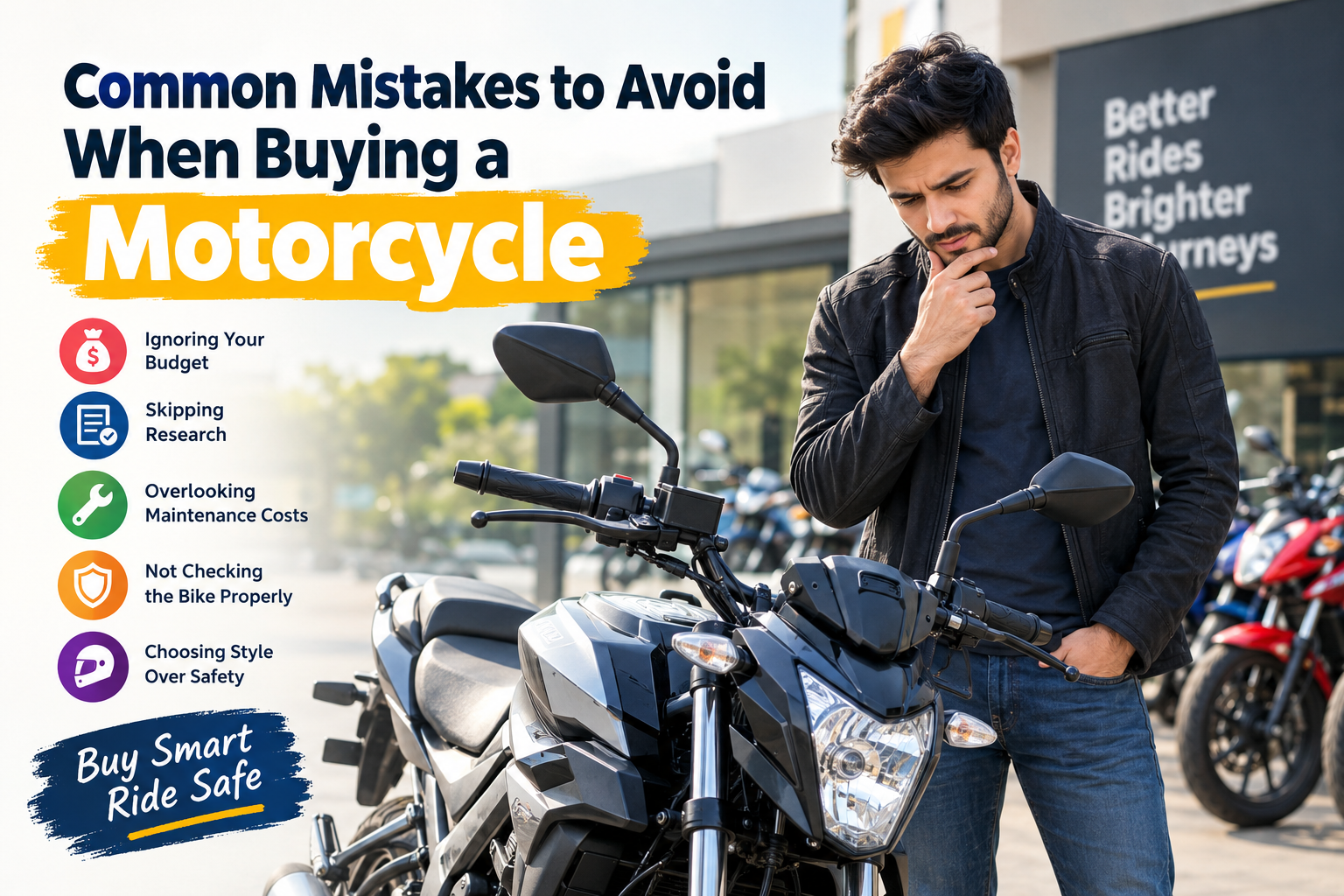
1. Ignoring Your Budget
One of the most common mistakes when buying a motorcycle is setting a budget only for the purchase price. Many buyers spend most of their available money on the motorcycle and forget about the additional expenses that come with ownership.
The actual cost of owning a motorcycle includes fuel, registration, insurance where applicable, regular servicing, replacement parts, tires, and safety equipment. These expenses may seem small individually, but they can add up over time.
For example, if you purchase a motorcycle that uses expensive parts or requires frequent maintenance, your monthly expenses may become higher than expected.
I recommend calculating your total budget before visiting a dealership. Keep some money aside for unexpected repairs and essential riding equipment. Choosing a motorcycle that fits your financial situation is usually better than purchasing an expensive model that becomes difficult to maintain.
2. Choosing a Motorcycle Based Only on Appearance
A stylish motorcycle can easily attract attention, but appearance should not be the main reason for purchasing it. Many buyers prefer aggressive designs, sporty bodywork, or large motorcycles without considering whether these features match their daily needs.
For example, a sports motorcycle may look impressive, but its riding position might feel uncomfortable during long commutes. Similarly, a heavy motorcycle may be difficult to handle for someone who has limited riding experience.
Before making a decision, think about where and how you will use the bike. If you mainly travel to work, a comfortable and fuel efficient motorcycle may be more practical. If you enjoy long distance journeys, seating comfort, luggage options, and highway stability may be more important.
A motorcycle should match your lifestyle rather than simply look good in photographs.
3. Buying a Motorcycle With Too Much Engine Power
Another mistake beginners should avoid is choosing a motorcycle with more engine power than they can comfortably manage.
Powerful motorcycles can accelerate quickly and may require better throttle control, braking skills, and riding experience. For a new rider, managing a heavy and powerful bike can create unnecessary difficulties.
Instead of focusing only on engine size, consider your experience, physical comfort, and intended use. A smaller or moderately powered motorcycle can be an excellent starting point for learning essential riding skills.
This does not mean that every large motorcycle is unsuitable for beginners. The important thing is to select a bike that you can control confidently and safely.
Before buying, sit on the motorcycle and check whether you can reach the handlebars, operate the controls comfortably, and support the bike when stopping. Your confidence and control matter more than impressive specifications.
4. Skipping Research Before Buying
Purchasing a motorcycle without comparing different models can lead to disappointment. Buyers sometimes visit one showroom, like a particular bike, and make a decision without checking other available options.
Every motorcycle has its own advantages and disadvantages. Some models offer better fuel economy, while others provide improved comfort, performance, or easier access to replacement parts.
I suggest researching at least three motorcycles within your budget. Compare their engine specifications, fuel consumption, service requirements, reliability feedback, and warranty conditions.
Reading owner reviews can also help you understand what daily ownership is like. Pay attention to repeated complaints about maintenance, spare parts availability, or common mechanical issues.
However, do not rely on a single online review. Different riders have different experiences, and maintenance habits can influence a motorcycle’s performance.
A little research before purchasing can prevent expensive mistakes later.
5. Forgetting About Fuel Economy
Fuel economy is particularly important for people who use their motorcycles every day. A motorcycle that consumes more fuel can increase your regular commuting expenses.
Some buyers focus entirely on engine performance without checking how much fuel the motorcycle uses under normal riding conditions.
Before purchasing, research the expected fuel economy and consider your daily travel distance. Remember that actual mileage depends on riding style, road conditions, traffic, maintenance, passenger weight, and other factors.
For instance, someone who travels long distances every day may benefit more from an economical commuter motorcycle than from a powerful bike designed mainly for performance.
If saving money is your priority, compare the estimated fuel costs of different models. Also remember that a motorcycle with excellent fuel economy may still be expensive to own if its parts and servicing cost significantly more.
The best choice is one that balances fuel efficiency, comfort, reliability, and purchase price.
6. Overlooking Maintenance and Repair Costs
A low purchase price does not always mean a motorcycle is inexpensive to own. Some models require specialized parts, more frequent servicing, or repairs that cost more than expected.
This issue is especially important when buying a used motorcycle. A bike may appear affordable initially, but worn tires, damaged brakes, a weak battery, or neglected engine maintenance can quickly increase the total cost.
Before buying, research the availability and price of common replacement parts. Ask about recommended service intervals and routine maintenance requirements.
If you are considering a used motorcycle, request its maintenance records whenever possible. A motorcycle with a documented service history may provide more confidence than one with an unknown maintenance background.
I believe buyers should consider long term ownership costs instead of focusing only on the initial price. A reliable motorcycle that is easy to maintain can offer better value over time.
7. Not Inspecting a Used Motorcycle Properly
Buying a used motorcycle without a proper inspection is one of the riskiest mistakes a buyer can make. A motorcycle may look clean and polished while hiding mechanical problems or previous accident damage.
Before purchasing, examine the tires, brakes, lights, mirrors, chain, suspension, and visible engine components. Look for oil leaks, damaged body panels, corrosion, loose parts, and signs of poor repairs.
Ask the seller about the motorcycle’s history, including previous accidents, major repairs, and regular servicing. Check that the engine number and chassis number match the available registration documents.
If you do not have mechanical knowledge, consider asking a qualified motorcycle mechanic to inspect the bike. This small investment may help you identify problems before paying for the motorcycle.
Avoid rushing into a purchase simply because the seller claims that another buyer is interested. Take enough time to verify the motorcycle’s condition and make an informed decision.
8. Skipping the Test Ride
A motorcycle may look comfortable while standing in a showroom, but the riding experience can be completely different. Skipping a test ride may leave you with a bike that feels awkward, heavy, or uncomfortable.
Whenever possible, arrange a test ride with the seller’s permission and follow local licensing and safety requirements.
During the ride, pay attention to the seating position, clutch operation, throttle response, braking, steering, and overall comfort. Check whether the motorcycle feels manageable when moving slowly and stopping.
Listen for unusual noises and notice any excessive vibration. The controls should feel natural, and the motorcycle should respond predictably.
If a test ride is unavailable, at least sit on the motorcycle and ask about its operating condition, warranty, and return policies.
A motorcycle should feel suitable for your body and riding experience, not just look attractive.
9. Ignoring Safety Features and Riding Gear
Safety should always be a priority when buying a motorcycle. Some buyers spend their entire budget on the bike and leave little money for a helmet and other protective equipment.
A properly fitted, certified motorcycle helmet is essential. Depending on your riding conditions, gloves, a protective jacket, suitable trousers, and sturdy footwear can provide additional protection.
You should also check the motorcycle’s braking system, tires, headlights, brake lights, turn signals, and mirrors. Anti lock braking systems, where available, can help reduce the risk of wheel lock during hard braking, although they do not eliminate every accident risk.
Do not choose a motorcycle simply because it has a sporty design or impressive speed. Consider how confidently you can control it in different traffic conditions.
Before riding on public roads, learn the controls, practice basic skills in a suitable safe area, and follow local traffic laws.
10. Forgetting to Check Documents and Ownership
Documentation is another important part of buying a motorcycle, particularly a used one. Some buyers become excited about the price and forget to verify whether the seller has the legal right to sell the vehicle.
Check the registration documents, engine number, chassis number, and the seller’s ownership details. Make sure the information is consistent and verify any required transfer procedures with the relevant local authority.
You should also ask about outstanding finance, unpaid obligations, or legal restrictions where applicable.
Never rely entirely on verbal promises. Request a written receipt or sale agreement that records the purchase price, motorcycle details, and transaction date.
If anything appears suspicious or the seller refuses reasonable verification, consider walking away from the deal.
Completing the paperwork properly can protect you from avoidable ownership disputes and registration problems.
11. Buying Without Comparing Warranty and After Sales Support
Warranty coverage and after sales service can make a significant difference to your ownership experience. However, some buyers compare motorcycles only by price and engine specifications.
Before purchasing a new motorcycle, read the warranty terms carefully. Check the coverage period, mileage limits, exclusions, and servicing requirements. Ask whether repairs must be completed at authorized service centers.
It is also helpful to find out whether reliable service centers and replacement parts are available in your area.
For a used motorcycle, ask whether any manufacturer warranty remains valid and whether it can be transferred to the new owner.
Good after sales support can make routine maintenance easier and reduce the stress of dealing with unexpected mechanical problems.
12. Rushing the Final Decision
One of the easiest mistakes to make is buying a motorcycle in a hurry. Excitement, attractive advertisements, limited time offers, and pressure from sellers can influence your judgment.
Instead of making an immediate decision, take time to review your options. Compare the total cost, riding comfort, performance, safety features, maintenance requirements, and ownership documents.
Write down the advantages and disadvantages of each motorcycle you are considering. Discuss your choice with an experienced rider or a qualified mechanic if necessary.
Do not assume that the most expensive motorcycle is automatically the best one. The right choice is the motorcycle that meets your needs and fits your budget.
Being patient during the buying process can help you avoid unnecessary expenses and make a more confident purchase.
Conclusion
Buying a motorcycle is an important decision that deserves careful thought. Although it is natural to feel excited about a new bike, making a rushed choice can lead to financial problems, uncomfortable rides, and unexpected maintenance expenses.
In my opinion, the best way to avoid common motorcycle buying mistakes is to focus on practical needs instead of appearance alone. Set a realistic budget, compare different models, research fuel economy, and understand the long term maintenance costs before making your decision.
If you are purchasing a used motorcycle, inspect its condition carefully, verify its documents, and seek professional mechanical advice when necessary. Always consider safety equipment and choose a motorcycle that matches your riding skills.
Remember that the best motorcycle is not necessarily the fastest, newest, or most expensive model. It is the one that offers the right combination of reliability, comfort, affordability, and safety for your everyday needs.
By following these motorcycle buying tips, beginners can make a more informed decision and enjoy a better ownership experience for years to come.
Frequently Asked Questions
What is the biggest mistake when buying a motorcycle?
One of the biggest mistakes is choosing a motorcycle without considering your budget, riding experience, and intended use. A bike that looks attractive may not be the most practical choice for everyday travel.
Should beginners buy a powerful motorcycle?
Beginners should generally choose a motorcycle they can control comfortably and confidently. A manageable engine size, suitable weight, and comfortable riding position can make learning easier.
What should I check before buying a used motorcycle?
Inspect the tires, brakes, lights, suspension, chain, engine, and visible frame components. Verify the registration documents and ownership details, review the maintenance history, and arrange a professional inspection when possible.
Is fuel economy important when buying a motorcycle?
Yes. Fuel economy can significantly affect long term commuting costs, especially if you travel every day. Compare realistic fuel consumption estimates along with maintenance and repair expenses.
How can I choose the right motorcycle for daily use?
Consider your daily distance, road conditions, budget, comfort, fuel economy, maintenance needs, and experience level. Compare several models and choose one that fits your routine rather than focusing only on appearance or engine power.