Introduction
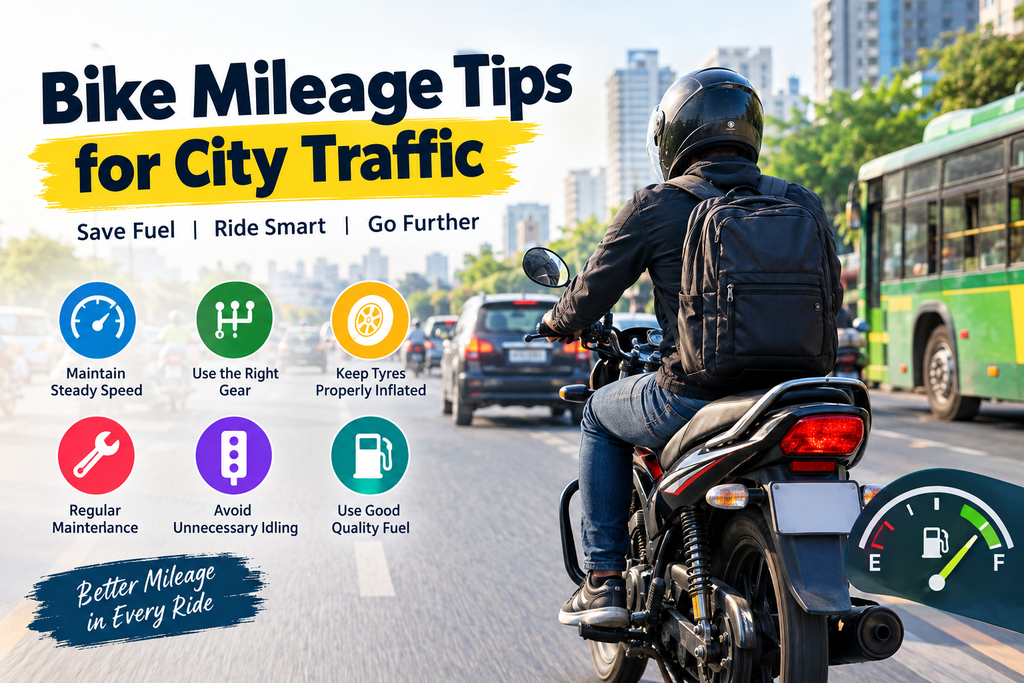
Getting good bike mileage in city traffic can be challenging for many motorcycle riders. Daily traffic jams, frequent stops, traffic signals, short trips, and changing road conditions can increase fuel consumption. Even a motorcycle that normally provides good fuel average on open roads may consume more petrol when used regularly in busy city areas.
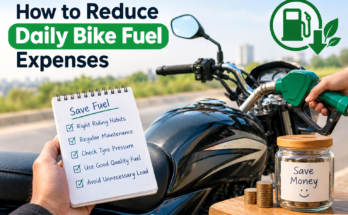
In my opinion, improving bike mileage is not always about buying a new motorcycle or spending money on expensive accessories. Small changes in riding habits and regular motorcycle maintenance can make a noticeable difference. Riders who understand how their bikes respond to traffic conditions can often reduce unnecessary fuel consumption and manage their daily transportation expenses more effectively.
Whether you use a motorcycle to travel to work, attend college, visit markets, or complete everyday tasks, learning practical bike mileage tips for city traffic can help you get more distance from every litre of petrol.
In this article, I will explain simple and practical ways to improve motorcycle fuel average in city traffic, maintain engine performance, and avoid common riding habits that waste fuel.
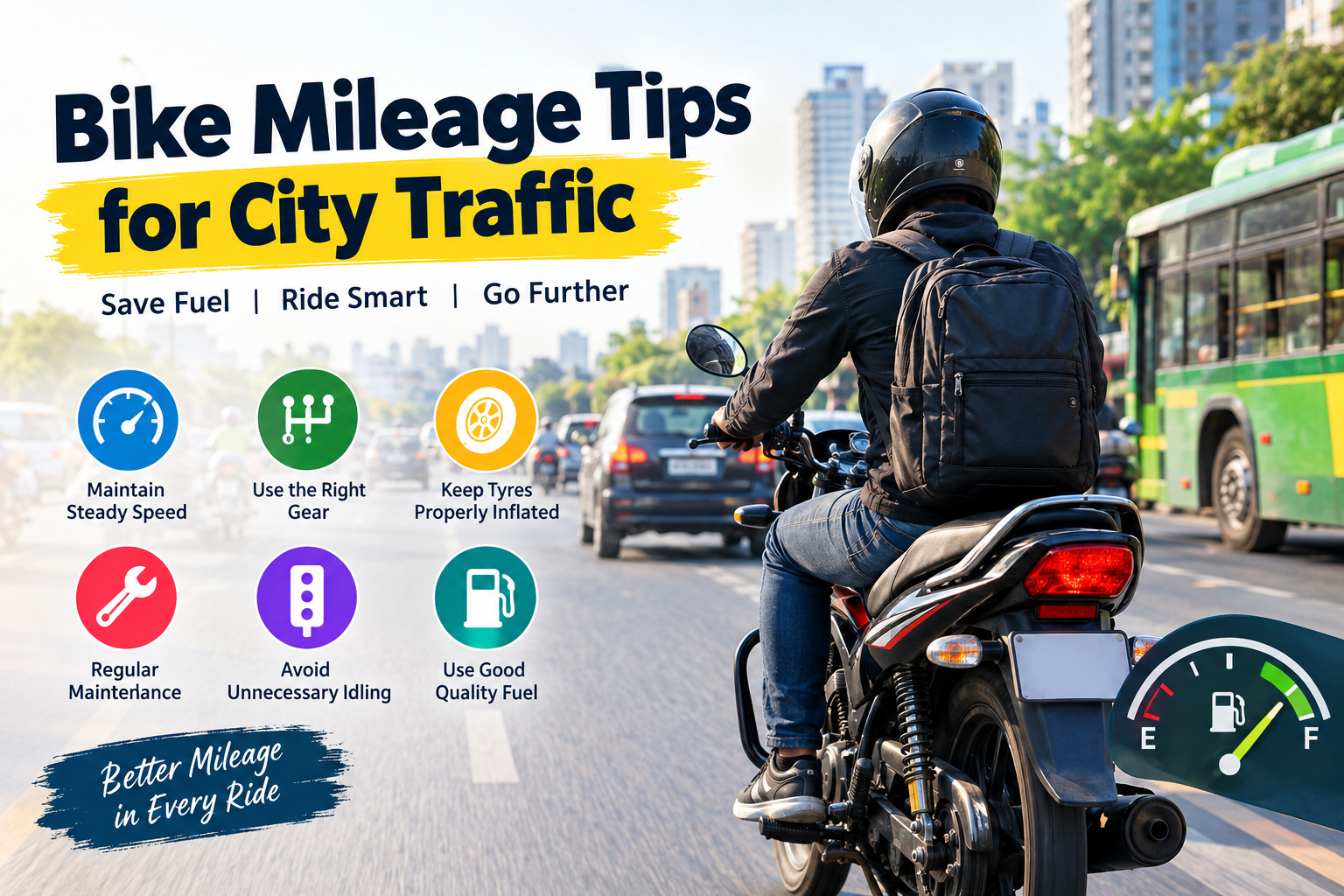
1. Maintain a Steady Speed Whenever Possible
One of the most useful bike mileage tips for city traffic is maintaining a smooth and steady speed whenever road conditions allow. Constantly accelerating quickly and braking suddenly can waste fuel, especially when traffic is moving slowly.
For example, when the road ahead is clear, accelerating gently and maintaining a suitable speed is generally more fuel efficient than repeatedly speeding up and slowing down. Aggressive acceleration makes the engine work harder and may increase petrol consumption.
City traffic does not always allow riders to maintain the same speed. However, you can still avoid unnecessary acceleration by observing the movement of vehicles ahead.
I believe smooth riding is one of the easiest habits to develop because it does not require additional equipment or maintenance expenses.
Always remember that maintaining a steady speed should never mean riding too slowly for the traffic around you or ignoring road conditions. Your speed should remain appropriate for safety, visibility, and local traffic laws.
2. Avoid Unnecessary Acceleration and Braking
Frequent acceleration and sudden braking can negatively affect motorcycle mileage. Every time you accelerate aggressively, the engine needs to produce more power. If you immediately brake at the next traffic signal, much of that energy is wasted.
Try to observe traffic conditions several seconds ahead whenever possible. If you notice that vehicles are slowing down, gradually reduce the throttle rather than accelerating toward them and braking suddenly.
For example, when approaching a red traffic light from a safe distance, releasing the throttle early can reduce unnecessary fuel consumption and help you slow down smoothly.
However, braking immediately is necessary whenever safety requires it. Fuel saving should never take priority over avoiding a collision.
Smooth throttle control, sensible braking, and proper following distance can make everyday city riding more comfortable and economical.
3. Keep Motorcycle Tyre Pressure at the Recommended Level
Tyre pressure is another important factor that affects bike fuel average. Underinflated tyres create additional rolling resistance, which means the engine may need to work harder to move the motorcycle.
When tyre pressure remains below the manufacturer’s recommendation, fuel consumption can increase. Incorrect pressure can also affect handling, tyre wear, and braking performance.
Check your motorcycle’s recommended tyre pressure in the owner’s manual or on the manufacturer’s information label, where available. Measure the pressure when the tyres are cold for a more reliable reading.
Do not assume that every motorcycle requires the same tyre pressure. The correct value depends on the motorcycle model, tyre specifications, and sometimes the load being carried.
In my view, checking tyre pressure regularly is a simple maintenance habit that can support better fuel efficiency without requiring expensive repairs.
Avoid overinflating tyres in an attempt to improve mileage. Excessive pressure can reduce grip and affect riding comfort.
4. Change Gears at the Appropriate Time
For motorcycles with manual transmissions, correct gear selection can help improve fuel efficiency in city traffic.
Riding in a gear that is too low for the current speed may cause the engine to run at unnecessarily high revolutions. On the other hand, using a gear that is too high at a very low speed can make the engine struggle.
The best approach is to change gears smoothly according to road speed, engine response, and the manufacturer’s recommendations.
For example, when traffic begins moving after a signal, accelerate gently and shift into higher gears as the motorcycle reaches a suitable speed. If traffic slows down, reduce speed and select an appropriate lower gear when necessary.
Avoid forcing the engine to pull strongly in a high gear at low speed. This can cause excessive engine strain and may affect performance over time.
Automatic scooters have different transmission systems, so their riders should focus on smooth throttle control and regular maintenance rather than manual gear changes.
5. Follow a Regular Motorcycle Maintenance Schedule
Regular motorcycle maintenance is essential for good fuel average, reliable performance, and longer engine life.
A poorly maintained motorcycle may consume more petrol because of dirty filters, incorrect adjustments, worn components, or other mechanical problems.
Important maintenance tasks include checking engine oil, inspecting the air filter, maintaining the correct tyre pressure, checking the chain where applicable, and inspecting spark plugs according to the manufacturer’s service schedule.
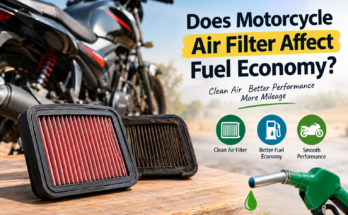
A dirty air filter can restrict airflow, potentially affecting engine performance and fuel consumption. However, the exact effect depends on the motorcycle’s engine design and fuel system.
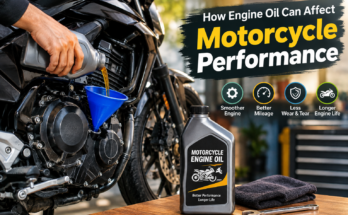
Similarly, old or unsuitable engine oil may affect lubrication and engine operation. Always use the oil grade and specification recommended by the manufacturer.
I recommend keeping a simple maintenance record with service dates and mileage readings. This makes it easier to identify when maintenance is due and notice changes in fuel efficiency.
Do not wait until the motorcycle develops a serious problem before arranging an inspection.
6. Avoid Keeping the Engine Running Unnecessarily
Unnecessary idling is another habit worth addressing when trying to improve bike mileage in city traffic.
When a motorcycle remains stationary with its engine running, it continues to consume fuel even though it is not travelling anywhere. Long waiting periods can therefore reduce the distance you get from the petrol used.
If you expect to remain stopped for an extended period and it is safe and appropriate to switch off the engine, doing so may save fuel.
However, you should not repeatedly switch the engine off and on during every brief traffic stop. The best approach depends on the motorcycle’s design, traffic conditions, and the length of the wait.
Motorcycles with automatic stop start systems should be used according to the manufacturer’s instructions.
Never switch off the engine while moving if doing so could compromise control or safety. At traffic signals, remain alert, keep your motorcycle stable, and follow local road rules.
7. Choose Quality Fuel From a Reliable Station
Fuel quality can influence motorcycle performance, especially when unsuitable or contaminated fuel causes engine problems.
I suggest purchasing petrol from a reputable station with good fuel handling practices. Consistent fuel quality can help reduce the risk of contamination and support reliable engine operation.
Use the fuel grade and octane rating recommended in your motorcycle’s owner’s manual. Higher octane petrol does not automatically provide better mileage in every motorcycle.
If your bike is designed to operate on regular petrol, paying extra for premium fuel may not produce a meaningful improvement in fuel economy.
Avoid allowing dirt or water to enter the fuel tank during refuelling. If the motorcycle suddenly begins consuming more fuel after a refill, develops unusual engine behaviour, or starts running poorly, consider having it inspected.
Choosing appropriate fuel is more useful than spending extra money on a grade that your motorcycle does not require.
8. Plan Your Daily Routes Carefully
Route planning is one of the most overlooked bike mileage tips for city traffic. The shortest route is not always the most fuel efficient.
A road with continuous traffic movement may be a better option than a shorter route with repeated congestion, road closures, and long signal delays.
Before leaving home, consider the usual traffic conditions, road quality, and likely delays. If possible, combine several nearby errands into one trip rather than taking multiple separate journeys.
For example, visiting the market on your way home from work may reduce the need for an additional motorcycle trip.
Avoid unnecessary detours and excessive searching for parking. These small activities can add to daily fuel consumption over time.
Route planning cannot eliminate traffic jams, but it can help you avoid predictable delays and make better use of your travel time.
9. Reduce Unnecessary Weight on Your Motorcycle
Carrying unnecessary weight can increase the energy required to move a motorcycle, particularly during repeated acceleration in busy traffic.
Remove unused tools, heavy bags, and other items that you do not need for your journey. Keep only essential equipment, safety items, and luggage.
If you regularly carry a passenger or transport heavy items, follow the motorcycle manufacturer’s load limits and instructions.
There is no need to remove safety equipment or useful accessories simply to save a small amount of fuel. Your priority should be safe and practical transportation.
The benefit of reducing weight depends on the motorcycle, the amount of weight removed, and the type of journey. Still, avoiding unnecessary loads is a sensible everyday habit.
10. Maintain the Motorcycle Chain Properly
For motorcycles with a chain drive, chain maintenance can help preserve efficient power transmission and smooth operation.
A chain that is excessively tight, poorly lubricated, or incorrectly adjusted may create additional friction and cause premature wear. A severely neglected chain can also become a safety concern.
Check the chain according to the maintenance schedule and adjustment procedure in your owner’s manual. Clean and lubricate it using products suitable for your motorcycle and chain type.
The correct chain slack varies between motorcycle models. Never use a universal adjustment measurement without checking the manufacturer’s specifications.
If the chain is damaged, develops tight spots, or produces unusual noise, arrange a proper inspection.
Although chain maintenance cannot guarantee a particular fuel average, it helps keep the motorcycle in good mechanical condition and supports reliable performance.
11. Avoid Excessive Short Trips When Practical
Short journeys can sometimes reduce fuel efficiency because the engine may not reach its normal operating temperature before the journey ends.
For example, riding a motorcycle for a very short distance to buy one item may be less efficient than completing that trip as part of a longer journey.
When practical, combine nearby errands or walk for very short distances if the location and conditions make walking safe and convenient.
Do not take unnecessarily long routes just to warm up the engine. Modern motorcycles should be operated according to the manufacturer’s starting and warm up guidance.
Avoid prolonged stationary warm up unless the manufacturer specifically recommends it. In many cases, a brief start up followed by gentle riding is more appropriate.
Planning trips efficiently can reduce unnecessary fuel use while also saving time.
12. Check Fuel Average Instead of Guessing
One of the best ways to improve motorcycle fuel economy is to measure it regularly.
A fuel gauge alone cannot tell you exactly how many kilometres your motorcycle travels per litre. Instead, record your distance travelled and the amount of petrol used.
You can calculate fuel average using this formula:
Fuel Average = Kilometres Travelled ÷ Litres of Fuel Used
For example, if your motorcycle travels 240 kilometres using 6 litres of petrol, the calculated average is 40 kilometres per litre.
This is an illustrative example, not a guaranteed mileage figure for every motorcycle.
For more useful results, record the odometer reading when refuelling and use the same refuelling method each time. Measuring over several refills can provide a more reliable picture than relying on a single trip.
If your fuel average suddenly drops, check tyre pressure, maintenance history, traffic conditions, and riding habits. If the problem continues, ask a qualified mechanic to inspect the motorcycle.
Common Mistakes That Reduce Bike Mileage
Some everyday habits can work against your fuel saving efforts.
These include accelerating aggressively, maintaining unnecessarily high engine revolutions, ignoring tyre pressure, delaying maintenance, carrying excessive weight, and leaving the engine running during long waits.
Another common mistake is expecting a dramatic mileage improvement from a single accessory or fuel additive. Results vary, and many products cannot guarantee better fuel economy.
Avoid making engine modifications without understanding their effect on reliability, emissions, and safety. Poorly performed modifications can create additional problems rather than improving performance.
The most reliable approach is to combine sensible riding habits with regular maintenance and accurate fuel consumption tracking.
Frequently Asked Questions
How can I improve bike mileage in heavy city traffic?
Ride smoothly, avoid unnecessary acceleration, maintain the recommended tyre pressure, follow the maintenance schedule, and plan routes carefully. These habits can support better fuel efficiency, although actual results depend on the motorcycle and traffic conditions.
Does slow riding always improve motorcycle mileage?
No. Riding smoothly at an appropriate speed can help, but riding too slowly in an unsuitable gear may cause the engine to struggle. Follow the manufacturer’s guidance and adapt your speed to road conditions.
Does engine oil affect bike fuel average?
Yes, engine oil can influence friction and engine operation. Using the correct oil grade and replacing it according to the service schedule helps maintain proper performance.
Why does my bike give lower mileage in city traffic?
Frequent stopping, repeated acceleration, congestion, idling, short trips, and a cold engine can all contribute to higher fuel consumption compared with smoother journeys.
How often should I check tyre pressure?
Check tyre pressure regularly, ideally when the tyres are cold, and before longer journeys. Follow the checking frequency and pressure recommendations provided by your motorcycle manufacturer.
Conclusion
Improving bike mileage in city traffic does not always require expensive upgrades or complicated techniques. In many cases, the biggest opportunities come from simple habits such as smooth acceleration, appropriate gear selection, correct tyre pressure, regular maintenance, and avoiding unnecessary idling.
In my opinion, the most effective strategy is to make these habits part of your everyday riding routine rather than trying a different fuel saving trick every week. Track your motorcycle’s actual fuel average, pay attention to changes in performance, and arrange maintenance whenever necessary.
Remember that every motorcycle is different. Engine size, model, road conditions, traffic congestion, load, and riding style all influence fuel consumption. No single tip can guarantee a specific mileage figure.
By applying these practical bike mileage tips for city traffic consistently, you can work toward reducing unnecessary petrol expenses while keeping your motorcycle reliable, comfortable, and safe for daily use.