Motorcycle riding on highways can be an enjoyable experience because it offers open roads, beautiful views, and the freedom to travel longer distances. However, highway riding also comes with risks that every motorcyclist should understand. Vehicles often travel at higher speeds, traffic conditions can change quickly, and even a small mistake can have serious consequences.
In my opinion, the best way to enjoy a motorcycle journey is to make safety a priority before starting the engine. Good riding habits, proper protective equipment, regular motorcycle maintenance, and awareness of surrounding traffic can make a significant difference.
Whether someone is a beginner or an experienced rider, learning how to stay safe while riding on highways is essential. In this guide, I will explain practical motorcycle highway safety tips that can help riders prepare for long journeys, avoid common mistakes, and develop greater confidence on the road.
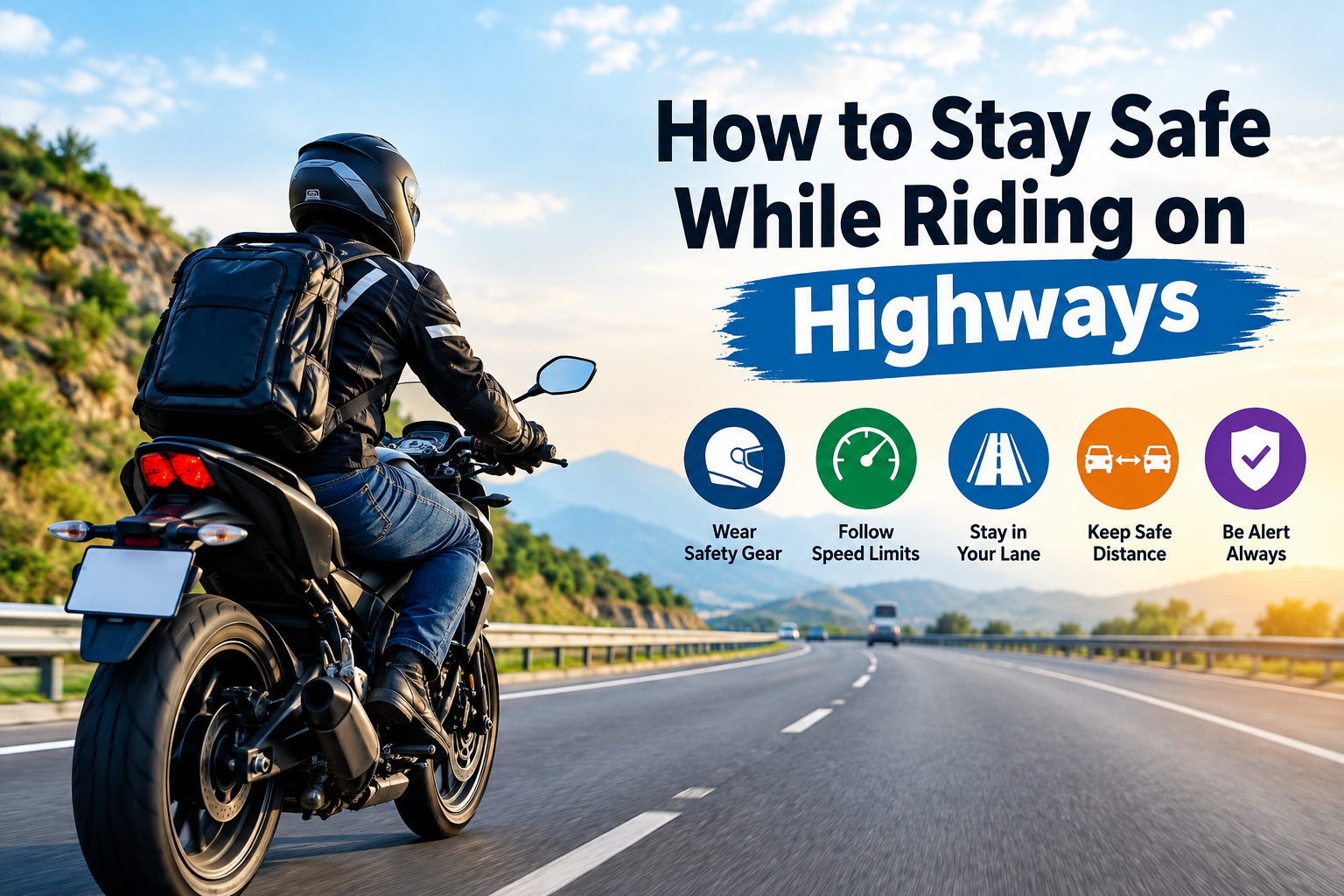
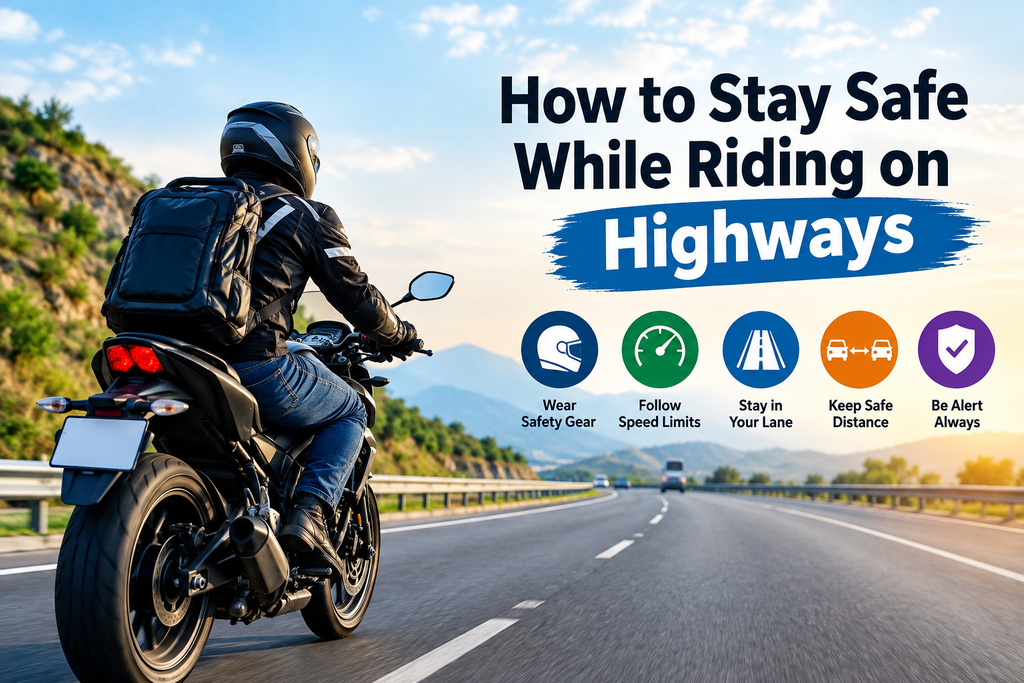
1. Wear Proper Motorcycle Safety Gear
One of the first things I consider important for highway riding is wearing suitable protective gear. Some riders focus mainly on reaching their destination quickly, but protecting the body should always come first.
A properly fitted, certified motorcycle helmet is the most important piece of safety equipment. It helps reduce the risk of serious head injuries during a crash. Choose a helmet that meets the applicable safety standards in your country and fasten its chin strap correctly before every ride.
Along with a helmet, I recommend wearing a motorcycle jacket, durable trousers, gloves, and over the ankle motorcycle boots. Protective clothing designed for riding can help reduce injuries caused by impact and road abrasion.
Bright or reflective clothing is also useful, especially when riding during cloudy weather, at dawn, or after sunset. The easier it is for other drivers to notice you, the better your chances of avoiding dangerous situations.
I believe that proper riding gear is not an unnecessary expense. It is an important investment in personal safety.
2. Inspect Your Motorcycle Before Every Journey
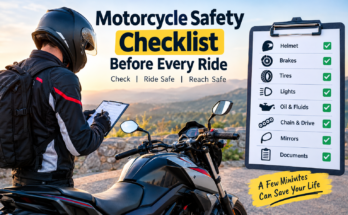
Before entering a highway, take a few minutes to check your motorcycle. A small mechanical problem that seems unimportant in the city can become dangerous at higher speeds.
Start by inspecting the tyres. Look for cuts, cracks, unusual wear, or embedded objects. Check tyre pressure according to the motorcycle manufacturer’s recommendations. Incorrect pressure can affect handling, braking, and tyre performance.
Next, test the front and rear brakes to make sure they respond properly. Check that the headlight, brake light, indicators, and horn are working. These components help you communicate with other road users.
It is also sensible to inspect the chain, where applicable, and check its lubrication and tension according to the owner’s manual. Look for signs of fluid leaks and make sure the mirrors are secure and correctly positioned.
Finally, check your fuel level and confirm that your motorcycle is suitable for the planned journey.
In my view, a simple motorcycle safety inspection is much easier than dealing with an unexpected breakdown on a busy highway.
3. Follow the Speed Limit
Speed management is one of the most important highway motorcycle safety tips. Highways may have long, open stretches that encourage riders to accelerate, but travelling too fast reduces the time available to respond to hazards.
I always consider the road conditions, traffic density, visibility, weather, and motorcycle capabilities when deciding on a safe speed. Following the posted speed limit is essential, but the legal maximum is not necessarily safe in every situation.
For example, heavy rain, road construction, sharp bends, or poor visibility may require a lower speed. Similarly, a crowded highway demands greater caution than a clear road with good visibility.
Avoid competing with other riders or trying to keep up with faster vehicles. Every motorcycle has different performance characteristics, and every rider has different experience levels.
Maintaining a controlled speed allows you to observe traffic, anticipate hazards, and make smoother decisions. Reaching your destination a little later is far better than taking unnecessary risks.
4. Maintain a Safe Following Distance
Keeping enough distance between your motorcycle and the vehicle ahead is another essential part of highway riding safety. Motorcycles can stop differently depending on their tyres, brakes, road surface, speed, and condition.
When riding in good conditions, use at least a three second following gap as a starting point, where appropriate under local guidance. Choose a fixed roadside object and count the seconds between the vehicle ahead passing it and your motorcycle reaching it. Increase the gap in rain, darkness, heavy traffic, or when visibility is limited.
Remember that a car driver may brake suddenly because of an obstacle, traffic congestion, or a missed exit. If you follow too closely, you may not have enough time to react safely.
I also recommend leaving extra space behind large trucks and buses. These vehicles can block your view of the road ahead, and their drivers may not always see a nearby motorcycle.
A safe following distance gives you more time to recognize danger and respond without sudden braking or swerving.
5. Stay Visible to Other Drivers
Motorcycles are smaller than most vehicles, which makes them harder for some drivers to notice. This is especially important on highways, where vehicles may approach quickly from behind or from adjacent lanes.
To improve visibility, keep your headlight on when required or recommended, wear bright clothing, and use reflective elements on your helmet or riding jacket.
Position your motorcycle where drivers can see you in their mirrors. Avoid lingering in another vehicle’s blind spot, particularly beside large trucks and buses. If you cannot see the driver’s mirrors clearly, there is a chance the driver cannot see you either.
Use your indicators before changing lanes or turning off the highway. Give other drivers enough time to understand your intentions, and cancel the signal after completing the manoeuvre if it does not switch off automatically.
I believe visibility is not only about wearing bright clothing. It is also about making sensible positioning decisions and communicating clearly with other road users.
6. Follow Lane Discipline
Good lane discipline helps reduce confusion and gives you more control over your surroundings. Always follow the traffic rules of the country where you are riding, including rules about which lane to use and when overtaking is permitted.
Avoid weaving between vehicles or moving unpredictably from one lane to another. Sudden movements make it difficult for drivers to anticipate your actions.
Before changing lanes, check your mirrors, look over your shoulder where safe, signal clearly, and move only when there is enough space. Mirrors do not reveal every vehicle, so a quick blind spot check is important.
Try to maintain a position within your lane that gives you a clear view ahead and keeps you away from obvious hazards. Avoid riding directly alongside another vehicle for long periods.
If traffic is moving slowly, remain patient rather than squeezing into narrow gaps. Saving a few seconds is never worth risking a collision.
7. Learn Safe Overtaking Techniques
Overtaking on highways requires careful judgment because closing speeds can be high. Before attempting to pass another vehicle, make sure overtaking is legal, the road ahead is clear, and you have enough distance to complete the manoeuvre safely.
Check your mirrors and blind spots, use your indicator, and confirm that the vehicle ahead is not preparing to change lanes or turn. Never assume another driver has noticed you.
Avoid overtaking near blind bends, junctions, roadworks, hill crests, or areas where your view of approaching traffic is restricted. Do not pass when road markings prohibit it or when the available space is insufficient.
Once you have passed the vehicle, return to your lane only when there is enough room to do so safely. Avoid cutting in closely, as this can force the other driver to brake suddenly.
My advice is simple: if you are uncertain whether an overtaking manoeuvre is safe, wait for a better opportunity.
8. Stay Alert and Avoid Distractions
Highway riding demands continuous attention. Even a short distraction can cause you to miss a braking vehicle, a road hazard, or a sudden change in traffic.
Never use a handheld phone while riding. Set your navigation before starting the journey, and if you need to check directions or answer a call, stop in a safe and legal location first.
Avoid adjusting accessories, searching through luggage, or taking your hands off the controls unnecessarily while moving. Keep your attention on the road and the vehicles around you.
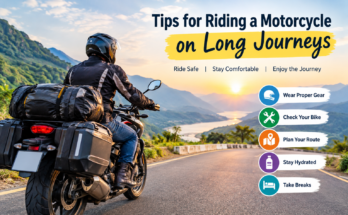
Fatigue is another major concern. Long journeys can reduce concentration and slow reaction times, even when the road appears straightforward. Take regular breaks and stop sooner if you notice heavy eyelids, repeated yawning, difficulty concentrating, or delayed reactions.
Never ride under the influence of alcohol or impairing drugs. Some medications can also cause drowsiness, so check their warnings before travelling.
A responsible rider understands that staying alert is just as important as controlling the motorcycle.
9. Adjust Your Riding to Weather Conditions
Weather can change highway riding conditions quickly. Rain, strong winds, fog, extreme heat, and low temperatures can all affect comfort, visibility, and motorcycle control.
During rain, reduce speed smoothly, increase your following distance, and avoid sudden braking or aggressive acceleration. Painted road markings, metal covers, oily surfaces, and standing water may become particularly slippery.
In strong crosswinds, maintain a relaxed grip on the handlebars and make smooth corrections. Be especially careful when passing trucks, leaving sheltered areas, or crossing exposed bridges, where wind conditions may change suddenly.
Fog requires extra caution because it reduces the distance you can see. Use the appropriate lights for the conditions, avoid high speeds, and consider delaying the journey if visibility becomes dangerously poor.
Hot weather can cause dehydration and fatigue. Drink water during breaks, wear suitable protective clothing, and pay attention to signs of overheating.
If the weather becomes too dangerous for safe riding, find a suitable place to stop away from moving traffic and wait for conditions to improve.
10. Be Careful Around Trucks and Buses
Large vehicles create special challenges for motorcycle riders. Trucks and buses have larger blind spots, need more room to manoeuvre, and may take longer to stop.
Avoid riding directly behind a large vehicle if it blocks your view of traffic ahead. Keep enough distance to see the road and identify potential hazards early.
When passing a truck, do so only when it is legal and safe. Make sure you have sufficient space, maintain predictable control, and avoid staying beside the vehicle longer than necessary.
Be cautious around a truck’s wheels because loose stones and road debris may be thrown into your path. Also remember that a large vehicle can create turbulent airflow, particularly at highway speeds.
If a truck begins changing lanes, do not assume its driver has seen you. Reduce risk by creating space and avoiding sudden movements.
11. Prepare for Emergencies
Even careful riders can encounter unexpected problems. A vehicle may stop suddenly, debris may appear on the road, or a mechanical issue may develop during a journey.
I recommend carrying a charged mobile phone, identification, essential emergency contacts, and a small first aid kit. A basic tyre repair kit may also be useful if it is suitable for your motorcycle and you know how to use it safely.
If your motorcycle develops a serious problem, avoid stopping in an active traffic lane. Where possible, move to a safe location away from moving vehicles. Use hazard lights if available and appropriate, and make yourself visible to approaching traffic.
If you experience a tyre problem or mechanical failure, avoid abrupt steering or braking. Maintain control and slow down as safely as the circumstances allow.
In the event of a crash, move away from traffic if you can do so safely and contact emergency services when needed. Do not remove an injured person’s helmet unless necessary to protect them from an immediate danger or instructed by a trained professional.
Preparing for emergencies gives you a better chance of responding calmly when something unexpected happens.
12. Plan Your Highway Journey in Advance
Good planning can prevent many avoidable problems. Before leaving, review your route, check the weather forecast, and identify suitable places to rest or refuel.
Make sure your motorcycle has enough fuel for the planned distance. Do not rely on finding a fuel station immediately when the tank is nearly empty.
Allow extra travel time so you do not feel pressured to ride faster than conditions permit. If you are unfamiliar with the route, review major turns, exits, and road restrictions before starting.
I also suggest sharing your expected arrival time with someone you trust when taking a long trip. This can be helpful if your plans change unexpectedly.
Avoid beginning a long highway journey when you are exhausted, unwell, or unable to concentrate. A short delay is preferable to riding when your judgment and reaction time are affected.
13. Keep Practising Your Riding Skills
Safe highway riding improves with experience, but experience alone does not guarantee good judgment. Riders benefit from practising essential skills in suitable, controlled environments.
Work on smooth acceleration, controlled braking, cornering, observation, and hazard awareness. A recognised motorcycle safety course can help you develop these skills under professional supervision.
If you are a beginner, start with shorter journeys on familiar roads and progress gradually as your confidence and ability improve. Do not attempt difficult highway conditions simply because other riders are comfortable with them.
Regular practice also helps you understand your motorcycle’s handling and braking characteristics. Always follow the manufacturer’s recommendations and practise emergency techniques only in an appropriate training environment.
The goal is not to become the fastest rider on the road. The goal is to become a predictable, skilled, and responsible motorcyclist.
Frequently Asked Questions
What is the most important highway motorcycle safety tip?
Wearing a properly fitted helmet, maintaining a safe speed, keeping enough following distance, and staying alert are among the most important safety practices. No single precaution removes every risk, so riders should combine several safe habits.
How fast should I ride a motorcycle on a highway?
Follow the posted speed limit and applicable traffic laws. Reduce your speed when weather, traffic, visibility, or road conditions make the legal maximum unsafe.
How can beginners stay safe on highways?
Beginners should wear protective gear, inspect their motorcycles, practise basic control skills, maintain generous following distances, and avoid challenging conditions until they have sufficient experience. A professional training course is also valuable.
Is highway riding safe at night?
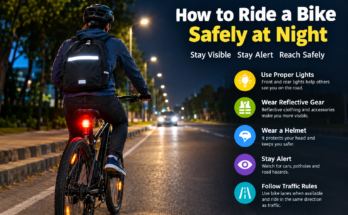
Night riding can be more challenging because visibility is reduced and hazards may be harder to identify. Use functioning lights, wear reflective gear, reduce speed when necessary, and avoid riding when tired.
Conclusion
Learning how to stay safe while riding on highways is an important responsibility for every motorcyclist. High speed, heavy traffic, changing weather, and limited visibility can create serious risks, but sensible preparation and responsible riding habits can help reduce them.
In my opinion, the most effective approach is to prepare your motorcycle before every journey, wear proper protective gear, maintain a safe following distance, follow traffic laws, and remain alert throughout the ride. It is equally important to recognise your limits and avoid taking unnecessary risks to save time.
Remember that highway safety is not about reaching your destination as quickly as possible. It is about reaching it safely. By practising these motorcycle highway safety tips consistently, riders can make their journeys more controlled, comfortable, and enjoyable.