Riding a bike in heavy traffic can be challenging, especially for beginners who are still learning how to handle busy roads. Cars, buses, motorcycles, pedestrians, and unexpected road situations require constant attention. Whether you ride a bicycle or a motorcycle, understanding road safety and developing good riding habits can help you reduce risks and feel more confident on the road.
In my opinion, safe riding is not just about knowing how to control a bike. It is also about understanding other road users, staying calm under pressure, and making responsible decisions. A few simple precautions can make a significant difference when traveling through crowded streets.
In this guide, I will explain how to ride a bike safely in heavy traffic, what mistakes to avoid, and which habits can help you become a more responsible rider.
Why Riding in Heavy Traffic Requires Extra Care
Heavy traffic creates situations that can change within seconds. A car may stop suddenly, a pedestrian may cross the road unexpectedly, or a vehicle may turn without giving a clear signal. Motorcyclists and cyclists have less physical protection than people inside cars, which makes awareness especially important.
Busy roads can also contain potholes, loose gravel, standing water, and uneven surfaces. These hazards may become difficult to notice when vehicles are moving closely together.
I believe the best approach is to ride defensively. This means expecting that other road users might make mistakes and leaving enough space to respond safely. Instead of assuming every driver has seen you, always consider what you would do if a vehicle moved into your path.
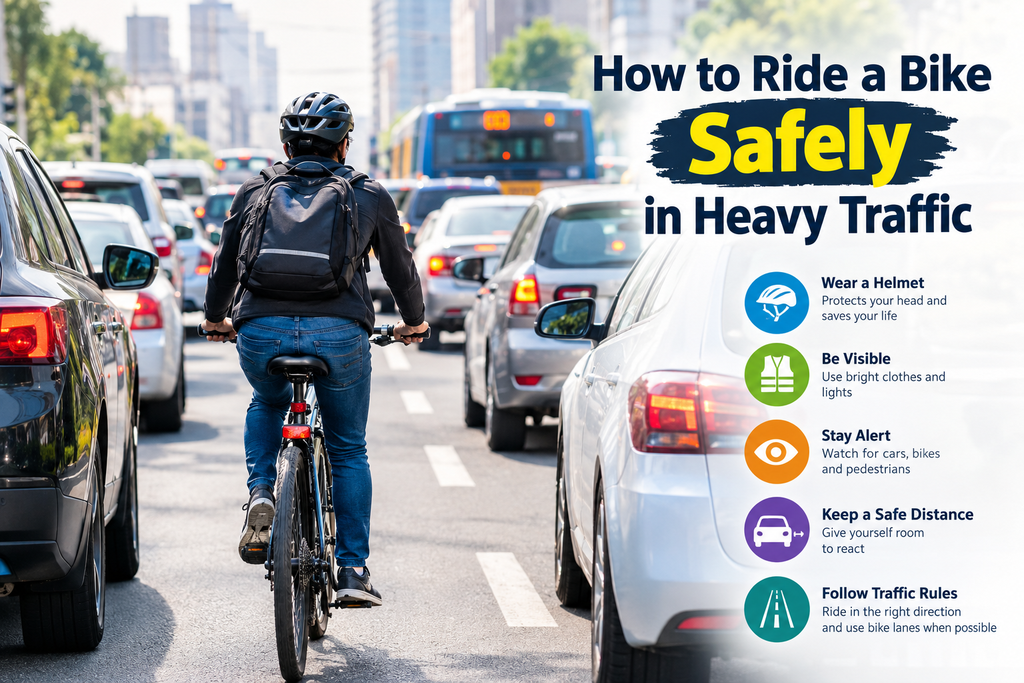
1. Always Wear the Right Safety Gear
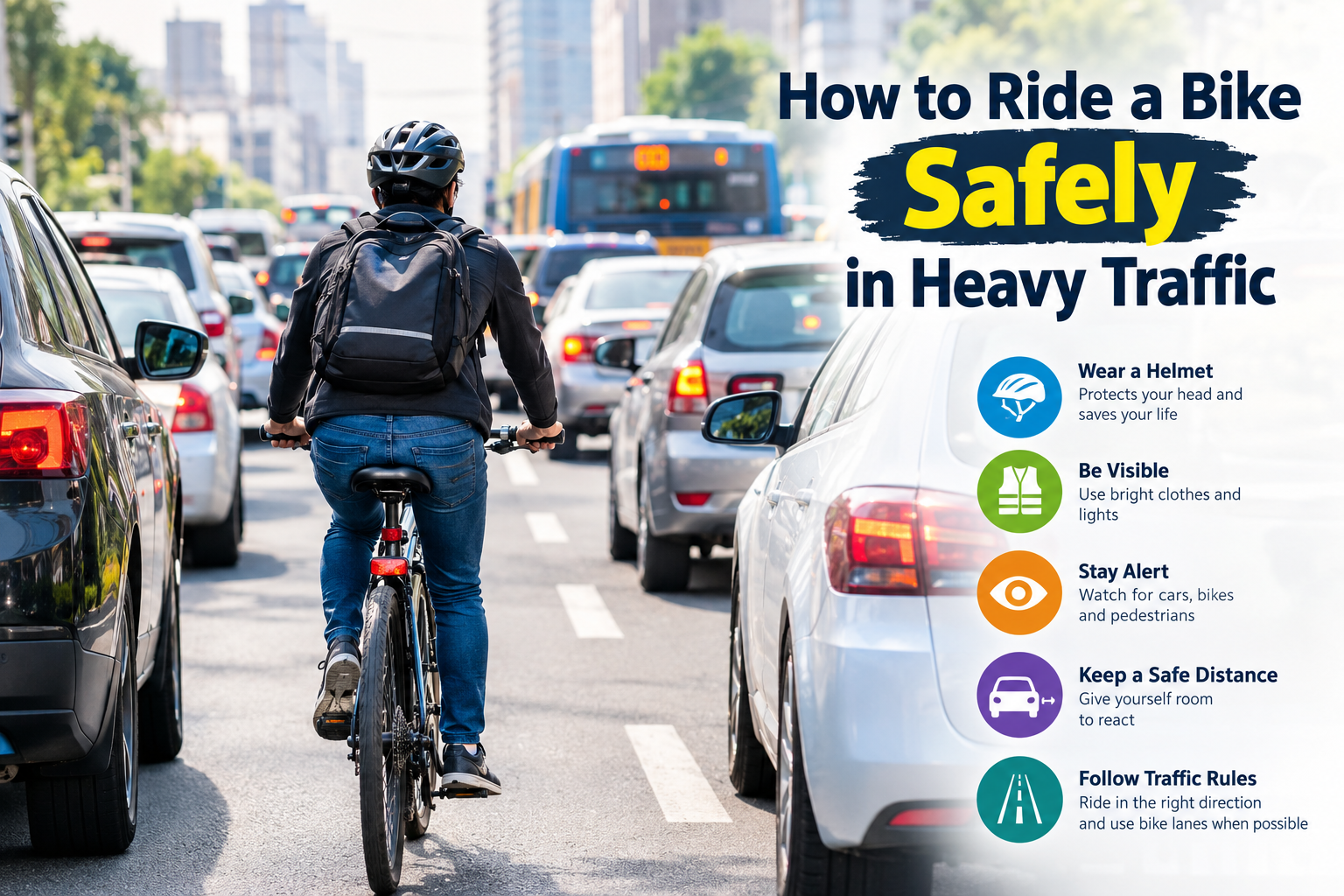
Wearing appropriate safety equipment is one of the most important steps when riding in traffic. A properly fitted helmet can help protect your head during a crash. Motorcycle riders should choose a certified motorcycle helmet, while bicycle riders should use a helmet designed for cycling.
For motorcycle riders, protective gloves, sturdy footwear, and abrasion resistant jackets and trousers provide additional protection. Avoid loose clothing that could become caught in moving parts.
Cyclists should also wear comfortable clothing that does not interfere with pedaling or steering. Reflective details and bright colors can make riders easier to notice.
In my view, safety gear should be considered essential rather than optional. Even a short journey through a crowded market or busy intersection can involve unexpected hazards.
2. Check Your Bike Before Every Ride
A quick inspection can help you identify problems before entering heavy traffic. Mechanical issues become particularly dangerous when you need to stop suddenly or change direction.
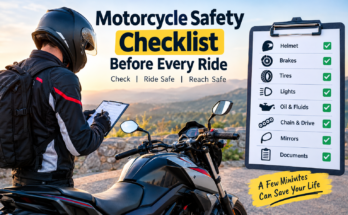
Before riding, check the following items:
- Brakes for reliable stopping power
- Tires for suitable pressure, damage, and sufficient tread
- Headlights, brake lights, and indicators where fitted
- Mirrors for a clear view of surrounding traffic
- The chain, where applicable, for proper condition and tension
- The horn or bell for warning other road users when appropriate
For motorcycles, also check the fuel level and look for visible fluid leaks. Bicycle riders should confirm that the wheels are secure and that the steering feels stable.
I recommend making this inspection a regular habit. It takes only a few minutes and can prevent avoidable problems during your journey.
3. Wear a Helmet and Make Yourself Visible
Visibility is a major concern when riding a bike in heavy traffic. Drivers may overlook a rider who is hidden behind a larger vehicle or positioned in a blind spot.
Choose bright clothing during the day and reflective clothing at night. Use a functioning headlight and rear light when conditions require them, particularly on bicycles. Motorcycle riders should keep their lighting system in good working order.
Position yourself where other drivers are more likely to see you. Avoid remaining beside a car for a long time, especially near its mirrors or rear corners.
Never assume that wearing bright clothing guarantees that drivers will notice you. Visibility works best when combined with careful positioning, predictable movements, and proper signaling.
4. Maintain a Safe Following Distance
Keeping enough distance from the vehicle ahead gives you more time to react if traffic slows suddenly.
In heavy traffic, some riders follow vehicles too closely because they want to move forward quickly. I consider this a risky habit because it reduces reaction time and limits visibility of road hazards.
Leave a comfortable stopping distance and increase it when the road is wet, slippery, or covered with loose material. The appropriate distance depends on your speed, braking ability, road conditions, and the type of bike you ride.
Avoid following closely behind buses and trucks because they can block your view of the road ahead. If possible, maintain a position that allows you to see traffic conditions without moving into an unsafe part of the road.
Remember that a safe following distance is not wasted space. It gives you more time to make decisions.
5. Follow Traffic Rules and Road Signs
Traffic rules help road users understand what to expect from one another. Ignoring a red light, riding against traffic, or entering an intersection without checking can put you and others at risk.
Always obey traffic signals, speed limits, lane markings, and signs. Ride in the correct direction and use designated bicycle lanes where available and appropriate. Motorcycle riders should follow the lane rules that apply to motor vehicles in their location.
At intersections, slow down and watch for turning vehicles and pedestrians. Do not assume that another driver will stop simply because you have the right of way.
Traffic laws differ between locations, so riders should learn the rules that apply to their area. Following them consistently helps make your riding more predictable and responsible.
6. Avoid Sudden Braking and Sharp Turns
Sudden movements can cause problems in crowded traffic. If you brake hard without warning, a vehicle behind you may not have enough time to respond. Sharp turns can also cause a loss of balance, especially on slippery surfaces.
Try to look ahead and anticipate changes in traffic. Reduce your speed gradually when approaching a queue, intersection, pedestrian crossing, or area with limited visibility.
When turning, slow down to a suitable speed before entering the turn. Look in the direction you intend to travel and maintain control of the bike.
Use your brakes smoothly and according to your bike’s design. Motorcycle riders should practice controlled braking in a safe environment and understand how their front and rear brakes work. Cyclists should also learn how their brakes respond under different conditions.
Good control is more valuable than speed when the road becomes crowded.
7. Stay Alert and Avoid Distractions
Heavy traffic demands your full attention. Looking at a mobile phone, adjusting music, or becoming distracted by conversations can prevent you from noticing a sudden hazard.
Keep your eyes moving between the road ahead, nearby vehicles, intersections, and possible escape spaces. Listen to your surroundings while remaining focused on visual information.
Avoid wearing headphones at a volume that prevents you from hearing important traffic sounds. Never use a handheld phone while riding.
Fatigue can also reduce concentration. If you feel sleepy, unwell, or mentally distracted, consider delaying your journey or stopping somewhere safe.
In my opinion, alertness is one of the most valuable skills a rider can develop. Many dangerous situations provide very little time to react, so noticing them early matters.
8. Learn to Use Mirrors and Check Blind Spots
Mirrors help riders monitor vehicles approaching from behind, but they do not show everything. Cars, buses, and motorcycles may remain hidden in blind spots.
Check your mirrors regularly, especially before slowing down, changing position, or preparing to turn. When it is safe, make an appropriate shoulder check to confirm that the intended space is clear.
Do not turn your head for so long that you lose awareness of the road ahead. Practice checking your surroundings while maintaining stable control.
Before changing lanes, make sure you have enough room and signal your intention clearly. If another vehicle is too close, wait rather than forcing your way into the available space.
These habits help you make safer decisions when traffic is moving unpredictably.
9. Use Signals Before Turning or Changing Direction
Clear signals help other road users understand your intentions. Motorcycle riders should use functioning indicators when fitted. Cyclists can use appropriate hand signals when it is safe and practical to do so.
Signal early enough to give others time to respond. Before turning, check mirrors and blind spots, assess the traffic around you, and make sure the path is clear.
Avoid signaling and immediately moving into another vehicle’s path. A signal communicates your intention, but it does not automatically give you permission to move.
If you are unsure whether a turn is safe, slow down and wait for a suitable opportunity. Predictable riding reduces confusion and helps everyone share the road more safely.
10. Avoid Riding Between Moving Vehicles
Moving between rows of cars can be particularly dangerous when traffic is dense. Drivers may change lanes, open a path unexpectedly, or turn without noticing a nearby rider.
Motorcyclists should follow local laws regarding lane filtering and lane splitting. Even where these practices are permitted, they require careful judgment and suitable conditions. Never assume that a narrow gap is safe simply because the bike can physically fit through it.
Cyclists should also avoid squeezing through spaces where there is not enough room to maintain control and a safe clearance from vehicles.
Do not rush to gain a few seconds. Waiting for a safer opportunity is usually a better decision than entering a space where you have little room to react.
11. Adjust Your Riding to Weather and Road Conditions
Rain, dust, fog, and poor lighting can make heavy traffic more difficult to navigate. Wet roads may reduce tire grip, while puddles can conceal potholes and other hazards.
Reduce your speed when visibility or traction is limited. Increase your following distance and avoid sudden acceleration, braking, or steering.
Be particularly careful around painted road markings, metal covers, oil patches, and loose gravel because these surfaces may become slippery. If water covers an area of road and you cannot judge its depth, avoid riding through it when possible.
At night, use appropriate lights and wear reflective clothing. If visibility becomes dangerously poor, find a safe place to stop rather than continuing under unsafe conditions.
12. Practice Defensive Riding and Stay Calm
Defensive riding means preparing for possible mistakes by other road users. A driver may change lanes unexpectedly, a pedestrian may cross between parked vehicles, or a car door may open into your path.
Look for warning signs such as a vehicle drifting toward a lane marking, brake lights ahead, or pedestrians approaching the road. Leave enough space to respond and avoid competing with aggressive drivers.
If another road user behaves impatiently, remain calm. Do not respond with racing, sudden braking, or unnecessary arguments.
New riders should practice on quieter roads before attempting busy intersections and congested streets. Gradually increasing the difficulty of your journeys can help build confidence without taking unnecessary risks.
Confidence should come from experience, preparation, and good judgment rather than taking chances.
Common Mistakes to Avoid in Heavy Traffic
Some riding mistakes are especially risky on busy roads. Avoid these habits whenever possible.
- Riding without a suitable helmet or protective equipment
- Following cars too closely
- Using a mobile phone while riding
- Ignoring traffic lights and road signs
- Changing lanes without checking blind spots
- Riding too fast for the road conditions
- Entering gaps that are too narrow
- Ignoring vehicle maintenance
- Riding while exhausted or distracted
- Assuming other drivers have noticed you
Correcting these habits can improve your safety and help you become a more responsible road user.
Conclusion
Learning how to ride a bike safely in heavy traffic requires patience, attention, preparation, and consistent practice. A well maintained bike, suitable safety gear, a safe following distance, and respect for traffic rules all contribute to a safer journey.
I believe the most important principle is to prioritize safety over speed. You cannot control every action taken by another road user, but you can control your own decisions, maintain awareness, and give yourself enough time to respond to changing conditions.
Whether you are a beginner or an experienced rider, continue improving your road awareness and riding skills. Take extra care at intersections, remain visible, and never let impatience influence your decisions.
Safe riding is not about reaching your destination as quickly as possible. It is about reaching it responsibly and protecting yourself and others along the way.