SEO optimized article | Motorcycle Safety | Beginner Riding Tips
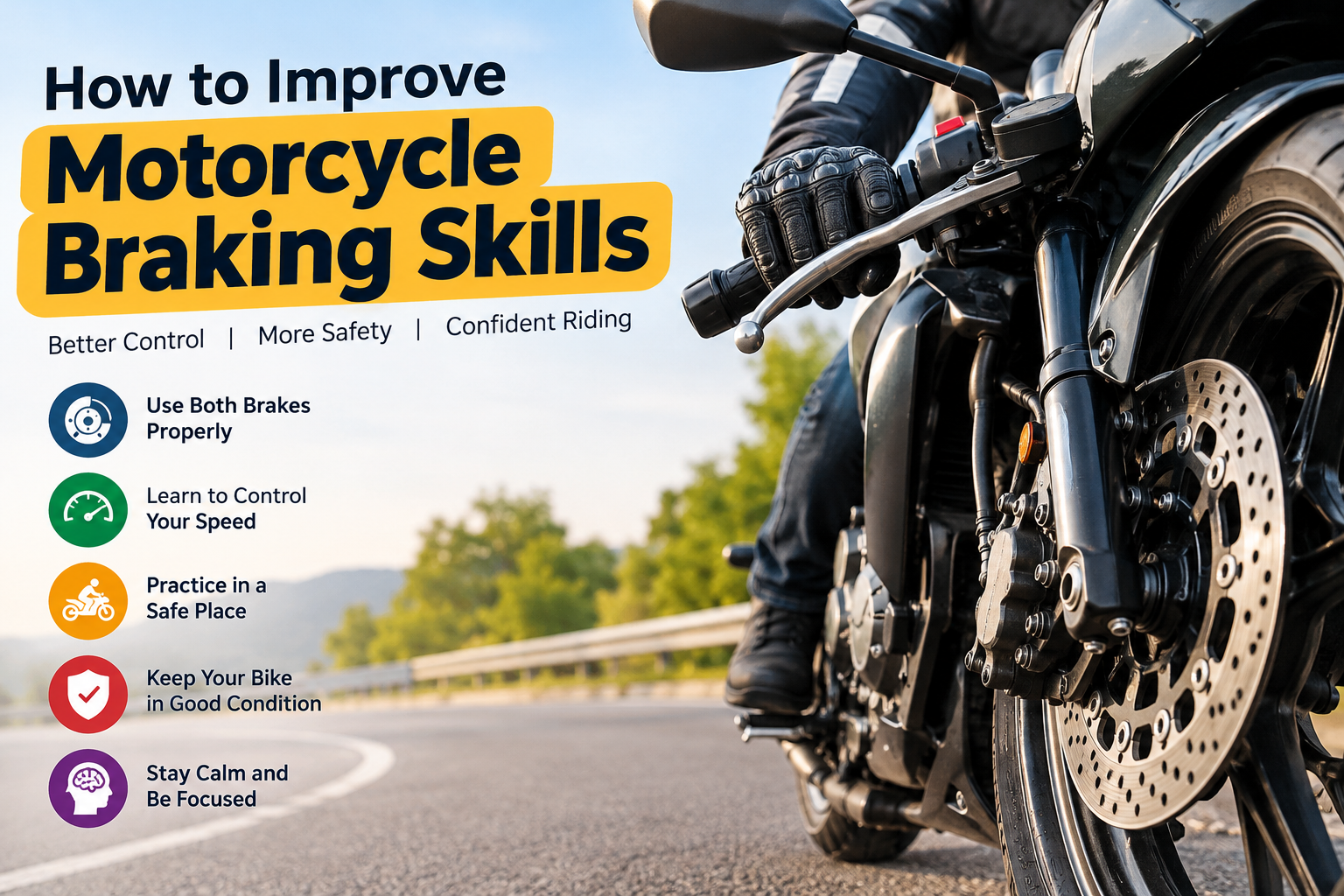
Motorcycle braking is one of the most important skills every rider should learn. In my opinion, becoming a confident motorcycle rider is not only about controlling the throttle, changing gears, or riding at higher speeds. It is also about knowing how to slow down and stop safely when the situation demands it. Good braking skills can help riders maintain control, respond to unexpected hazards, and reduce the risk of accidents.
Many beginners focus on learning how to accelerate and ride smoothly, but they do not spend enough time practicing emergency stops and controlled braking. This can become a serious problem when a vehicle suddenly stops ahead, a pedestrian crosses the road, or traffic conditions change unexpectedly.
Learning how to improve motorcycle braking skills takes time, patience, and regular practice. From my point of view, every rider should understand how the front and rear brakes work, how road conditions affect stopping distance, and why maintaining a safe following distance is essential.
In this guide, I will explain practical motorcycle braking techniques that beginners can learn to become safer and more confident on the road.
1. Understand How Motorcycle Brakes Work
Before improving your motorcycle braking skills, it is important to understand the purpose of each brake.
Most motorcycles have a front brake operated by a hand lever and a rear brake controlled by a foot pedal. Both brakes help slow the motorcycle, but they do not contribute equally in every situation.
The front brake generally provides the greatest stopping power because braking transfers weight toward the front wheel. As the motorcycle slows down, the front tire gains a larger share of the load and can usually provide more braking force when used correctly.
The rear brake also plays an important role. It can help stabilize the motorcycle, control speed at low speeds, and support smooth stops when used appropriately.
In my view, beginners should avoid the common mistake of relying only on the rear brake. The front brake is essential for effective stopping, while the rear brake provides additional control. Learning to coordinate both brakes is an important step toward becoming a skilled rider.
However, the correct braking pressure depends on the motorcycle, tire grip, road surface, speed, and riding conditions. Always follow the motorcycle manufacturer’s instructions and learn the proper technique through professional training.
2. Practice Using Both Brakes Smoothly
One of the best ways to improve motorcycle braking skills is to practice applying both brakes in a controlled manner.
A sudden, forceful squeeze of the front brake can overwhelm the available tire grip, particularly on slippery surfaces or when the front wheel is turned. Similarly, pressing the rear brake too hard can cause the rear wheel to skid.
Instead of grabbing the brake lever suddenly, practice applying pressure progressively. This means increasing braking force smoothly as the motorcycle begins to slow down.
During a normal stop, look ahead, keep your motorcycle upright when practical, and apply the brakes progressively according to the available grip. Use both brakes in a coordinated way rather than depending entirely on one.
I believe smooth braking is more useful than aggressive braking in everyday riding. It makes stops more predictable and helps prevent unnecessary instability.
Practice this technique in a quiet, flat, dry area away from traffic, pedestrians, and obstacles. Begin at low speeds and increase your speed only when you can stop consistently and safely.
3. Learn the Correct Front Brake Technique
The front brake is responsible for much of a motorcycle’s stopping power, so learning how to use it correctly is essential.
Many beginners feel nervous about the front brake because they have heard that using it can cause a motorcycle to fall. In reality, the front brake is designed to provide powerful stopping performance when used correctly. The main concern is applying too much pressure too suddenly or braking beyond the available tire grip.
Start by becoming familiar with the brake lever and its response. At a low speed in a controlled practice area, apply the front brake gently and progressively. Notice how the motorcycle responds as you increase pressure.
As you gain experience, practice firmer stops under the guidance of a qualified instructor. Keep your eyes looking ahead and your arms relaxed rather than locking your elbows.
Avoid sudden front brake inputs when the motorcycle is significantly leaned over or the front wheel is turned. Whenever possible, complete most of your braking before entering a corner.
The goal is not to squeeze the lever as hard as possible. It is to apply the greatest useful braking force that the road conditions and motorcycle can safely support.
4. Do Not Ignore the Rear Brake
Although the front brake usually provides most of the stopping power, the rear brake should not be overlooked.
The rear brake is particularly useful for low speed control, smooth stops, and certain situations where gentle speed adjustments are needed. However, too much rear brake pressure can cause the rear wheel to lock, especially when weight has transferred forward during hard braking.
To improve your technique, practice applying the rear brake gently and progressively. Pay attention to how the motorcycle responds and learn to recognize when you are applying excessive pressure.
If the rear wheel begins to skid, the appropriate response depends on the situation and motorcycle. Avoid making sudden steering movements, and seek professional instruction to learn how to manage a skid safely.
From my perspective, learning rear brake control is just as important as becoming comfortable with the front brake. Good riders understand how both brakes work together rather than treating them as separate controls.
5. Maintain a Safe Following Distance
Even excellent motorcycle braking skills cannot eliminate every road hazard. Maintaining enough distance from the vehicle ahead gives you more time to react.
When riding too closely, you may have insufficient space to stop if the driver ahead brakes suddenly. Wet roads, loose gravel, poor visibility, and worn tires can make the situation even more dangerous.
A useful starting point in favorable conditions is to maintain at least a two second following gap, increasing it when visibility, weather, traffic, or road surfaces are less favorable. Your local road safety guidance may recommend a longer interval for motorcycles.
To estimate the gap, choose a fixed roadside reference point. When the vehicle ahead passes it, count the seconds until your motorcycle reaches the same point.
Remember that following distance is not a replacement for attentive riding. Keep scanning the road, watch for brake lights, and anticipate possible hazards before they become emergencies.
I believe defensive riding is one of the easiest ways to make braking safer because it gives you more time and space to respond.

6. Practice Emergency Braking Safely
Emergency braking is an important skill because unexpected situations can occur even when you are riding carefully.
A pedestrian may enter the road, a car may stop suddenly, or traffic may slow without warning. In these situations, your response must be controlled and appropriate for the available grip.
The best way to prepare is to practice progressive, straight line stops in a safe training environment.
Start at a low speed and use both brakes smoothly. Gradually increase braking pressure while keeping the motorcycle stable and looking toward your intended stopping area. Once you are comfortable, a qualified instructor can help you practice firmer stops and evaluate your technique.
Do not begin emergency braking practice at high speeds or on public roads. Sudden practice stops without proper preparation can lead to a loss of control.
Modern motorcycles may have an anti lock braking system, commonly called ABS. ABS helps prevent the wheels from locking during braking, but it cannot overcome the physical limits of tire grip. It does not guarantee a shorter stopping distance in every condition.
If your motorcycle has ABS, learn how the system behaves and follow the manufacturer’s instructions. If it does not have ABS, professional training becomes especially valuable for learning how to manage braking pressure near the limit of available grip.
7. Adjust Braking to Road Conditions
Road conditions have a major influence on motorcycle stopping distance. A technique that works well on dry asphalt may not work equally well on wet pavement, gravel, sand, or uneven roads.
On wet roads, reduce your speed and increase your following distance. Apply the brakes progressively because available grip may be lower than expected.
On loose gravel or sandy surfaces, avoid sudden control inputs and be especially careful with the front brake. Loose material can move beneath the tires and reduce stability.
When riding downhill, use controlled braking and maintain a suitable speed rather than waiting until you are traveling too fast. Long descents can also increase brake temperatures, so follow the motorcycle manufacturer’s guidance for managing them.
Painted road markings, metal covers, oil spills, and wet leaves may also provide less grip than ordinary pavement.
My advice is to treat every unfamiliar road surface with caution. Adjusting your speed before reaching a hazardous area is usually safer than attempting to correct the situation with sudden braking.
8. Keep Your Motorcycle Brakes in Good Condition
Good technique is only part of safe braking. Your motorcycle must also be properly maintained.
Check your brake pads or shoes, brake fluid, cables where applicable, discs or drums, and hydraulic components according to the maintenance schedule. Look for fluid leaks, unusual noises, damaged hoses, or a brake lever that feels unusually soft.
Tire condition is equally important because the tires are the only parts of the motorcycle that contact the road. Check tire pressure regularly and inspect the tread for excessive wear or damage.
If the brakes feel weak, make unusual sounds, vibrate excessively, or behave differently from normal, arrange an inspection before continuing to ride.
Do not ignore maintenance problems or attempt repairs beyond your skill level. A qualified motorcycle mechanic can identify faults and ensure that the braking system is operating correctly.
Regular maintenance helps make braking performance more predictable and supports safer riding.
9. Keep Your Eyes Up and Your Body Relaxed
Your body position and attention can affect braking performance more than many beginners realize.
When a rider becomes frightened, it is easy to stare at the obstacle ahead, tense the arms, and make abrupt control movements. This can make it harder to maintain smooth control.
Instead, keep your head up and look toward the road and the space where you intend to stop. Maintain a secure riding position, grip the motorcycle with your legs where appropriate, and avoid locking your elbows.
Keep your hands positioned so you can operate the controls comfortably. During hard braking, your arms should not be forced to support your entire body weight through the handlebars.
Staying calm does not mean ignoring danger. It means developing practiced responses that help you act deliberately rather than panic.
Regular training builds familiarity with the brakes and makes it easier to respond appropriately when conditions change.
10. Avoid Common Motorcycle Braking Mistakes
Recognizing common mistakes is another practical way to improve motorcycle braking skills.
Here are several habits I recommend avoiding:
1. Using only the rear brake: This may reduce your available stopping power when stronger braking is needed.
2. Grabbing the front brake suddenly: Abrupt pressure can exceed available grip, particularly on slippery surfaces.
3. Following vehicles too closely: This reduces the time and distance available to react.
4. Braking aggressively while cornering: Heavy braking while leaned over can use up available tire grip and increase the risk of losing control.
5. Ignoring tire pressure: Incorrect pressure can affect handling, stability, and braking performance.
6. Practicing on busy roads: Public traffic is not a suitable environment for learning emergency braking.
7. Riding too fast for conditions: Higher speeds require more distance to stop and leave less time to respond to hazards.
From my point of view, correcting these habits gradually is more effective than trying to master every technique in one day. Consistency, patience, and proper instruction are essential.
11. Create a Regular Motorcycle Braking Practice Routine
Improving motorcycle braking skills requires regular practice rather than occasional attempts. Even experienced riders can benefit from reviewing their technique and receiving feedback from qualified instructors.
I recommend beginning with a simple practice routine in a legal, controlled area with a clean, level surface and plenty of open space.
During each practice session, focus on one skill at a time. Begin with gentle stops at low speeds, then work on smoother coordination between the front and rear brakes. Once your technique becomes consistent, practice controlled stops from gradually higher speeds under appropriate supervision.
Pay attention to how smoothly you apply the brakes, whether the motorcycle remains stable, and how consistently you stop within your intended area.
Take breaks when you become tired or distracted. Never practice emergency braking when you are feeling stressed, riding an unfamiliar motorcycle without preparation, or working in conditions that make the exercise unsafe.
A qualified motorcycle safety instructor can help you identify problems that may be difficult to recognize on your own.
The most important thing is to focus on improving your technique instead of trying to achieve the shortest possible stopping distance during every practice session.
Conclusion
Learning how to improve motorcycle braking skills is essential for every rider who wants to travel safely and confidently. Proper use of both brakes, progressive brake pressure, a safe following distance, and awareness of road conditions can make a significant difference in everyday riding.
In my opinion, good braking begins with understanding your motorcycle and respecting the limits of tire grip. Regular practice in a controlled environment helps you become more familiar with the controls and develop smoother responses to unexpected situations.
Remember that no braking technique can eliminate every risk. Proper protective equipment, regular motorcycle maintenance, sensible speeds, and defensive riding habits are equally important.
Whether you are a beginner or an experienced rider, continue learning and refining your braking technique. With patience, professional guidance, and consistent practice, you can develop better motorcycle control and become a more responsible rider on the road.