Motorcycle riding is an exciting experience that gives us a sense of freedom, independence, and adventure. However, when someone starts learning how to ride a motorcycle, it is easy to make mistakes that can affect their safety. Beginners often focus on controlling the motorcycle and learning how to change gears, but safe riding requires much more than that.
In my opinion, becoming a good motorcycle rider is not only about speed or confidence. It is about understanding road conditions, following traffic rules, maintaining the motorcycle, and making responsible decisions. Even a small mistake can create a dangerous situation, especially when a rider has limited experience.
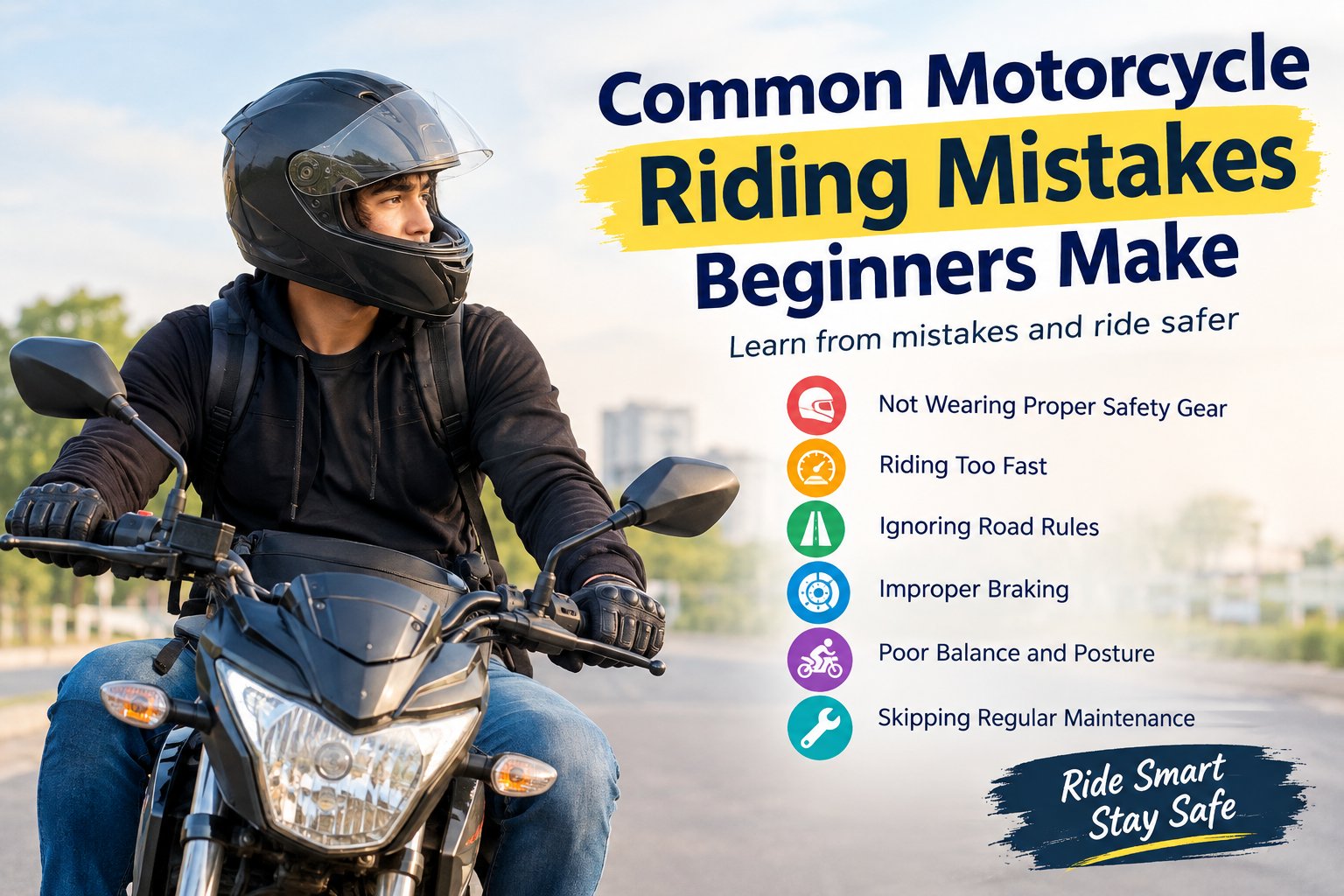
Understanding the common motorcycle riding mistakes beginners make can help new riders develop better habits from the beginning. Whether you are learning to ride your first motorcycle or improving your existing skills, avoiding these mistakes can make every journey safer and more comfortable.
In this article, I will explain the most common motorcycle riding mistakes beginners should avoid and share practical tips that can help new riders build confidence on the road.
1. Not Wearing Proper Motorcycle Safety Gear
One of the biggest mistakes beginner motorcycle riders make is riding without proper safety gear. Some riders believe that a short trip does not require a helmet, gloves, or protective clothing. However, accidents can happen at any time, even when travelling a short distance.
A properly fitted, certified motorcycle helmet is one of the most important pieces of protective equipment. It helps protect the head during an impact. Riders should also consider motorcycle gloves, a protective jacket, durable trousers, and sturdy footwear that covers the ankles.
In my view, safety gear should be treated as a basic requirement rather than an optional expense. Wearing ordinary clothes and open footwear may feel comfortable, but they offer limited protection during a fall.
Beginners should choose equipment that fits properly and is suitable for the weather. A comfortable helmet with a secure fastening can also help reduce distractions while riding.
2. Riding Too Fast Before Gaining Experience
Another common motorcycle riding mistake is riding faster than your skills allow. New riders sometimes become overconfident after learning how to balance a motorcycle and operate the controls. They may assume that controlling the bike at low speeds means they are ready for faster roads.
However, riding at higher speeds reduces the time available to react to unexpected situations. A pedestrian may cross the road, a vehicle may change lanes, or an obstacle may suddenly appear.
Beginners should gradually improve their riding skills in safe, permitted practice areas before entering more demanding traffic conditions. They should always follow posted speed limits and adjust their speed according to visibility, traffic, weather, and road surfaces.
I believe that controlling your speed is a sign of good riding judgment. Reaching your destination safely is more important than arriving a few minutes earlier.
3. Ignoring Traffic Rules and Road Signs
Traffic rules exist to make roads safer for everyone. Unfortunately, some beginner riders overlook road signs, traffic signals, lane markings, and right of way because they are concentrating on operating their motorcycles.
Ignoring these rules can lead to collisions, fines, and dangerous situations. Riders should understand the traffic laws that apply in their area before riding on public roads.
It is important to stop at red lights, obey speed limits, use indicators when turning, and maintain a safe following distance. Riders should also check their mirrors and blind spots before changing lanes.
In busy areas, especially where cars, buses, bicycles, and pedestrians share the road, predictable riding is essential. Following traffic rules helps other road users understand your intentions and gives everyone a better chance to respond safely.
4. Using the Brakes Incorrectly
Learning how to brake correctly is an essential part of motorcycle safety. Beginners sometimes rely too heavily on one brake, apply the brakes suddenly, or become nervous when they need to slow down quickly.
Motorcycles require smooth and controlled braking. Riders should learn how their front and rear brakes work and practise using them according to the motorcycle manufacturer’s guidance. The front brake generally provides a substantial amount of stopping power, while the rear brake also contributes to slowing the motorcycle and maintaining control.
Sudden braking, especially on loose gravel, wet roads, or slippery surfaces, can increase the risk of losing traction.
New riders should practise controlled stops in a safe, open area under the supervision of a qualified instructor when possible. They should also keep enough distance from the vehicle ahead to allow time for gradual braking.
Good braking skills develop with practice. The goal is to remain calm, anticipate hazards, and apply the brakes smoothly rather than waiting until the last moment.
5. Looking Down Instead of Looking Ahead
Many beginners look directly at the road immediately in front of their motorcycle. This may seem natural because they want to avoid potholes or small obstacles. However, constantly looking down limits their awareness of the surrounding environment.
Good riders scan the road ahead and remain aware of traffic, intersections, pedestrians, and changing road conditions. Looking where you want the motorcycle to go can also help you maintain a smoother line through a turn.
For example, when approaching a bend, a beginner should avoid staring at the edge of the road or a roadside obstacle. Instead, they should look through the curve toward a safe path while maintaining an appropriate speed.
This does not mean ignoring nearby hazards. Riders should use their vision to monitor both the immediate road surface and the wider traffic environment.
In my opinion, developing good observation habits early is one of the most valuable lessons a beginner can learn. It improves awareness and helps riders recognise potential dangers sooner.
6. Poor Motorcycle Balance and Body Position
Balance is a fundamental motorcycle riding skill. Beginners sometimes hold the handlebars too tightly, keep their bodies stiff, or place their feet incorrectly when stopping.
An overly tense riding position can make it harder to respond smoothly to changing conditions. Riders should maintain a relaxed but controlled grip, keep their knees comfortably positioned against the motorcycle where appropriate, and sit in a balanced posture.
Their feet should remain on the footrests while riding, except when briefly required for a safe manoeuvre. When stopping, they should support the motorcycle securely with a foot on the ground as appropriate for the bike and road conditions.
At very low speeds, balance becomes particularly important. Beginners should practise starting, stopping, and making gentle turns in a suitable practice area before attempting complicated manoeuvres in traffic.
Every motorcycle feels slightly different, so riders should become familiar with their own bike before carrying passengers or attempting long journeys.
7. Using the Clutch and Gears Incorrectly
For beginners riding a manual motorcycle, clutch control and gear changes can feel confusing. Some riders release the clutch too quickly, use the wrong gear, or keep the clutch partially engaged for longer than necessary.
These habits can cause jerky movements, stalling, unnecessary wear, and reduced control.
To improve, beginners should learn how the clutch’s engagement point feels on their particular motorcycle. They can practise starting smoothly, changing gears, and stopping in a quiet, safe area.
It is also important to select a suitable gear for the speed and riding conditions. Riding in an inappropriate gear can make the motorcycle feel uncomfortable or unresponsive.
New riders should consult their motorcycle’s owner’s manual and seek guidance from a qualified instructor. Each model has different characteristics, so there is no single technique that works exactly the same for every motorcycle.
With patience and consistent practice, clutch control becomes more natural and helps make everyday riding smoother.
8. Following Other Vehicles Too Closely
Tailgating is another serious mistake that beginner motorcycle riders should avoid. When a rider follows a car or another motorcycle too closely, they have less time to react if the vehicle ahead brakes suddenly.
Motorcycles may also encounter road hazards that are difficult to see when travelling directly behind a larger vehicle. A car can hide potholes, debris, or changes in the road surface.
Riders should maintain an adequate following distance and increase it when visibility is poor, the road is wet, or traffic conditions are unpredictable. They should also avoid remaining in another vehicle’s blind spot for extended periods.
A safe following distance provides more time to observe hazards, respond to sudden changes, and brake in a controlled manner.
I consider patience an essential part of safe riding. Leaving enough space is a simple habit that can reduce pressure and improve your ability to respond to unexpected events.
9. Forgetting to Check Mirrors and Blind Spots
Mirrors help riders monitor traffic behind them, but mirrors do not show everything. Beginners sometimes change lanes or turn without checking their surroundings properly.
Before changing lanes, merging, or moving into traffic, riders should check their mirrors and perform an appropriate shoulder check to assess blind spots when it is safe to do so.
They should also use indicators early enough to communicate their intentions to other road users. However, indicators do not give a rider automatic priority, so it remains necessary to check that the manoeuvre is safe.
Mirrors should be adjusted before starting the journey. Riders should avoid making major mirror adjustments while moving because doing so can distract them from the road.
Building a consistent observation routine makes it easier to notice nearby vehicles and reduces the chance of moving into another road user’s path.
10. Riding in Bad Weather Without Preparation
Rain, strong winds, fog, and poor visibility can make motorcycle riding more difficult. Beginners may underestimate how much these conditions affect traction, braking distance, and balance.
Wet roads can become particularly slippery around painted road markings, metal covers, oil patches, and loose surfaces. Strong crosswinds can also affect the stability of a motorcycle, especially in exposed areas.
When weather conditions become challenging, riders should reduce speed, increase their following distance, use smooth control inputs, and avoid sudden acceleration or braking. They should ensure their lights are working and wear suitable protective clothing.
If visibility or road conditions become unsafe, stopping in a safe location and waiting for conditions to improve may be the better decision.
New riders should avoid using difficult weather conditions as an opportunity to test their limits. Experience should be developed gradually in manageable situations.
11. Neglecting Regular Motorcycle Maintenance
A motorcycle can look clean and run smoothly while still having maintenance problems. Beginners sometimes focus only on riding and forget that mechanical condition plays an important role in road safety.
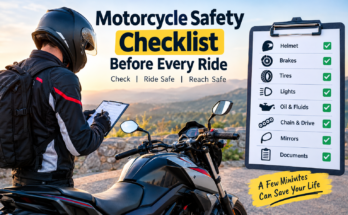
Before starting a journey, riders should check the tyres, brakes, lights, mirrors, and visible signs of damage. Tyres should have suitable pressure and sufficient tread, according to the manufacturer’s recommendations.
The chain, where fitted, should be checked and maintained according to the owner’s manual. Riders should also follow the recommended service schedule and pay attention to unusual noises, vibrations, leaks, or changes in braking performance.
Ignoring a mechanical problem can turn a minor issue into a serious safety concern. If something feels wrong, it is better to have the motorcycle inspected by a qualified mechanic rather than continue riding without understanding the problem.
In my opinion, regular maintenance is just as important as learning riding techniques. A well maintained motorcycle gives its rider a better chance of detecting problems before they become dangerous.
12. Getting Distracted While Riding
Distractions can affect even experienced riders, but beginners may find it particularly difficult to divide their attention between operating the motorcycle and monitoring traffic.
Using a mobile phone, adjusting music, looking at notifications, or concentrating on roadside activity can take attention away from important hazards.
Riders should keep their phones out of reach while moving and stop in a safe location if they need to make a call or check directions. They should also avoid riding when extremely tired, unwell, or under the influence of alcohol or impairing substances.
Staying mentally alert is essential because road conditions can change within seconds. A distracted rider may miss a traffic signal, overlook a vehicle entering the road, or react too late to sudden braking.
Developing a habit of concentrating fully on riding can make journeys safer and less stressful.
13. Carrying a Passenger Too Soon
Some beginners invite friends or family members to ride with them before they have developed sufficient experience. Carrying a passenger changes the motorcycle’s weight distribution, handling, acceleration, and braking behaviour.
A passenger may also move unexpectedly or affect the rider’s balance. These changes can make low speed manoeuvres and emergency stops more challenging.
Before carrying anyone, riders should become comfortable controlling their motorcycle alone and confirm that their licence, motorcycle, and local regulations permit carrying a passenger.
The motorcycle must have an appropriate passenger seat and footrests. Both people should wear suitable protective equipment, and the passenger should understand how to sit securely and follow the rider’s movements without sudden shifts.
Beginners should prioritise developing their own riding skills before adding this extra responsibility.
14. Becoming Overconfident After a Few Successful Rides
Confidence is useful when learning a new skill, but overconfidence can encourage poor decisions. A beginner who has completed several journeys without difficulty may start believing that accidents happen only to careless riders.
In reality, even familiar roads can present unexpected hazards. A vehicle may suddenly turn, an animal may enter the road, or loose material may appear around a corner.
Riders should continue practising, respect their limitations, and remain willing to learn from mistakes. Taking a recognised motorcycle safety course can help improve observation, braking, turning, and hazard awareness.
I believe the best riders are not those who assume they know everything. They are the ones who remain patient, prepare carefully, and keep improving their skills over time.
Practical Tips for Beginner Motorcycle Riders
Here are some simple habits that can help new riders avoid common motorcycle riding mistakes.
1. Wear a properly fitted, certified helmet and appropriate protective clothing on every ride.
2. Practise starting, stopping, turning, and braking in a safe area before riding in busy traffic.
3. Follow traffic laws and maintain a safe speed for the conditions.
4. Check your mirrors, blind spots, and surroundings before changing lanes.
5. Inspect your tyres, brakes, lights, and other essential components regularly.
6. Avoid distractions and never ride while impaired by alcohol or other substances.
7. Keep enough distance from vehicles ahead to respond safely.
8. Take breaks when tired and avoid riding beyond your current skill level.
9. Learn from qualified instructors and follow the guidance in your motorcycle’s owner’s manual.
10. Wear visible clothing when possible and use your motorcycle’s lights appropriately.
These habits may seem simple, but practising them consistently can make a meaningful difference to your safety.
Frequently Asked Questions
What is the most common motorcycle riding mistake beginners make?
One common mistake is underestimating the importance of protective gear, safe speed, and hazard awareness. Beginners should focus on developing safe habits before attempting more challenging rides.
How can a beginner become a better motorcycle rider?
A beginner can improve by practising regularly in suitable areas, learning from a qualified instructor, following traffic rules, and gradually developing essential skills such as braking, turning, and clutch control.
Is riding a motorcycle difficult for beginners?
Motorcycle riding requires coordination, observation, and practice. Most beginners need time to become comfortable with balance and controls. Learning gradually and practising in safe conditions can make the process easier.
How often should I check my motorcycle?
You should perform basic safety checks before riding and follow the manufacturer’s recommended maintenance schedule. Tyres, brakes, lights, and other essential components deserve particular attention.
Is it safe for beginners to ride in the rain?
Rain can make roads slippery and reduce visibility. Beginners should avoid challenging weather conditions while developing their skills. If riding becomes necessary, they should proceed cautiously and stop somewhere safe if conditions are unsuitable.
Conclusion
Understanding the common motorcycle riding mistakes beginners make is an important step towards becoming a safer and more responsible rider. From wearing proper safety gear and controlling speed to practising braking, following traffic rules, and maintaining the motorcycle, every small habit contributes to a safer riding experience.
In my view, motorcycle riding should never be treated as a competition. There is no need to prove your skills by riding fast or taking unnecessary risks. Real confidence comes from knowing your abilities, understanding your limitations, and making sensible decisions.
If you are a beginner, give yourself time to learn. Practise regularly, seek professional guidance, and pay attention to the road around you. Most importantly, remember that reaching your destination safely is always more important than reaching it quickly.
By avoiding these common mistakes and making safety a daily priority, you can build your riding skills, gain confidence, and enjoy motorcycle journeys more responsibly.