Riding a bike at night can be enjoyable, convenient, and sometimes necessary. Whether I am returning home from work, going for an evening ride, or traveling through quiet streets, I believe safety should always be my first priority. Riding after sunset is different from riding during the day because visibility becomes limited, traffic conditions can change, and it becomes harder to notice obstacles on the road.
Learning how to ride a bike safely at night is important for beginners as well as experienced riders. A few simple habits, such as using proper lights, wearing reflective clothing, maintaining a safe speed, and staying alert, can make a significant difference.
In my opinion, night riding is not necessarily dangerous when a rider prepares properly and makes sensible decisions. The key is to understand the risks and take practical steps to reduce them. In this article, I will explain the most useful night bike riding safety tips that can help riders enjoy a safer journey after dark.
1. Make Sure Your Bike Is Ready for Night Riding
Before starting a night ride, I believe it is important to check the condition of the bike. During the daytime, small mechanical problems may be easier to notice, but at night, they can become serious safety concerns.
Start by checking the brakes, tires, wheels, and lights. Both brakes should work properly, and the tires should have sufficient air pressure and good tread. Loose components, damaged cables, or worn tires can affect your control, especially on unfamiliar roads.
If you ride a motorcycle, inspect the headlight, tail light, brake light, turn signals, mirrors, and tire condition. If you ride a bicycle, check that your front light and rear light are securely attached and functioning correctly.
I would never recommend ignoring an unusual sound or a braking problem simply because the journey is short. A quick inspection before leaving home can help prevent unexpected trouble on the road.
2. Use Bright Front and Rear Lights
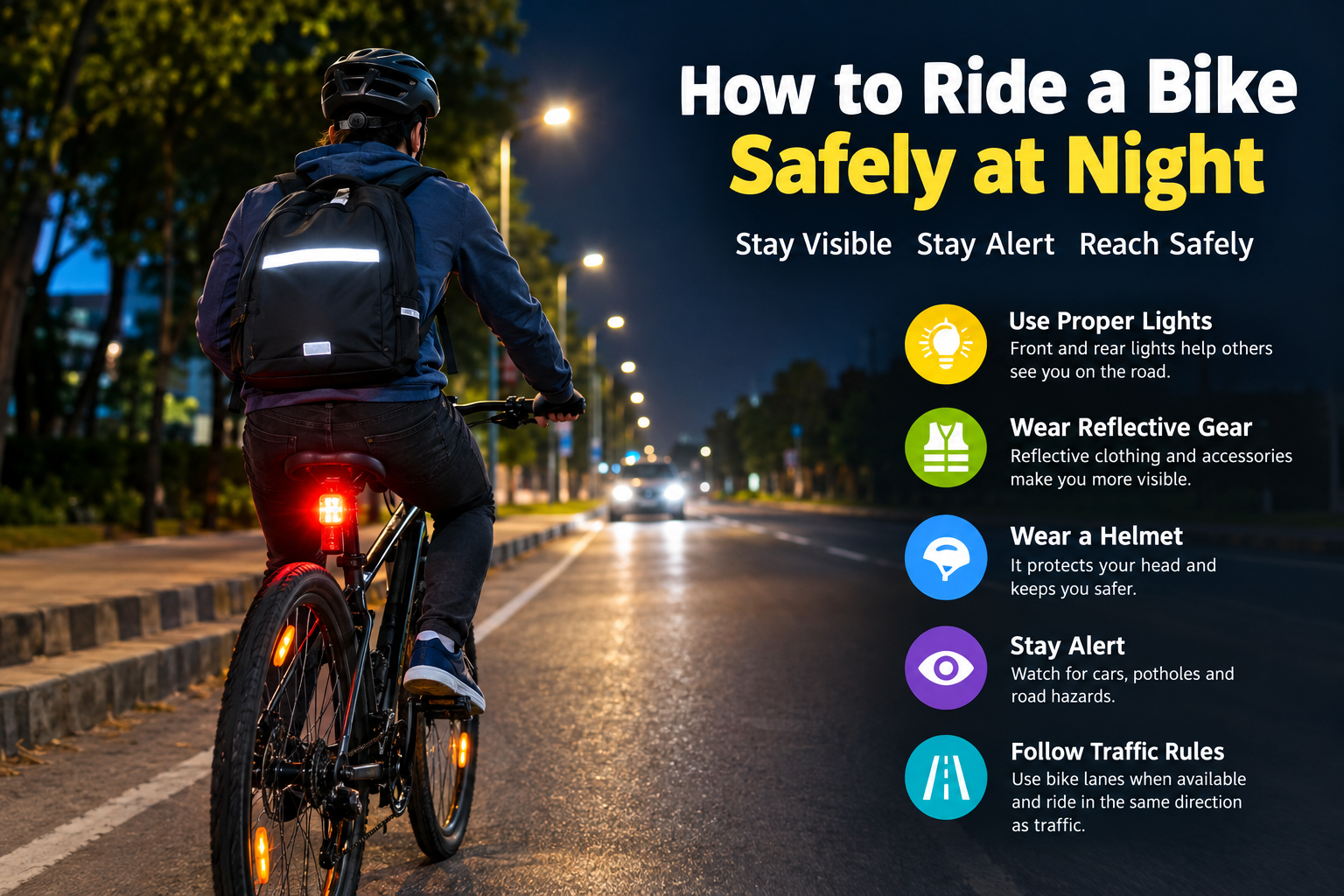
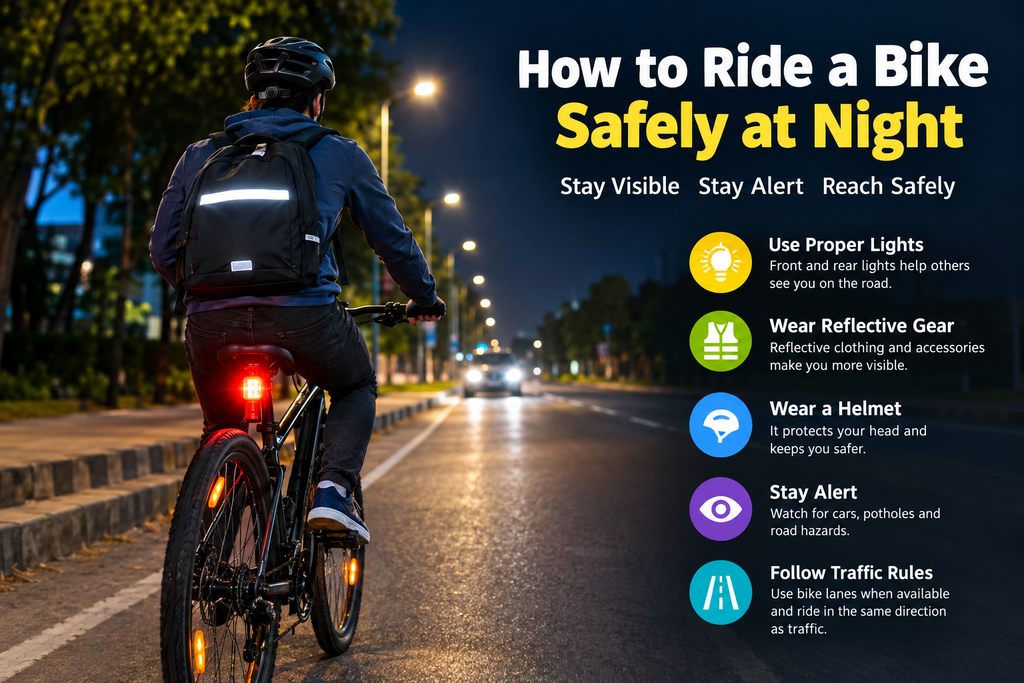
One of the most important tips for riding a bike safely at night is using suitable lighting. Darkness reduces visibility, making it harder for riders to see road hazards and for other road users to notice them.
A front light helps illuminate the road ahead, while a rear red light helps drivers approaching from behind recognize your position. Choose lights that are suitable for your type of bike and the roads you regularly travel.
For bicycle riders, a rechargeable front light with sufficient brightness for the riding environment is a practical option. A flashing rear light may improve visibility, although a steady light can also help drivers judge your position and distance. Follow local regulations regarding required lights and flashing modes.
Motorcycle riders should use a properly functioning headlight and keep all other lights in good condition. Never cover the headlight or use lighting that blinds approaching traffic.
I also recommend checking your lights before every night ride. A light that worked yesterday may have a drained battery today. Carrying a backup light or charging your equipment before leaving can provide additional peace of mind.
3. Wear Reflective and Visible Clothing
Dark clothing can make a rider difficult to see at night, particularly on roads with limited street lighting. This is why clothing plays an important role in night cycling and motorcycle safety.
I prefer clothing with bright colors and reflective details because they help other road users recognize a rider more easily. Reflective jackets, vests, ankle bands, gloves, and helmet details can improve visibility when headlights shine on them.
For bicycle riders, reflective elements on moving parts, such as the legs or pedals, can also help drivers identify movement. Motorcycle riders can choose protective jackets and trousers with reflective panels without sacrificing essential protection.
However, reflective clothing should never replace proper lights. Reflective materials work best when light reaches them, so combining lights with visible clothing provides a more complete approach.
The goal is simple: make yourself easier to see from the front, behind, and sides.
4. Reduce Your Speed in Darkness
Speed management is one of the most valuable night bike riding safety tips. When visibility is limited, you may not have enough time to react to a pothole, animal, pedestrian, stopped vehicle, or unexpected turn.
I believe it is better to reach your destination a little later than to ride too fast for the conditions. Choose a speed that allows you to stop safely within the distance you can clearly see.
On poorly lit roads, reduce your speed even further. Wet surfaces, loose gravel, fallen leaves, and uneven pavement can become difficult to recognize after dark.
Avoid sudden acceleration, hard braking, and sharp steering movements unless an emergency requires immediate action. Smooth control helps maintain stability and gives you more time to respond to changing conditions.
Remember that the posted speed limit is not always the safest speed. Weather, traffic, visibility, and road conditions should influence your decisions.
5. Keep a Safe Distance From Other Vehicles
Maintaining a safe following distance is especially important when riding at night. You may not immediately notice when a vehicle ahead slows down, stops, or changes direction.
I recommend leaving enough space to react without needing to brake suddenly. The appropriate distance depends on your speed, the road surface, visibility, and the braking performance of your bike.
Avoid following cars, buses, and trucks too closely. Large vehicles can block your view of the road ahead and may create blind spots around their sides and rear.
When traveling behind another vehicle, remember that its lights do not necessarily reveal every road hazard. A pothole or object may remain hidden until you are much closer.
Good spacing gives you more time to observe, make decisions, and respond calmly. It also reduces the chance of a collision if traffic suddenly slows.
6. Choose Familiar and Well Lit Routes
Route planning can make night riding safer and less stressful. Whenever possible, choose roads with good lighting, predictable traffic, clear road markings, and suitable space for your type of bike.
I would rather use a slightly longer route with better visibility than a shorter road with deep shadows, damaged surfaces, or heavy traffic.
If you are riding a bicycle, use designated cycling lanes or suitable cycling routes where available. Avoid roads where cycling is prohibited or where traffic conditions make riding unsafe.
Motorcycle riders should also be cautious on unfamiliar rural roads, narrow streets, and routes with limited lighting. Look for warning signs, roadworks, sharp bends, and intersections.
Before leaving, consider checking the weather and your planned route. Heavy rain, fog, or strong winds may make it wiser to delay the journey or choose another mode of transport.
7. Watch for Pedestrians, Animals, and Road Hazards
At night, pedestrians and animals can appear unexpectedly, particularly near residential streets, markets, parks, and rural areas.
Always scan the road ahead and pay attention to the edges of the road. Look for pedestrians crossing between parked vehicles, people walking without reflective clothing, and animals approaching the roadway.
Road hazards also deserve attention. Potholes, broken glass, loose stones, metal covers, and standing water can be difficult to identify in low light.
I recommend looking well ahead instead of focusing only on the small area directly in front of your bike. This gives you more time to identify hazards and choose a safe path around them.
Never swerve suddenly without checking surrounding traffic. If an obstacle cannot be avoided safely, slow down and make controlled movements whenever possible.
8. Avoid Distractions While Riding
Concentration is essential when learning how to ride a bike safely at night. Even a short distraction can cause you to miss an important change in traffic or road conditions.
Never text, browse your phone, or hold a phone conversation while riding. If you need to check directions, find a safe place away from moving traffic and stop first.
Avoid adjusting music, navigation settings, or other equipment while the bike is moving. Before leaving, set your route and check that your lights, mirrors, and other equipment are positioned correctly.
I also believe riders should avoid riding when they are extremely tired. Fatigue can reduce concentration, slow reaction times, and make it harder to judge distances.
Stay mentally alert throughout the journey. If you feel sleepy or cannot concentrate properly, stop somewhere safe and arrange another way to reach your destination.
9. Wear a Proper Helmet and Protective Gear
Protective equipment is an important part of night bike riding safety. A properly fitted helmet can reduce the risk of serious head injury in a crash.
For motorcycle riders, choose a certified helmet that fits securely and fastens correctly. Wear suitable riding gloves, protective footwear, and abrasion resistant clothing.
Bicycle riders should also use an appropriate helmet, along with gloves and clothing suited to the weather. A helmet should sit level on your head and remain secure without excessive movement.
Keep your helmet visor or eyewear clean and free from scratches that can scatter light or reduce visibility. A dirty visor may make approaching headlights particularly distracting.
Protective gear cannot prevent every injury, but it can provide an important layer of protection if something goes wrong.
10. Adjust Your Riding for Rain and Wet Roads
Wet roads require additional care at night because reflections from streetlights and headlights can make it harder to judge the road surface. Rain may also reduce tire grip and increase stopping distances.
When the road is wet, reduce your speed and increase your following distance. Avoid sudden braking, rapid acceleration, and sharp turns.
Be particularly careful around painted road markings, metal covers, oily patches, and standing water. These surfaces may offer less grip than dry pavement.
For bicycle riders, use suitable tires and ensure that the brakes work well in wet conditions. For motorcycle riders, maintain the bike according to the manufacturer’s recommendations and avoid riding through water when its depth or condition is uncertain.
If heavy rain, flooding, or poor visibility makes the journey unsafe, stop in a safe location and wait for conditions to improve.
11. Follow Traffic Rules and Communicate Clearly
Traffic rules help road users understand what others are likely to do. Following them is especially important at night, when visibility and reaction time may be limited.
Obey traffic signals, speed limits, lane markings, and local rules for bicycles or motorcycles. Signal turns early enough for others to respond, and check your surroundings before changing lanes.
Avoid weaving through traffic or passing vehicles in unsafe spaces. Never assume a driver has seen you simply because you can see the vehicle.
For bicycle riders, use hand signals when appropriate and safe. Motorcycle riders should use functioning turn signals and check their mirrors and blind spots before maneuvering.
Predictable riding makes it easier for other road users to understand your intentions and helps reduce unnecessary risks.
12. Carry Essential Items for Emergencies
A little preparation can make an unexpected problem easier to manage. Depending on the type and length of your journey, I recommend carrying a charged phone, identification, and basic emergency supplies.
Bicycle riders may benefit from a small repair kit, tire repair supplies, and a portable pump. Motorcycle riders should consider carrying the tools and emergency items appropriate for their bike and local conditions.
Keep emergency contact information accessible, and tell someone your planned route if you are traveling a long distance through an unfamiliar area.
If your bike breaks down at night, move away from active traffic if possible and choose a safe, visible location. Use your lights or reflective equipment to make yourself noticeable, and request roadside assistance when necessary.
Good preparation will not remove every risk, but it can help you respond more effectively when something unexpected happens.
Conclusion
Learning how to ride a bike safely at night is about preparation, awareness, and responsible decision making. From my point of view, the most important habits are using reliable lights, wearing visible protective clothing, controlling your speed, maintaining a safe distance, and staying focused on the road.
A well maintained bike and a carefully planned route can also make a meaningful difference. Always adjust your riding to the weather, traffic, and available visibility instead of assuming that familiar roads will remain safe after dark.
Night riding does not need to be stressful when you understand the risks and prepare properly. By following these practical night bike riding safety tips, you can improve your visibility, make better decisions, and reduce avoidable dangers.
The most important rule is to put safety before speed. Arriving safely is always more valuable than reaching your destination a few minutes earlier.