Introduction
Motorcycle mileage is one of the most important things I consider when thinking about the cost of daily transportation. Whether someone uses a motorcycle to travel to work, attend college, visit family, or complete everyday tasks, fuel expenses can become a regular burden. The good news is that improving motorcycle mileage does not always require buying a new bike or spending a lot of money on expensive accessories. In many cases, simple changes in riding habits can help a motorcycle use fuel more efficiently.
In my opinion, the way we ride a motorcycle is just as important as the condition of the engine. Sudden acceleration, unnecessary braking, incorrect gear selection, and poor maintenance can all affect fuel consumption. By developing smoother riding habits and taking proper care of the motorcycle, riders can often improve fuel economy and reduce their overall transportation costs.
In this guide, I will explain the best riding habits for better motorcycle mileage and share practical tips that beginners and experienced riders can use in their daily routines.
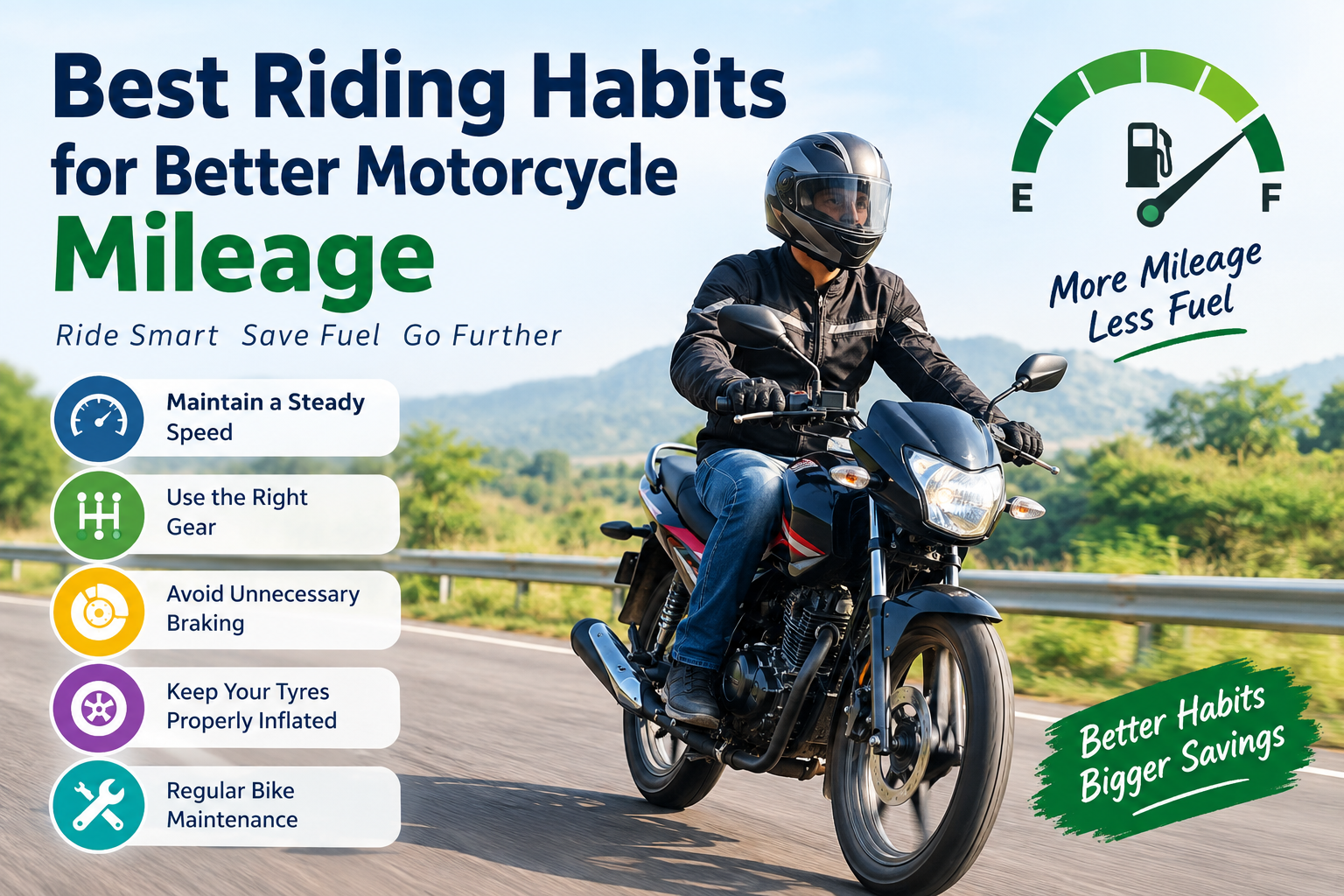
1. Maintain a Steady Riding Speed
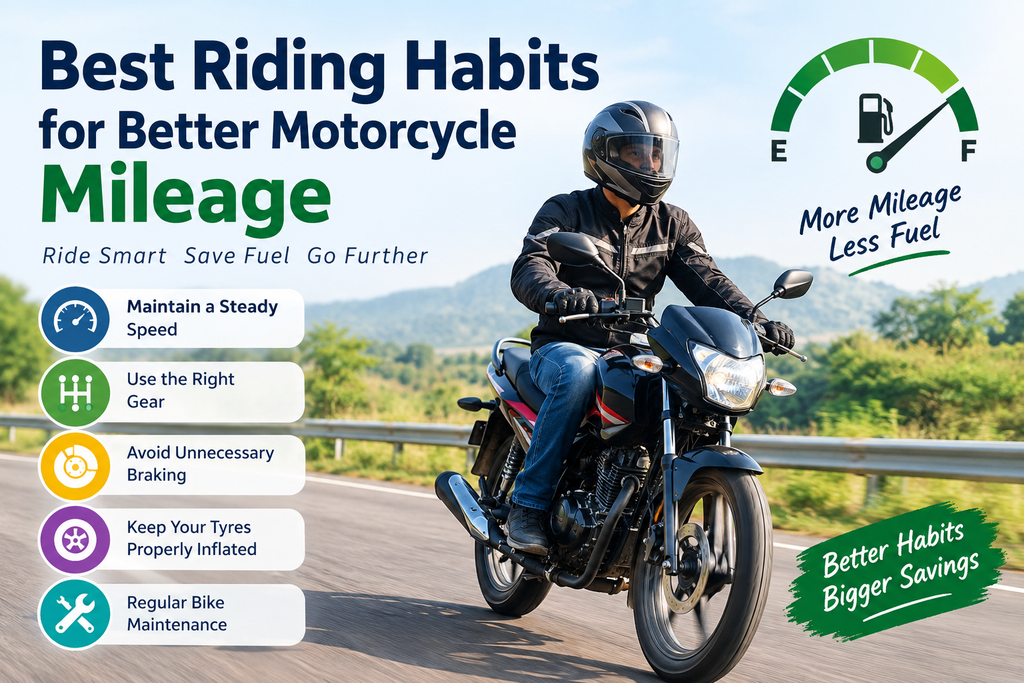
One of the simplest ways to improve motorcycle mileage is to maintain a steady and appropriate speed. Constantly accelerating and slowing down can make the engine work harder than necessary, especially when riding in traffic.
I believe smooth riding is more useful than repeatedly trying to reach a high speed and then slowing down. When the road is clear, maintaining a consistent speed within the legal limit can help reduce unnecessary fuel consumption.
However, the ideal speed depends on the motorcycle model, engine size, road conditions, traffic, and gear selection. There is no single speed that guarantees the best mileage for every motorcycle.
Try to look ahead while riding and anticipate changes in traffic. This allows you to adjust your speed gradually instead of making sudden movements. Always prioritize road safety and follow local traffic rules.
2. Accelerate Gradually
Hard acceleration is another habit that can increase fuel consumption. When a rider twists the throttle aggressively, the engine may need more fuel to produce the additional power.
I recommend accelerating smoothly whenever traffic and road conditions allow. Gradual acceleration helps maintain better control and can make the ride more comfortable for both the rider and passenger.
For example, when moving away from a traffic signal, increase speed progressively rather than opening the throttle fully. There is usually no practical benefit in racing away from every stop, particularly when the next signal or traffic jam is only a short distance ahead.
Smooth acceleration is especially helpful for daily commuters who frequently travel through busy streets.
3. Use the Correct Gear
Choosing the correct gear is important for both motorcycle performance and fuel efficiency. Riding in a gear that is too low for the current speed can keep engine revolutions unnecessarily high. On the other hand, using a gear that is too high at a very low speed can make the engine struggle.
My approach is to change gears according to the road, speed, engine response, and manufacturer’s recommendations. A motorcycle should accelerate without excessive engine noise or signs of strain.
Avoid forcing the engine to pull strongly in a high gear when the speed is too low. Downshift when needed, particularly before climbing a hill or overtaking another vehicle.
Learning the appropriate gear range for your motorcycle takes practice. Following the owner’s manual is a reliable starting point because different engines have different operating characteristics.
4. Avoid Unnecessary Braking
Frequent braking can waste energy that was used to bring the motorcycle up to speed. If a rider repeatedly accelerates and then brakes hard, fuel consumption may increase compared with a smoother riding pattern.
I find that looking farther ahead makes a significant difference in everyday riding. When approaching a red light, a slow vehicle, or a crowded junction, reduce speed gradually when it is safe to do so.
Keep a reasonable following distance and avoid sudden acceleration when traffic is clearly slowing down. This helps reduce unnecessary braking and makes the ride more predictable.
Of course, safety always comes first. Never avoid braking when it is needed to prevent a collision, and do not coast in neutral to save fuel. Maintain proper control of the motorcycle at all times.
5. Keep Motorcycle Tyres Properly Inflated
Tyre pressure is an important part of motorcycle maintenance that riders sometimes overlook. Underinflated tyres can increase rolling resistance, which means the engine may need more energy to keep the motorcycle moving.
I recommend checking tyre pressure regularly, especially before long journeys. Use a reliable pressure gauge and follow the pressure specifications provided by the motorcycle manufacturer. Check the pressure when the tyres are cold whenever possible.
Do not assume that every motorcycle requires the same tyre pressure. The correct values can vary by model, tyre type, load, and riding conditions.
Properly inflated tyres can also improve handling, stability, and tyre life. These benefits make tyre pressure checks worthwhile even when the main goal is better motorcycle mileage.
6. Maintain Your Motorcycle Regularly
Regular maintenance helps a motorcycle operate as intended. A poorly maintained engine may consume more fuel, perform inconsistently, or develop problems that become expensive to repair.
In my view, basic maintenance should never be ignored simply because the motorcycle still starts and runs. Some problems develop gradually and may not be obvious during a short ride.
Important maintenance tasks include changing engine oil at the recommended intervals, cleaning or replacing the air filter when necessary, inspecting the spark plug, checking the drive chain, and servicing the motorcycle according to the owner’s manual.
A dirty air filter, worn spark plug, poorly adjusted chain, or other mechanical issue may affect performance and fuel economy. However, the effect depends on the motorcycle and the condition of its components.
If mileage drops suddenly without an obvious reason, have the motorcycle inspected by a qualified mechanic rather than replacing parts without proper diagnosis.
7. Avoid Excessive Idling
Leaving a motorcycle running while parked wastes fuel without helping you reach your destination. Although motorcycles generally use less fuel at idle than while moving under load, unnecessary idling can still add to fuel consumption.
I suggest switching off the engine when you expect to remain stopped for a while and it is safe and practical to do so. Follow your motorcycle manufacturer’s recommendations, particularly if the engine needs a specific warm up procedure.
Modern motorcycles generally do not require long periods of idling to warm up. Follow the owner’s manual and ride gently until the engine reaches its normal operating temperature.
Never switch off the engine in a situation where doing so could affect your control, visibility, or ability to move safely.
8. Reduce Unnecessary Weight
Carrying unnecessary weight can increase the amount of energy required to move a motorcycle, particularly during acceleration and uphill travel.
I recommend keeping the motorcycle free from items that are not needed for the journey. Heavy tools, unused accessories, and other unnecessary loads can usually be removed.
However, do not remove essential safety equipment or carry less fuel than is appropriate for your journey just to reduce weight. If you regularly carry a passenger or luggage, ensure that the motorcycle is suitable for the load and that tyre pressure is adjusted according to the manufacturer’s guidance.
A sensible load can contribute to better handling as well as more efficient riding.
9. Plan Your Route Before Riding
Route planning is an underrated way to improve motorcycle fuel economy. A short route filled with congestion, frequent stops, and rough roads may use more fuel than a slightly longer route with smoother traffic flow.
Before leaving, consider traffic conditions, road quality, and the number of stops you need to make. Combining several errands into one trip can also reduce unnecessary travel.
I believe planning ahead saves both time and money. When possible, choose a safe route with fewer traffic interruptions rather than repeatedly changing direction or circling busy streets in search of a quicker way.
Do not take an unfamiliar or unsafe road simply because a navigation application estimates that it is shorter. Road safety and reasonable travel time should remain the main priorities.
10. Use the Recommended Engine Oil
Engine oil helps lubricate moving parts and reduce friction inside the engine. Using the oil grade recommended by the manufacturer supports proper engine operation and can help avoid unnecessary wear.
I would not recommend choosing engine oil based only on price or claims that it will dramatically increase mileage. The correct viscosity and specification matter more than advertising promises.
Check your owner’s manual for the required oil grade and change interval. Use a suitable product from a reputable supplier, and check the oil level according to the manufacturer’s instructions.
The wrong oil can affect engine performance or protection, depending on the motorcycle design and product used. Regular oil maintenance is a practical way to support long term reliability.
11. Keep the Drive Chain in Good Condition
For motorcycles with a chain drive, chain condition can affect how efficiently power reaches the rear wheel. A chain that is too tight, too loose, dry, or poorly maintained can create mechanical problems and increase wear.
I recommend inspecting the chain regularly and cleaning, lubricating, and adjusting it according to the owner’s manual. The correct slack varies between motorcycle models, so avoid relying on a universal measurement.
A damaged or badly worn chain and sprocket set should be inspected and replaced when necessary. A well maintained drive system helps support smooth performance and reliable operation.
Always switch off the engine before performing chain maintenance, keep hands clear of moving components, and ask a qualified mechanic for help if you are unsure.
12. Monitor Your Actual Motorcycle Mileage
One of the best ways to understand fuel consumption is to measure it instead of relying on assumptions. A rider may feel that a motorcycle is delivering poor mileage when the actual difference is small, or may overlook a gradual decline in fuel economy.
To calculate mileage, fill the tank safely, reset the trip meter, and ride normally. At the next refill, note the distance travelled and the amount of fuel added.
Divide the distance travelled by the litres of fuel used to calculate kilometres per litre.
For example, if you travel 240 kilometres and use 6 litres of fuel, your mileage is:
240 ÷ 6 = 40 kilometres per litre.
Repeat the measurement over several refills to get a more useful average. Traffic, weather, passenger weight, road conditions, and fuel measurement differences can affect individual results.
If mileage continues to decline, inspect riding habits and maintenance first, then seek professional help if needed.
13. Avoid Unnecessary Modifications
Some riders install aftermarket exhaust systems, change engine components, or make other modifications in the hope of increasing mileage. However, modifications do not automatically improve fuel efficiency.
In some cases, an unsuitable modification can affect engine tuning, emissions compliance, reliability, or performance. The outcome depends on the motorcycle and the changes made.
My advice is to focus on correct maintenance and sensible riding before spending money on products that promise unusually high fuel savings. Use parts that meet the manufacturer’s specifications and comply with local laws.
A standard motorcycle in good condition can often deliver dependable performance without unnecessary modifications.
Conclusion
Improving motorcycle mileage is mainly about building consistent habits and keeping the bike in good condition. Maintaining a steady speed, accelerating gradually, choosing the correct gear, avoiding unnecessary braking, and checking tyre pressure are practical steps that many riders can begin using immediately.
Regular servicing, correct engine oil, chain maintenance, sensible route planning, and measuring actual fuel consumption can also help identify opportunities for improvement.
In my opinion, the most effective approach is to make small changes and observe the results over time. Every motorcycle is different, so fuel economy will depend on the engine, road conditions, traffic, load, and maintenance history.
By riding smoothly, avoiding wasteful habits, and prioritizing safety, riders can work toward better motorcycle mileage, lower fuel expenses, and a more comfortable daily riding experience.