Introduction
Motorcycle fuel mileage is one of the most important things I consider when thinking about the overall cost of riding a bike. Whether someone uses a motorcycle for daily commuting, travelling to work, running errands, or visiting family, good fuel efficiency can help reduce monthly expenses. However, many riders eventually notice that their motorcycle starts consuming more petrol than usual. This situation can be frustrating, especially when fuel prices are high and every extra litre affects the budget.
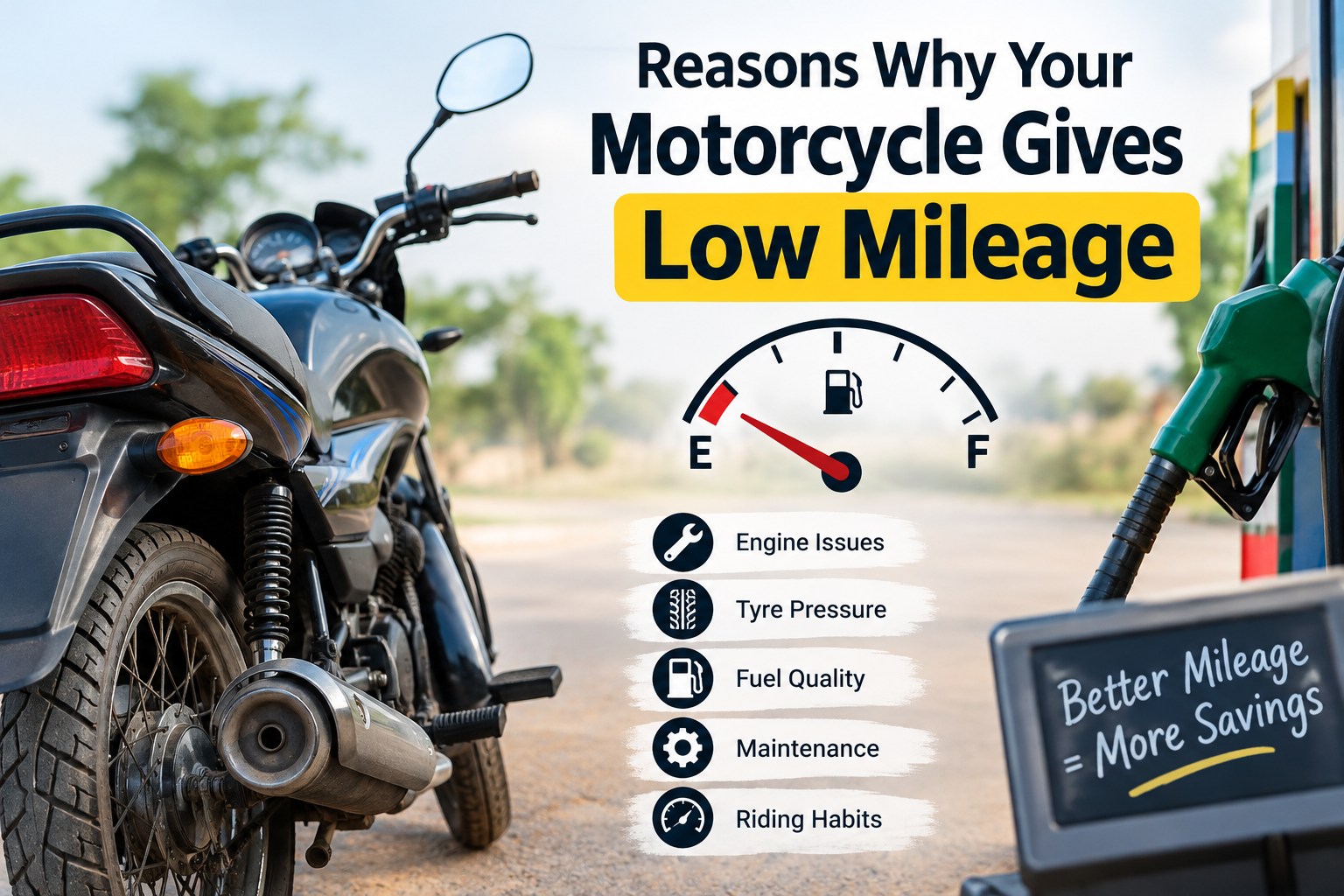
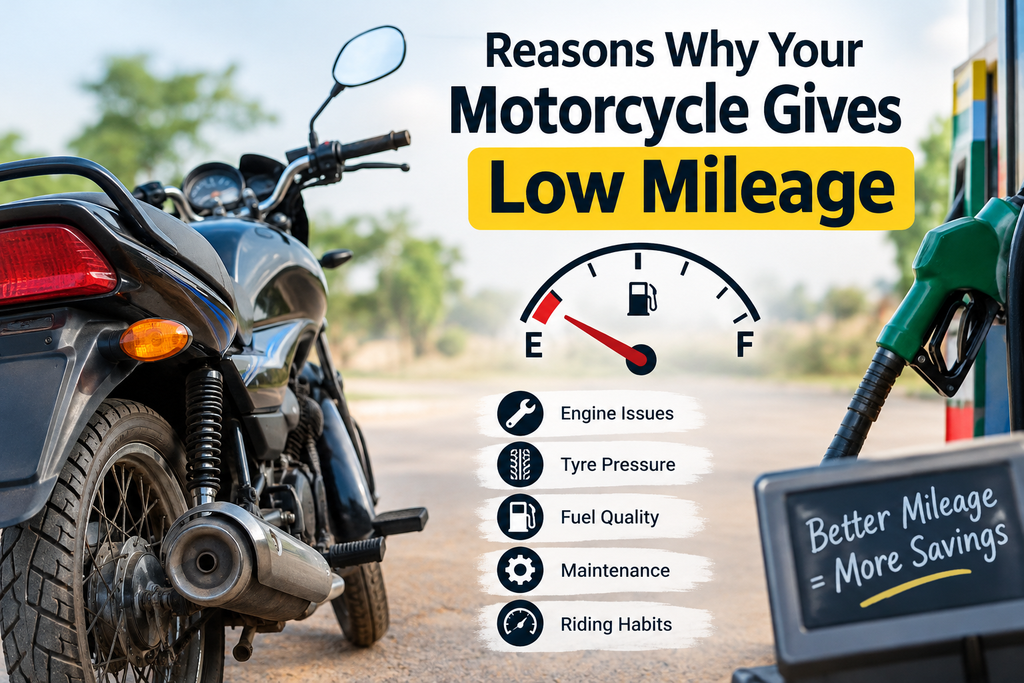
There are several reasons why a motorcycle gives low mileage. Sometimes the problem is related to riding habits, while in other cases, poor maintenance, incorrect tyre pressure, dirty air filters, or engine problems may be responsible. The good news is that many common causes of low motorcycle mileage can be identified and addressed without spending a lot of money.
In my opinion, the best approach is to understand how a motorcycle works and pay attention to small changes in its performance. A little regular maintenance and responsible riding can make a noticeable difference over time. In this article, I will explain the common reasons for low motorcycle mileage and discuss practical ways to improve fuel efficiency.
1. Incorrect Tyre Pressure
One of the most common reasons why a motorcycle gives low mileage is incorrect tyre pressure. Tyres are the only parts of a motorcycle that directly touch the road, so their condition has an important effect on riding performance and fuel consumption.
When tyre pressure is too low, the tyres create more rolling resistance. This means the engine must work harder to move the motorcycle forward. As a result, the bike may consume more petrol than expected.
Low tyre pressure can also affect handling, braking, and tyre life. On the other hand, filling tyres beyond the recommended pressure is not a good solution because it can reduce grip and affect riding stability.
I recommend checking tyre pressure regularly, especially before longer journeys. Always follow the pressure recommended by the motorcycle manufacturer, taking the specified riding conditions into account. A simple pressure gauge can help you maintain the correct level and avoid unnecessary fuel consumption.
2. Poor Riding Habits
Riding habits have a significant impact on motorcycle fuel efficiency. Even a well maintained motorcycle may deliver poor mileage if it is ridden aggressively.
Frequent rapid acceleration, sudden braking, and unnecessary high speeds can increase fuel consumption. When a rider repeatedly accelerates hard and then brakes immediately, the motorcycle uses energy that could have been saved through smoother riding.
I believe smooth riding is one of the easiest ways to improve motorcycle mileage without spending extra money. Accelerating gradually, maintaining a steady speed when road conditions allow, and anticipating traffic can help reduce unnecessary fuel use.
It is also important to use the correct gear. Riding in a gear that is too low for the speed can keep engine revolutions unnecessarily high. Similarly, forcing the engine to pull in a gear that is too high can cause strain.
The best approach is to change gears smoothly and follow the manufacturer’s recommendations. Safe and consistent riding can help improve fuel economy while making everyday journeys more comfortable.
3. A Dirty Air Filter
The engine needs an appropriate mixture of air and fuel to operate efficiently. The air filter helps prevent dust, dirt, and other particles from entering the engine.
When the air filter becomes clogged, airflow can be restricted. Depending on the motorcycle’s engine and fuel system, this may contribute to poor performance, increased fuel consumption, or difficulty accelerating.
This problem can be particularly relevant for motorcycles used on dusty roads or in areas with heavy traffic. Dust can accumulate more quickly in these environments, making regular inspection important.
I suggest checking the air filter according to the motorcycle manufacturer’s maintenance schedule. Some filters can be cleaned, while others must be replaced when dirty or damaged. It is important to use the correct maintenance method for the particular filter rather than washing every filter with water.
A clean, properly maintained air filter supports normal engine operation and may help restore fuel efficiency when restricted airflow is contributing to the problem.
4. Old or Incorrect Engine Oil
Engine oil reduces friction between moving engine components and helps control heat. When the oil becomes old, contaminated, or unsuitable for the motorcycle, engine performance may suffer.
Incorrect oil viscosity can also affect engine operation. Oil that does not meet the manufacturer’s specifications may provide unsuitable lubrication under certain operating conditions. In some cases, excessive friction or poor lubrication can contribute to reduced efficiency.
From my point of view, changing engine oil on time is an important part of motorcycle maintenance. It is usually better to follow the recommended service interval than to wait until the engine begins making unusual noises or showing other warning signs.
Always choose oil that meets the motorcycle manufacturer’s specifications, including the correct viscosity and required performance standards. For motorcycles with wet clutches, the oil must also be suitable for that type of system.
Changing engine oil will not solve every mileage problem, but proper lubrication supports engine health and can help prevent avoidable mechanical issues.
5. Worn or Incorrect Spark Plug
The spark plug plays an essential role in petrol engine combustion. It produces the spark that ignites the air and fuel mixture inside the combustion chamber.
A worn, damaged, incorrectly gapped, or unsuitable spark plug can cause incomplete combustion, rough idling, poor acceleration, and increased fuel consumption. In some situations, the engine may also misfire or become difficult to start.
If your motorcycle suddenly starts giving low mileage along with these symptoms, the ignition system deserves attention.
I recommend inspecting the spark plug according to the maintenance schedule and replacing it when necessary. The correct spark plug type and gap should always be used.
However, replacing the spark plug without checking the actual problem may not provide a solution. Ignition coils, wiring, fuel delivery, and other engine components can also cause similar symptoms. If the problem continues, a qualified mechanic can diagnose the underlying fault.
6. Dirty Carburettor or Fuel Injection Problems
The fuel delivery system controls how petrol reaches the engine. Older motorcycles commonly use carburettors, while many newer motorcycles use electronic fuel injection.
A dirty carburettor, blocked fuel passage, worn component, or incorrect adjustment can interfere with the fuel and air mixture. This may result in rough running, weak acceleration, difficult starting, or higher fuel consumption.
Fuel injected motorcycles can also develop problems involving injectors, sensors, fuel pressure, or other control components. These faults may affect how efficiently the engine uses petrol.
In my opinion, riders should avoid adjusting complicated fuel system components without the necessary knowledge. Incorrect adjustments can make the problem worse and may create additional repair costs.
Basic maintenance and clean fuel can help prevent some issues, but persistent fuel consumption problems should be checked by a trained mechanic. Proper diagnosis is especially important when the motorcycle releases unusual exhaust smoke, smells strongly of petrol, or runs irregularly.
7. Riding in Heavy Traffic
Traffic conditions are another reason why motorcycles sometimes deliver lower mileage than expected. Riding in crowded streets involves frequent stopping, starting, slowing down, and accelerating.
During these journeys, the engine may spend considerable time running without covering much distance. This means the motorcycle consumes fuel even when it is barely moving.
In many cities, short journeys through congested roads can produce noticeably different mileage from longer rides on open roads.
I think it is important to compare fuel economy under similar conditions. If you normally ride through heavy traffic, comparing your mileage with a figure achieved on an open highway may give a misleading impression.
Whenever practical and safe, planning your journey to avoid severe congestion can reduce unnecessary stopping and idling. However, traffic conditions cannot always be controlled, so some variation in fuel mileage is completely normal.
8. Carrying Unnecessary Weight
The total weight of a motorcycle and its rider affects how much energy is required to accelerate. Carrying heavy luggage or unnecessary items can increase the load on the engine, particularly during frequent stops and starts.
For example, a motorcycle used for daily commuting may carry tools, bags, accessories, and other items that are not needed for every journey.
Removing unnecessary weight is a simple step that may help reduce fuel consumption in certain riding conditions.
However, riders should never remove essential safety equipment or carry less fuel than needed for a safe journey just to improve mileage. Passengers and luggage should also remain within the motorcycle’s specified load limits.
The aim is to avoid unnecessary weight while keeping the motorcycle safe, practical, and comfortable to use.
9. A Loose or Poorly Lubricated Chain
The drive chain transfers power from the engine to the rear wheel on many motorcycles. If the chain is too tight, too loose, poorly lubricated, or badly worn, the drivetrain may not operate efficiently.
A dry or incorrectly adjusted chain can increase friction and create additional wear. A severely worn chain or damaged sprockets can also affect smooth power transmission.
I recommend inspecting the chain regularly and following the manufacturer’s guidance for cleaning, lubrication, and adjustment. Correct chain slack is particularly important because both excessive tightness and excessive looseness can cause problems.
If the chain has stiff links, unusual noises, significant wear, or damaged sprocket teeth, it may need professional attention or replacement.
Routine chain maintenance is relatively simple, but it should never be ignored. A properly maintained drivetrain supports smoother riding and may help prevent avoidable energy losses.
10. Worn Tyres and Incorrect Wheel Alignment
Tyre condition affects both fuel economy and road safety. Worn, damaged, or unsuitable tyres may influence rolling resistance, grip, and motorcycle handling.
Incorrect wheel alignment or problems with the wheels can also contribute to resistance or unstable handling. If a motorcycle feels as though it is pulling to one side, vibrating unusually, or struggling to roll freely, it should be inspected.
I believe tyre maintenance should never focus on mileage alone. Good traction and reliable handling are essential for safe riding, especially in wet weather or during emergency braking.
Use tyres of the correct size and type, maintain the recommended pressure, and replace tyres when they reach the manufacturer’s wear limits or show damage. Have alignment and wheel bearing problems checked by a qualified mechanic.
These steps help keep the motorcycle safe while addressing mechanical issues that may contribute to inefficient operation.
11. Fuel Quality and Fuel Leakage
Fuel quality can influence engine performance. Contaminated petrol or fuel that does not meet the manufacturer’s requirements may cause rough running or other problems.
Using the recommended fuel grade is important, particularly for motorcycles with specific engine requirements. Higher octane fuel is not automatically better for every motorcycle, so there is little reason to pay extra unless the manufacturer recommends it.
Fuel leakage is a more serious concern. A damaged fuel hose, loose connection, faulty seal, or leaking carburettor can waste petrol and create a fire hazard.
If you notice a strong petrol smell, visible leakage, or unexplained fuel loss, stop riding and arrange a safe inspection. Do not continue using a motorcycle with a suspected fuel leak.
Choosing a reliable fuel station and following the recommended fuel specifications are sensible habits, but mechanical leaks require proper repair rather than simply changing fuel brands.
12. Poor Maintenance and Engine Wear
A motorcycle requires regular servicing to keep its major components working correctly. When routine maintenance is neglected, several small problems may develop together and reduce fuel efficiency.
For example, a neglected air filter, worn spark plug, incorrectly adjusted chain, and unsuitable engine oil may all affect performance. In older motorcycles, low compression, worn piston rings, valve problems, or other internal engine faults may also contribute to poor mileage.
I suggest following the service schedule in the owner’s manual instead of waiting until a noticeable problem appears.
If your motorcycle has gradually started consuming more petrol despite proper basic maintenance, a mechanic may need to check engine compression, valve clearance, ignition timing where applicable, and fuel system operation.
Major engine repairs should only be considered after proper diagnosis. Guessing the cause and replacing parts unnecessarily can increase expenses without fixing the real problem.
How to Check Your Motorcycle’s Actual Mileage
Before deciding that your motorcycle has low mileage, it is useful to calculate its fuel consumption accurately.
Follow these simple steps:
- Fill the fuel tank to a consistent level using a safe and repeatable method.
- Reset the trip meter to zero.
- Ride normally under your usual conditions.
- Refill the tank using the same method and note the litres required.
- Record the distance travelled and calculate the average.
Use this formula:
Motorcycle mileage = Distance travelled in kilometres ÷ Fuel used in litres
For example, if you travel 180 kilometres and use 4 litres of petrol, your average is:
180 ÷ 4 = 45 kilometres per litre.
Repeat the test over several refills for a more reliable estimate. Small differences in filling level, traffic, weather, and riding conditions can affect individual readings.
Compare your results with the manufacturer’s expected figures while remembering that real world mileage often differs from laboratory or advertised figures.
Practical Ways to Improve Motorcycle Mileage
Once you identify the possible reason for low mileage, focus on practical improvements.
- Maintain the correct tyre pressure.
- Accelerate smoothly and avoid unnecessary sudden braking.
- Change gears appropriately and avoid excessive engine revolutions.
- Keep the air filter clean according to the manufacturer’s instructions.
- Replace engine oil and spark plugs when required.
- Keep the chain properly adjusted and lubricated.
- Avoid unnecessary luggage.
- Use the recommended fuel grade.
- Follow the regular motorcycle servicing schedule.
- Address unusual engine noises, misfires, leaks, and warning lights promptly.
These habits do not guarantee a specific increase in mileage because every motorcycle has different mechanical characteristics. However, they can help prevent avoidable fuel waste and keep the bike in better condition.
Frequently Asked Questions
Why is my motorcycle suddenly giving low mileage?
A sudden drop in mileage may be caused by incorrect tyre pressure, a dirty air filter, a worn spark plug, fuel system problems, a dragging brake, or changing traffic conditions. Check the simple maintenance items first, and arrange a professional inspection if the problem continues.
Does engine oil affect motorcycle mileage?
Yes, unsuitable or degraded engine oil can affect engine operation and lubrication. Use oil that meets the manufacturer’s specifications and replace it at the recommended intervals.
Can low tyre pressure increase fuel consumption?
Yes. Underinflated tyres generally create greater rolling resistance, which can increase the energy needed to move the motorcycle. Maintaining the recommended pressure also supports safer handling and tyre life.
Does riding at high speed reduce motorcycle mileage?
Often, yes. Higher speeds generally increase aerodynamic drag, requiring more engine power and fuel. The effect varies with motorcycle design, gearing, engine size, and road conditions.
How often should I service my motorcycle?
The correct interval depends on the motorcycle model, age, mileage, and operating conditions. Follow the owner’s manual and service schedule rather than relying on one interval for every motorcycle.
Conclusion
Understanding the reasons why your motorcycle gives low mileage can help you save money and maintain better riding performance. Problems such as low tyre pressure, aggressive riding, dirty air filters, worn spark plugs, incorrect engine oil, and neglected chain maintenance are worth checking when fuel consumption increases.
In my view, the best way to improve motorcycle mileage is to develop simple maintenance habits and pay attention to changes in performance. Regular servicing, smooth riding, and accurate fuel calculations can help you understand whether your motorcycle is operating efficiently.
If basic maintenance does not improve the situation, a qualified mechanic can investigate deeper engine or fuel system problems. Addressing the actual cause is usually more effective than spending money on unnecessary accessories or unverified mileage improvement products.
A properly maintained motorcycle is not only more economical but also more reliable and safer for everyday travel. By taking care of your bike and riding responsibly, you can reduce avoidable fuel expenses and enjoy a better ownership experience.