Introduction
Fuel prices can make daily motorcycle riding expensive, especially when we use our bikes for work, shopping, college, and other everyday activities. For many people, a motorcycle is an important part of daily life, so improving fuel efficiency can help reduce monthly expenses. The good news is that you do not always need expensive accessories or costly modifications to get better bike mileage.
In my opinion, the best way to improve bike mileage without spending much is to focus on regular maintenance, sensible riding habits, correct tyre pressure, and responsible fuel use. Small changes in our daily routine can make a noticeable difference over time. Although the results depend on the motorcycle model, engine condition, road conditions, and riding style, many riders can improve fuel efficiency by taking better care of their bikes.
In this article, I will explain some simple and practical bike mileage tips that riders can follow without putting unnecessary pressure on their budgets.
1. Maintain the Correct Tyre Pressure
One of the easiest ways to improve bike mileage is to check tyre pressure regularly. Tyres that do not have the recommended pressure can increase rolling resistance, making the engine work harder to move the motorcycle.
When tyre pressure is too low, the bike may consume more fuel, and the tyres can wear unevenly. Underinflated tyres can also affect handling and braking performance. On the other hand, overinflating tyres is not a good solution because it may reduce grip and make the ride less comfortable.
I recommend checking tyre pressure at regular intervals, preferably when the tyres are cold. Follow the pressure values provided in your motorcycle owner’s manual or on the manufacturer’s recommended label.
This simple habit costs little or nothing and can help maintain fuel efficiency, tyre life, and riding safety.
2. Ride at a Steady Speed
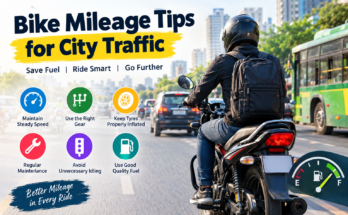
Riding habits have a significant effect on motorcycle fuel consumption. Frequent acceleration, sudden braking, and unnecessary speeding can waste fuel, particularly in busy city traffic.
When I think about saving fuel, maintaining a steady and reasonable speed is one of the most practical habits to develop. Instead of accelerating aggressively after every traffic signal, increase speed smoothly and pay attention to the movement of vehicles ahead.
Try to anticipate traffic conditions so that you can slow down gradually instead of braking suddenly. This approach reduces unnecessary changes in speed and can make riding more comfortable.
However, steady riding does not mean travelling too slowly in every situation. The goal is to ride at a safe speed suitable for the road, traffic, and motorcycle.
Avoiding unnecessary acceleration is a simple way to improve bike mileage without spending extra money.
3. Keep the Air Filter Clean
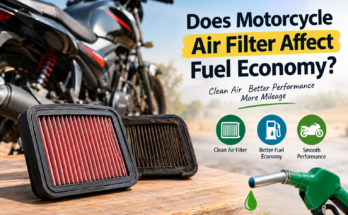
The air filter prevents dust and dirt from entering the motorcycle engine. When it becomes clogged, airflow may be restricted, potentially affecting engine performance and fuel consumption.
This issue can be especially important for riders who travel on dusty roads or use their motorcycles every day.
Checking the air filter during routine maintenance is a sensible practice. Depending on the motorcycle model, the filter may need cleaning or replacement according to the manufacturer’s instructions. Some filters are designed to be cleaned, while others must be replaced rather than washed.
I would not recommend spending money on unnecessary performance filters when the standard filter is working correctly. A properly maintained original filter is usually a sensible choice for everyday riding.
Keeping the air filter in good condition can support efficient engine operation and help prevent avoidable performance problems.
4. Change Engine Oil on Time
Engine oil reduces friction between moving engine parts and helps protect them from excessive wear. Using the correct oil and changing it at the recommended interval can support smooth engine operation.
Old, degraded, or unsuitable oil may affect engine performance. However, changing the oil more frequently than necessary does not automatically improve mileage.
Check your motorcycle manual for the recommended oil grade and service interval. Different motorcycles require different oil specifications, so choosing oil only because it is cheap or popular may not be the best decision.
In my view, following the manufacturer’s maintenance schedule is a better way to control expenses than experimenting with different products.
Regular oil changes can help maintain engine health, reduce the risk of avoidable repairs, and support consistent fuel efficiency over the long term.
5. Avoid Carrying Unnecessary Weight
Extra weight can increase the energy required to move a motorcycle, especially when accelerating or riding uphill. Although a small amount of additional weight may have only a limited effect, carrying heavy items unnecessarily can contribute to higher fuel consumption.
Take a few minutes to check what you normally carry in your bike’s storage compartment or luggage. Remove unnecessary tools, heavy accessories, and other items that you do not need for your journey.
This does not mean removing essential safety equipment or carrying less than you need. Keep important items such as required documents and basic emergency equipment with you.
For daily commuting, travelling with only necessary belongings is a simple habit that may help improve fuel economy while keeping the motorcycle practical to use.
6. Check the Chain and Keep It Properly Adjusted
The motorcycle chain transfers power from the engine to the rear wheel. A chain that is too tight, excessively loose, dirty, or poorly lubricated can affect performance and may increase mechanical wear.
Check the chain according to the maintenance instructions for your motorcycle. Clean and lubricate it using a suitable product at the recommended interval, particularly after riding in dusty or wet conditions.
Chain adjustment is also important. An excessively tight chain can place additional stress on components, while an overly loose chain can become noisy or even come off in dangerous circumstances.
If you are unsure how to adjust the chain correctly, ask a qualified mechanic to check it. Proper adjustment is more important than attempting a quick adjustment without the necessary knowledge.
A clean, correctly adjusted, and lubricated chain helps the motorcycle operate as intended and can prevent expensive repairs.
7. Avoid Long Periods of Idling
Leaving a motorcycle engine running while waiting for someone or sitting in a parking area consumes fuel without moving the bike.
If you expect to stop for a while in a safe place, switching off the engine can help avoid unnecessary fuel use. There is no need to restart the engine repeatedly during very short stops, so use reasonable judgment and follow your motorcycle manufacturer’s guidance.
In heavy traffic, stopping and starting may be unavoidable. Instead of worrying about every second of fuel consumption, focus on practical decisions that reduce unnecessary idling when it is safe to do so.
Small savings from individual trips may seem insignificant, but regular habits can add up over weeks and months.
Never switch off the engine in a situation where doing so could compromise your control of the motorcycle or create a safety risk.

8. Use the Correct Gear at the Right Time
For motorcycles with manual transmissions, selecting an appropriate gear can help the engine operate efficiently. Riding in a gear that is too low for the speed may cause unnecessarily high engine revolutions, while using a gear that is too high can make the engine struggle.
I recommend learning how your motorcycle responds at different speeds. Shift smoothly and avoid forcing the engine to work harder than necessary.
Do not change gears according to speed alone because engine design, road gradients, traffic, and load also matter. When climbing a hill or accelerating to avoid a hazard, the bike may need a lower gear.
The goal is to keep the engine running comfortably within its normal operating range rather than constantly pushing it to high revolutions.
Good gear selection improves ride quality and may help reduce unnecessary fuel consumption.
9. Follow a Simple Maintenance Schedule
Skipping routine maintenance may seem like a way to save money, but neglected problems can eventually become more expensive.
Spark plugs, air filters, engine oil, brakes, and other components should be inspected according to the motorcycle manufacturer’s service recommendations.
A worn spark plug or an engine that is not running correctly can affect performance and fuel efficiency. Similarly, brakes that drag because of a mechanical problem may create unnecessary resistance.
You do not need to replace every component simply because someone recommends it. Ask the mechanic to explain the problem and distinguish necessary repairs from optional upgrades.
Keeping a basic record of service dates and maintenance expenses can help you identify recurring problems and plan your budget.
Preventive maintenance is often more economical than waiting until a minor issue develops into a major repair.
10. Plan Your Daily Trips Wisely
The way you plan your journeys can influence fuel consumption. Short trips involving frequent stops, cold starts, and heavy traffic may use more fuel per kilometre than longer journeys under suitable conditions.
When possible, combine nearby errands into one trip instead of making several separate journeys. Check your route before leaving and choose a practical road that avoids unnecessary detours.
However, the shortest route is not always the most fuel efficient. A slightly longer road with smoother traffic may sometimes be more economical than a short route with constant congestion.
Avoid speeding simply to save travel time, and do not use unfamiliar shortcuts that create safety risks.
Better trip planning can reduce unnecessary riding, save time, and help control daily fuel expenses without requiring any mechanical modification.
11. Measure Your Bike Mileage Correctly
Before trying to improve fuel economy, it helps to know how much fuel your motorcycle actually uses.
One simple method is to fill the tank to a consistent level, reset the trip meter, and ride normally. At the next refill, note the distance travelled and the amount of fuel needed to return to the same level.
Use this formula:
Bike mileage = Distance travelled ÷ Fuel consumed
For example, if your motorcycle travels 240 kilometres using 6 litres of fuel, its average is:
240 ÷ 6 = 40 kilometres per litre.
For more reliable results, repeat the measurement over several refills and use similar filling conditions. Small differences in fuel pump cut-off or tank level can affect an individual calculation.
Record your mileage along with riding conditions and maintenance changes. This can help you determine whether your new habits are making a genuine difference.
Avoid comparing one trip directly with another when traffic, road conditions, weather, and passenger weight are very different.
12. Do Not Spend Money on Unnecessary Modifications
Many riders look for accessories or engine modifications that promise better mileage. However, expensive products do not always provide the advertised results.
Before buying a fuel-saving device, consider whether it has credible evidence supporting its claims and whether it is suitable for your motorcycle.
Avoid modifying the fuel system, changing engine components, or using unsuitable additives simply because someone claims they will dramatically improve fuel economy.
Incorrect modifications may reduce reliability, affect emissions, or create safety problems. They may also cost more than the fuel savings they promise.
In my opinion, maintaining the standard motorcycle properly and developing good riding habits should come before spending money on upgrades.
If your bike suddenly starts consuming much more fuel than usual, have it inspected rather than trying random products.
Conclusion
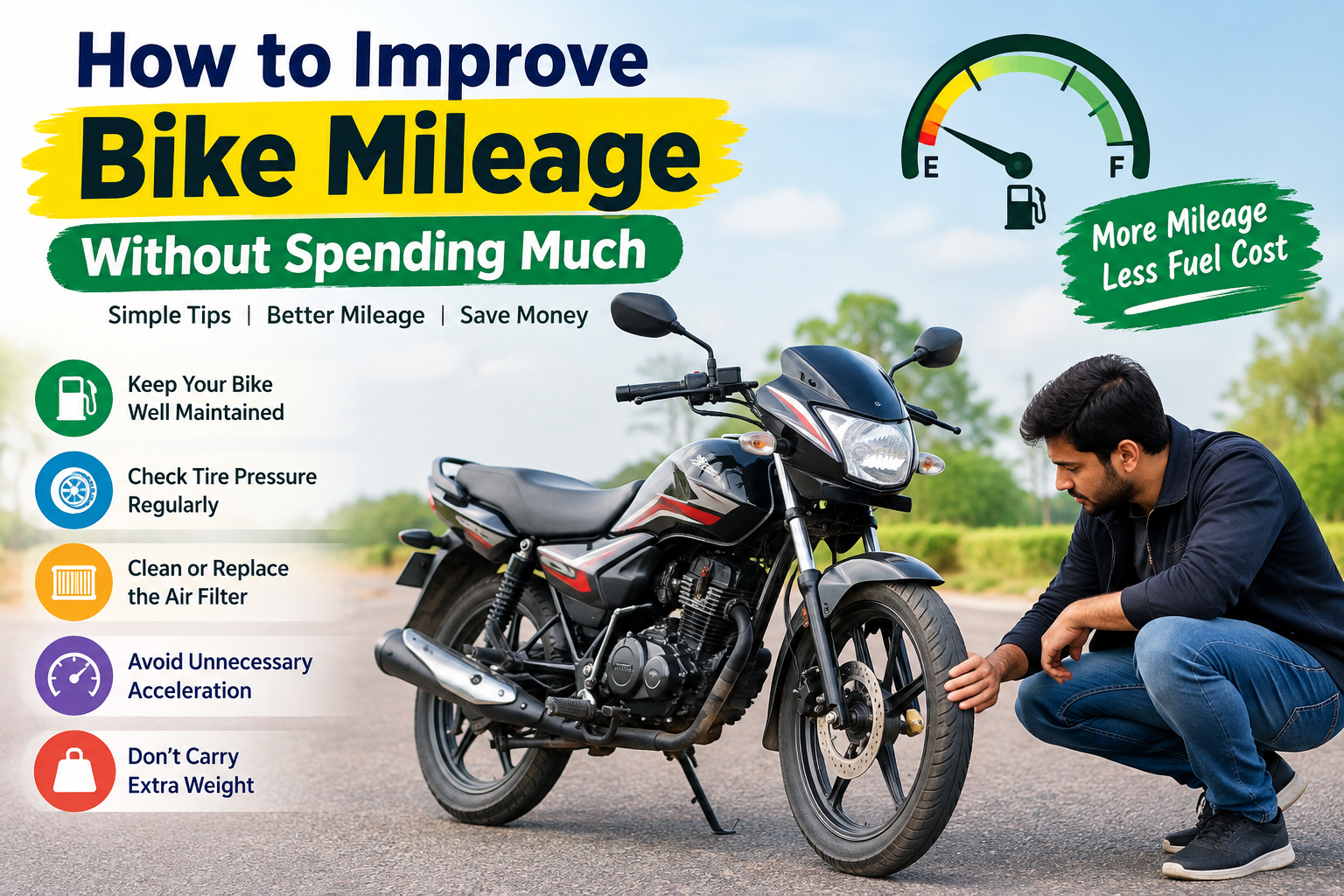
Improving bike mileage without spending much is possible when you focus on practical habits and regular maintenance. Correct tyre pressure, smooth acceleration, timely oil changes, a clean air filter, proper chain care, and sensible trip planning can all contribute to better fuel efficiency.
You do not need to change everything at once. Start with simple checks, ride more smoothly, and measure your fuel consumption over several refills. These steps will help you understand which changes work best for your motorcycle.
Remember that actual mileage depends on the bike model, engine condition, road conditions, traffic, load, and riding style. No single tip can guarantee a specific improvement, and maintenance should always follow the manufacturer’s recommendations.
The most useful approach is to avoid unnecessary expenses, take care of your motorcycle, and make fuel conscious decisions every day. With consistency and a little attention, you can work toward better bike mileage, lower fuel costs, and a more reliable motorcycle without putting too much pressure on your budget.
Frequently Asked Questions
1. How can I improve bike mileage without spending money?
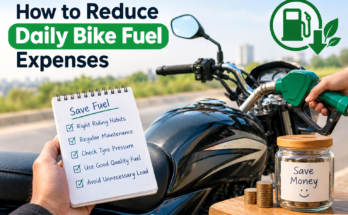
You can begin by maintaining a steady speed, avoiding aggressive acceleration, removing unnecessary weight, reducing avoidable idling, and planning your trips efficiently.
2. Does tyre pressure affect bike mileage?
Yes. Incorrect tyre pressure, especially pressure that is too low, can increase rolling resistance and affect fuel efficiency. Always follow the recommended pressure for your motorcycle.
3. Can engine oil improve motorcycle mileage?
Using the correct engine oil and changing it at the recommended interval helps maintain engine performance. The wrong oil or neglected maintenance may affect operation, but more frequent oil changes do not automatically produce better mileage.
4. How often should I check my bike’s air filter?
Follow the maintenance schedule in your motorcycle manual. Check it more frequently if you regularly ride in dusty conditions, and clean or replace it according to the filter manufacturer’s instructions.
5. Why is my bike giving low mileage suddenly?
Possible reasons include low tyre pressure, a dirty air filter, a worn spark plug, chain problems, dragging brakes, fuel system issues, or changes in riding conditions. If mileage drops suddenly or the engine runs poorly, have the motorcycle inspected by a qualified mechanic.
6. Does riding slowly always save fuel?
No. Fuel efficiency depends on engine load, gear selection, traffic, and road conditions. Riding smoothly at a safe, suitable speed is generally more useful than simply trying to travel as slowly as possible.