Introduction
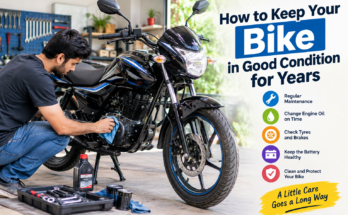
A motorcycle is more than just a way to travel. For many people, it is an affordable, convenient, and enjoyable way to get around every day. However, keeping a motorcycle in good condition requires regular care and attention. In my opinion, basic motorcycle maintenance is one of the most important habits every rider should develop because it helps improve safety, reduce repair costs, and extend the life of the bike.
Many motorcycle problems begin with small issues that riders ignore, such as low engine oil, underinflated tires, loose chains, or weak batteries. These problems may not seem serious at first, but they can become expensive if left unattended.
The good news is that you do not need to be a professional mechanic to perform basic motorcycle maintenance. With a simple checklist and a little knowledge, you can inspect your motorcycle regularly and identify problems before they become more serious.
In this guide, I will explain the most important motorcycle maintenance tasks that every beginner should know.
1. Check the Engine Oil Regularly
Engine oil is essential for keeping a motorcycle engine running smoothly. It lubricates moving parts, reduces friction, and helps control heat inside the engine. When the oil level becomes too low or the oil deteriorates, engine components may experience excessive wear.
I recommend checking the engine oil regularly, especially before long rides. Park the motorcycle on level ground and follow the owner’s manual to check the oil correctly. Some motorcycles have a dipstick, while others use a sight glass.
Make sure the oil level stays within the recommended range. If the oil looks unusually dirty or the motorcycle has reached its scheduled oil change interval, replace it according to the manufacturer’s instructions.
Always use the recommended oil grade and specification for your motorcycle. Avoid overfilling because excessive oil can also cause problems.
2. Inspect the Motorcycle Tires
Tires are among the most important parts of a motorcycle because they provide grip and help maintain stability on the road. Poor tire condition can increase the risk of losing control, particularly during braking, cornering, or riding on wet surfaces.
As part of your basic motorcycle maintenance checklist, inspect both tires for cuts, cracks, punctures, bulges, and uneven wear. Check the tread depth and replace tires when they reach the manufacturer’s wear limit.
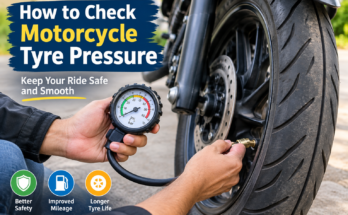
Tire pressure is equally important. Underinflated tires can affect handling and increase heat buildup, while overinflated tires may reduce the contact area with the road.
Check tire pressure when the tires are cold and use the pressure recommended in your motorcycle’s owner’s manual. Do not rely only on visual inspection because a tire can look normal even when its pressure is incorrect.
3. Check the Brakes
A motorcycle’s braking system must work properly before every ride. Even if your bike appears to be running perfectly, worn brake pads or low brake fluid can create a serious safety risk.
Inspect the brake pads for excessive wear and check the brake discs for unusual damage. If your motorcycle uses drum brakes, follow the manufacturer’s inspection procedure.
Test both the front and rear brakes before starting your journey. The brake levers and pedals should feel normal and provide consistent braking performance.
For motorcycles with hydraulic brakes, check the brake fluid level and look for signs of leakage. Use only the fluid specification recommended by the manufacturer.
If you notice grinding noises, a spongy brake lever, reduced braking power, or fluid leakage, avoid riding until the problem has been inspected and repaired by a qualified mechanic.
4. Inspect and Lubricate the Motorcycle Chain
The motorcycle chain transfers power from the engine to the rear wheel. If the chain becomes too loose, too tight, dirty, or dry, it can wear out quickly and affect the motorcycle’s performance.
I believe chain maintenance is one of the easiest ways to protect important motorcycle components. Check the chain slack according to the measurement and procedure specified in your owner’s manual.
Clean the chain using a suitable motorcycle chain cleaner and a soft brush. After cleaning, apply the correct chain lubricant if your motorcycle uses a lubricated chain system.
Inspect the chain and sprockets for rust, damaged links, unusual wear, or hooked sprocket teeth. Adjust the chain only according to the manufacturer’s instructions.
Never clean or lubricate a chain while the engine is running. Keep your hands, clothing, and tools away from moving components to prevent serious injuries.
5. Check the Battery Condition
A motorcycle battery supplies electrical power for starting and operating essential systems. A weak battery may cause slow starting, dim lights, or electrical problems.
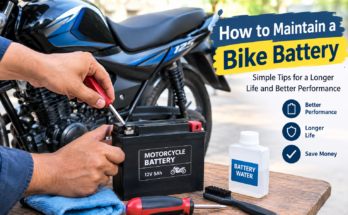
Inspect the battery terminals for corrosion and make sure the connections are secure. If your motorcycle has a conventional battery that requires maintenance, check its condition according to the manufacturer’s instructions. Do not open a sealed maintenance free battery.
If the motorcycle remains unused for long periods, the battery may gradually lose its charge. A compatible motorcycle battery maintainer can help keep it charged when the bike is stored.
Look for cracks, swelling, leaks, or damaged cables. Replace a battery that is no longer reliable with a suitable model.
Always follow the manufacturer’s safety instructions when working with a battery, and avoid short circuits around its terminals.
6. Inspect the Air Filter
The air filter prevents dust and other particles from entering the engine. A dirty air filter can restrict airflow and affect engine performance, fuel efficiency, and acceleration.
Check the air filter at the intervals recommended in your owner’s manual. Motorcycles ridden on dusty roads may need more frequent inspections than those used mainly on clean city streets.
Some filters can be cleaned, while others must be replaced. The correct method depends on the filter material and motorcycle design.
Avoid washing or applying oil to a filter unless its manufacturer specifically permits that procedure. Installing the wrong type of filter or fitting it incorrectly may allow dirt to enter the engine.
7. Test All Lights and Indicators
Working lights help you see the road and allow other road users to recognize your movements. Headlights, brake lights, turn signals, and tail lights should be checked regularly.
Switch on the motorcycle and test the headlight on its available settings. Check both turn signals and make sure the indicators flash correctly.
Apply each brake separately and confirm that the brake light responds. Inspect the tail light and any other required lighting equipment.
If a light does not work, check the bulb, fuse, wiring, or relevant electrical connections. Modern motorcycles may use integrated LED units that require a different repair procedure.
Never ignore a faulty brake light or turn signal because these components play an important role in preventing road accidents.
8. Check the Cables, Controls, and Suspension
The throttle, clutch, and other controls should operate smoothly. A throttle that sticks or a clutch that does not engage properly can make a motorcycle difficult to control.
Before riding, check that the throttle returns smoothly to its resting position. Inspect the clutch lever and follow the manufacturer’s instructions for checking its free play.
Look for damaged cables, loose handlebars, and unusual movement in the suspension. Check the front forks for oil leakage and inspect the rear shock absorber for visible damage.
If you notice unusual knocking sounds, excessive bouncing, steering problems, or leaking suspension components, arrange a professional inspection.
Do not attempt complicated suspension repairs without the proper tools and experience.
9. Check Coolant and Other Fluids
Some motorcycles use liquid cooling systems that require regular coolant inspections. If your motorcycle is liquid cooled, check the coolant level using the method described in the owner’s manual.
Never remove a radiator cap while the engine is hot because pressurized coolant can cause serious burns. Allow the engine to cool completely before performing the appropriate checks.
Depending on the motorcycle, you may also need to inspect clutch fluid, hydraulic brake fluid, or other specified fluids.
Use the correct fluid type and follow the recommended replacement schedule. Do not mix different fluids unless the manufacturer confirms that they are compatible.
Air cooled motorcycles do not require engine coolant, so your maintenance checklist should match your motorcycle’s design.
10. Keep the Motorcycle Clean
Cleaning your motorcycle is not only about appearance. Regular cleaning makes it easier to spot oil leaks, damaged parts, loose fasteners, and corrosion.
Use motorcycle safe cleaning products, a soft sponge, and clean water. Avoid directing high pressure water at electrical connectors, wheel bearings, seals, or sensitive components.
After washing, dry the motorcycle properly and check the brakes before riding. Water on brake components may temporarily reduce braking performance.
Clean the chain separately with an appropriate product and lubricate it as recommended. Avoid spraying lubricant onto brake discs, brake pads, or tires because contamination can reduce grip and braking effectiveness.
A clean motorcycle is often easier to inspect and maintain.
11. Follow a Regular Motorcycle Maintenance Schedule
The best way to maintain a motorcycle is to follow a consistent schedule rather than waiting for something to go wrong.
Before every ride, check the tires, brakes, lights, throttle, and any obvious leaks or loose parts.
Every week, or according to your riding frequency, inspect the chain, battery connections, fluid levels, and general motorcycle condition.
At the intervals specified by the manufacturer, change the engine oil, inspect the air filter, service the brakes, and check important mechanical components.
Record maintenance dates, mileage, parts replaced, and repairs completed. Keeping these records helps you remember upcoming service requirements and may be useful when selling the motorcycle.
Remember that maintenance intervals vary according to the model, riding conditions, age, and mileage of the bike.
12. Common Motorcycle Maintenance Mistakes to Avoid
One common mistake is ignoring small warning signs. Unusual noises, fluid leaks, starting difficulties, and changes in handling should never be overlooked.
Another mistake is using incorrect engine oil, chain lubricant, coolant, or tire pressure. Always check your owner’s manual instead of relying on general advice that may not suit your motorcycle.
Some riders also delay scheduled servicing because the bike still appears to run normally. However, several important problems can develop without obvious symptoms.
Finally, avoid performing repairs beyond your knowledge or available equipment. Incorrect repairs to brakes, wheels, steering, or suspension can compromise your safety.
When you are uncertain, consult a qualified motorcycle mechanic.
Conclusion
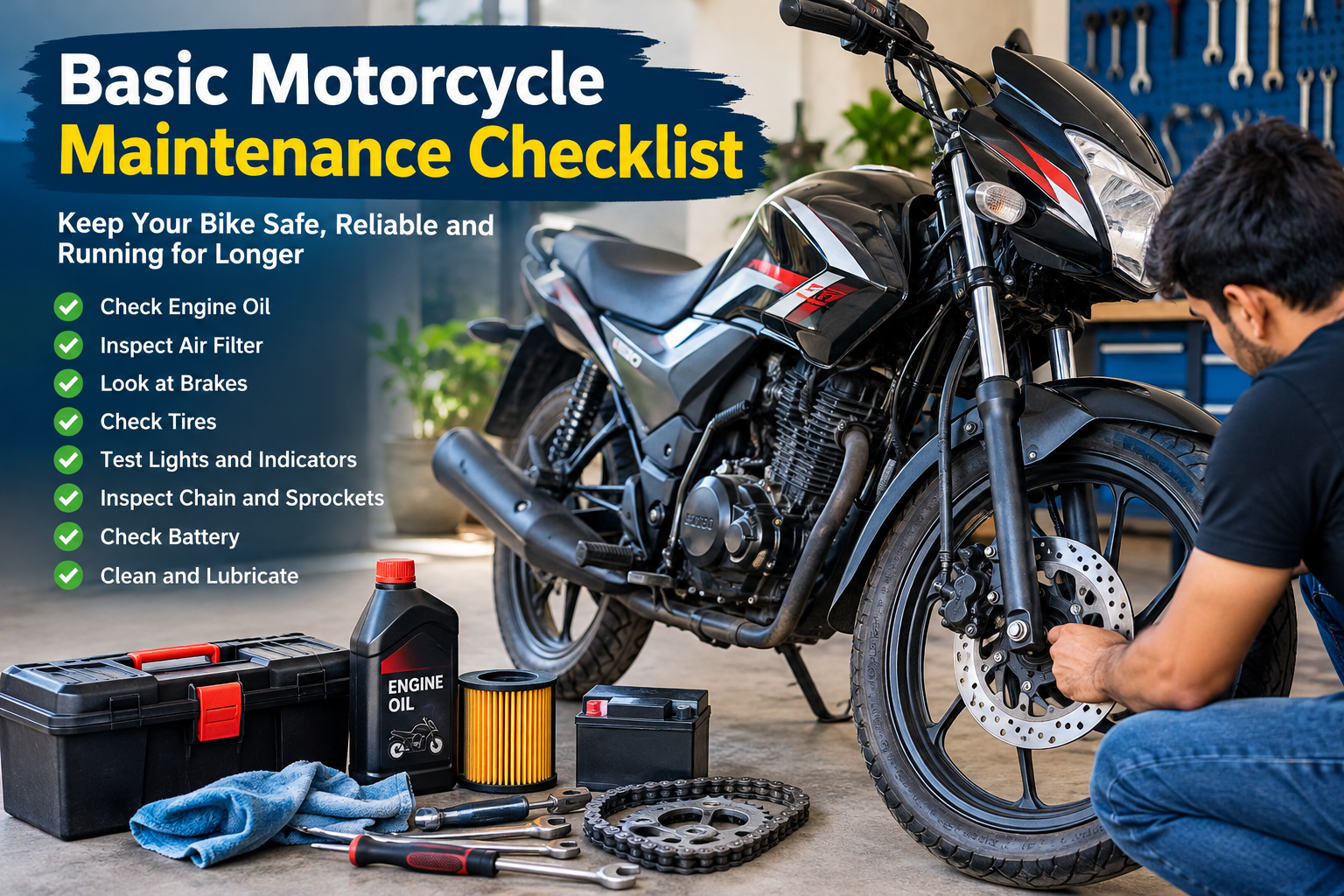
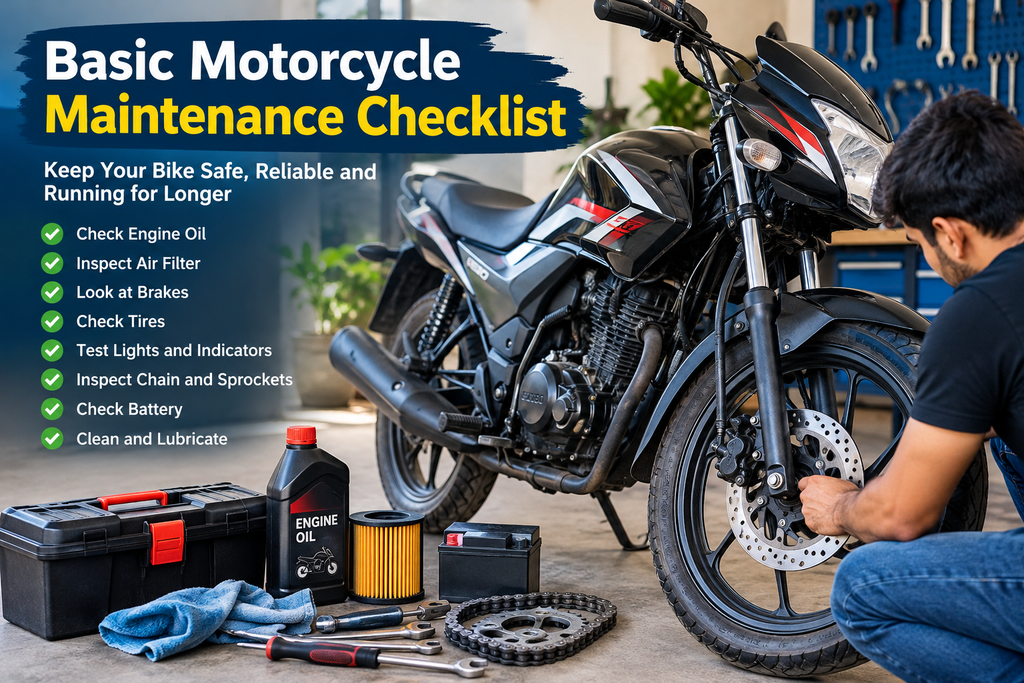
A basic motorcycle maintenance checklist can help every rider keep their bike safer, more reliable, and ready for everyday use. In my view, the most important habits are checking engine oil, maintaining correct tire pressure, inspecting brakes, cleaning and lubricating the chain, checking the battery, and testing all lights.
These simple tasks do not require advanced mechanical knowledge, but they do require consistency and attention to detail. By inspecting your motorcycle regularly and following the manufacturer’s service schedule, you can identify problems earlier and potentially reduce unnecessary repair expenses.
Make motorcycle maintenance part of your regular routine rather than treating it as something to do only when a problem appears. A well maintained motorcycle is easier to trust on daily journeys and can provide dependable service for many years.