Introduction
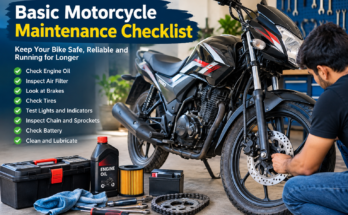
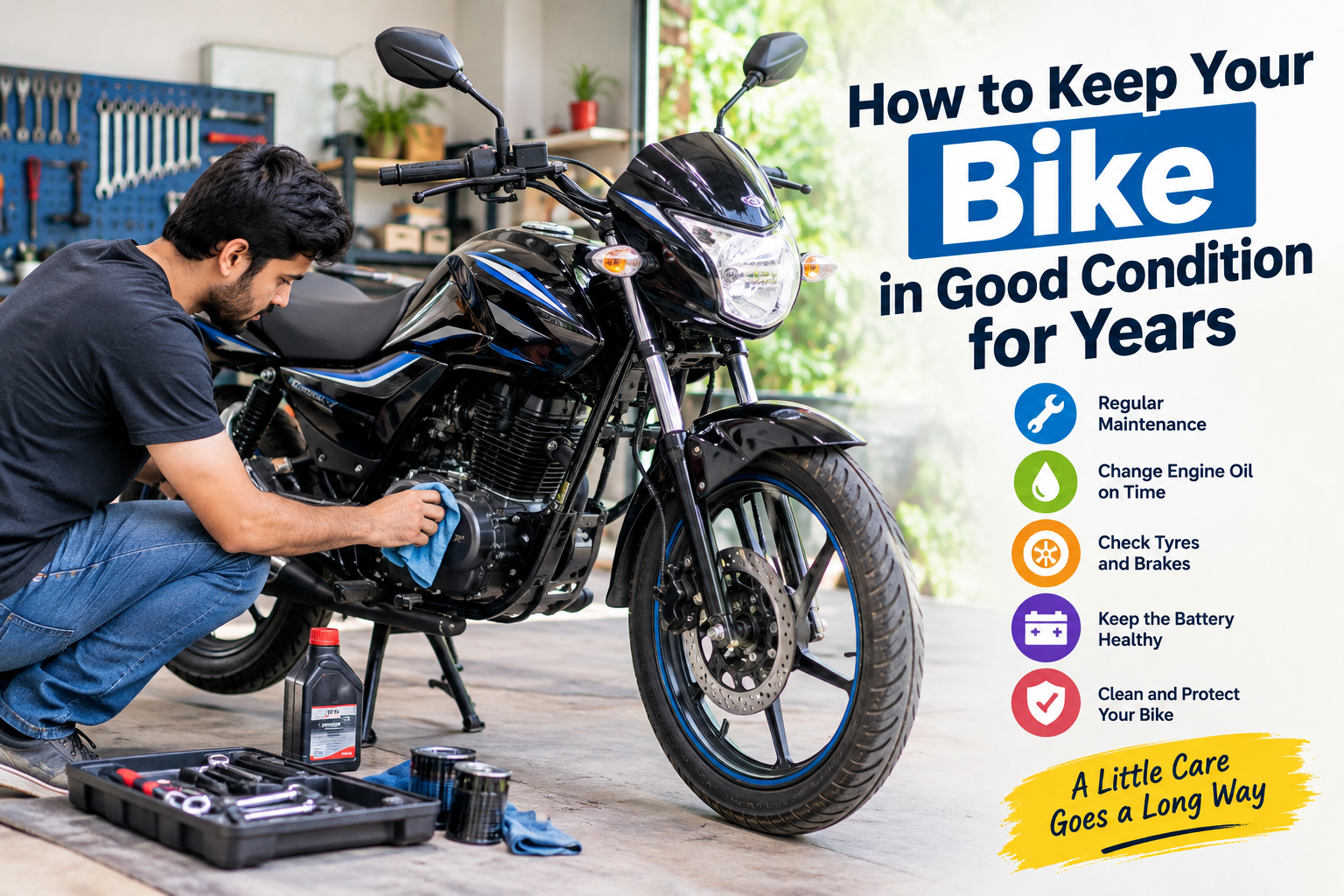
Keeping a bike in good condition for years is not difficult when you follow a regular maintenance routine. Whether you use your motorcycle for daily commuting, travelling with friends, or running everyday errands, proper care can help it remain reliable, comfortable, and safe. In my opinion, the secret to keeping a bike in good condition is to pay attention to small problems before they become expensive repairs.
Many riders focus only on fuel and riding, forgetting that a motorcycle needs regular inspection and maintenance. Dirty engine oil, worn tyres, a loose chain, and a weak battery can affect performance over time. Fortunately, most basic maintenance tasks are simple when you understand what to check and when to do it.
In this article, I will explain practical motorcycle maintenance tips that can help you extend your bike’s lifespan, reduce repair costs, improve fuel efficiency, and enjoy a better riding experience for years.
1. Follow a Regular Bike Maintenance Schedule
The first step in keeping your bike in good condition is following a consistent maintenance schedule. Waiting until something stops working can lead to unnecessary expenses and safety problems.
I recommend checking your motorcycle regularly, even when it appears to be running perfectly. Inspect the tyres, brakes, lights, chain, and visible parts for signs of wear or damage. These simple checks take only a few minutes and can help you identify problems early.
You should also follow the maintenance schedule provided in your motorcycle owner’s manual. Different motorcycles require different service intervals depending on their engine design, age, and riding conditions.
Keep a record of oil changes, repairs, filter replacements, and professional servicing. This makes it easier to remember upcoming maintenance and understand your bike’s condition over time.
2. Change Engine Oil on Time
Engine oil plays an important role in motorcycle performance and longevity. It lubricates moving engine components, reduces friction, helps control heat, and carries away some contaminants.
Old or insufficient oil may not protect the engine properly. Over time, this can contribute to increased wear and expensive mechanical problems.
Always use the oil grade and specification recommended by your motorcycle manufacturer. Check the oil level according to the instructions in your owner’s manual and inspect the engine for leaks.
Change the engine oil at the recommended interval. Some motorcycles also require an oil filter replacement during servicing. If your bike uses a separate transmission or other lubricated components, follow the manufacturer’s specific instructions.
I believe timely oil changes are among the most valuable maintenance habits because they help protect one of the most important and expensive parts of a motorcycle.
3. Keep the Air Filter Clean
The air filter prevents dust, dirt, and other particles from entering the engine. When the filter becomes clogged, airflow can decrease and engine performance may suffer.
A dirty air filter can sometimes contribute to poor acceleration, increased fuel consumption, or irregular engine operation. However, these symptoms can have other causes as well.
Check your air filter at the intervals recommended by the manufacturer, especially if you frequently ride on dusty roads. Clean reusable filters according to their instructions and replace disposable filters when necessary.
Never use excessive compressed air or unsuitable cleaning products on a filter that could be damaged by them.
A clean and properly maintained air filter helps your motorcycle receive the airflow it needs for efficient operation.
4. Check Tyre Pressure and Condition
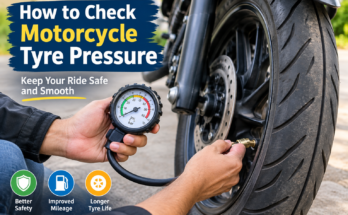
Tyres are essential for motorcycle safety because they provide the contact between your bike and the road. Incorrect tyre pressure can affect handling, braking, tyre wear, and fuel efficiency.
Check tyre pressure regularly when the tyres are cold. Use the pressure specified by the manufacturer for your motorcycle and riding conditions rather than relying only on the maximum pressure printed on the tyre.
Inspect both tyres for cracks, cuts, punctures, uneven wear, and embedded objects. Also check the tread depth and replace tyres when they reach the manufacturer’s recommended limit or show signs of damage.
Avoid riding with damaged tyres or pressure that is significantly below the recommended level.
In my view, checking tyres is one of the easiest ways to improve motorcycle safety. A few minutes of inspection can help prevent problems during everyday journeys.
5. Clean and Lubricate the Motorcycle Chain
For motorcycles equipped with a chain drive, chain maintenance is necessary for smooth power delivery and long service life.
A dry, dirty, or excessively loose chain can wear out faster and may affect the riding experience. A chain that is too tight can also damage drivetrain components.
Inspect the chain regularly and adjust its slack according to your motorcycle’s owner’s manual. Clean it with a suitable chain cleaner and apply the lubricant recommended for your chain type.
If your motorcycle has an O ring, X ring, or similar sealed chain, use products compatible with that design. Check the sprockets for damaged or unusually worn teeth as well.
Always perform chain cleaning and adjustment with the engine switched off. Never run the engine to spin the rear wheel while cleaning or lubricating the chain, because this can cause serious hand injuries.
Proper chain care helps reduce unnecessary wear and keeps the drivetrain working smoothly.
6. Maintain the Motorcycle Battery
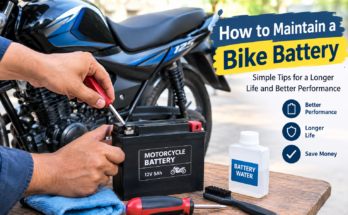
A healthy battery helps your motorcycle start reliably and supports its electrical system. Battery problems can become frustrating when the bike refuses to start unexpectedly.
Check the battery terminals for corrosion, looseness, or damage. Keep connections secure and clean them using an appropriate method when necessary. If your motorcycle has a conventional battery that requires maintenance, follow the manufacturer’s instructions for checking electrolyte levels.
For maintenance free batteries, do not open the sealed case. If the battery becomes weak, have its condition and charging system tested.
When storing your motorcycle for an extended period, use a compatible battery maintainer if recommended. Avoid leaving electrical accessories switched on when the engine is not running.
Extreme temperatures and long periods without use can affect battery life. Regular checks can help you identify a weak battery before it causes starting difficulties.
7. Inspect the Brakes Regularly
Brakes are among the most important safety components on any motorcycle. Good brake maintenance helps you control your speed and respond to unexpected situations.
Check the brake pads for wear and inspect the discs for visible damage. If your motorcycle has drum brakes, follow the manufacturer’s instructions for inspection and adjustment.
For hydraulic brakes, check the fluid level and look for leaks around the master cylinder, hoses, and calipers. Replace brake fluid according to the recommended service interval because it can absorb moisture over time.
Pay attention to warning signs such as unusual noises, excessive lever travel, vibration, or reduced braking performance.
If you notice a serious brake problem, do not continue riding until it has been inspected and repaired. Brake repairs should be handled by a qualified mechanic if you are unfamiliar with the system.
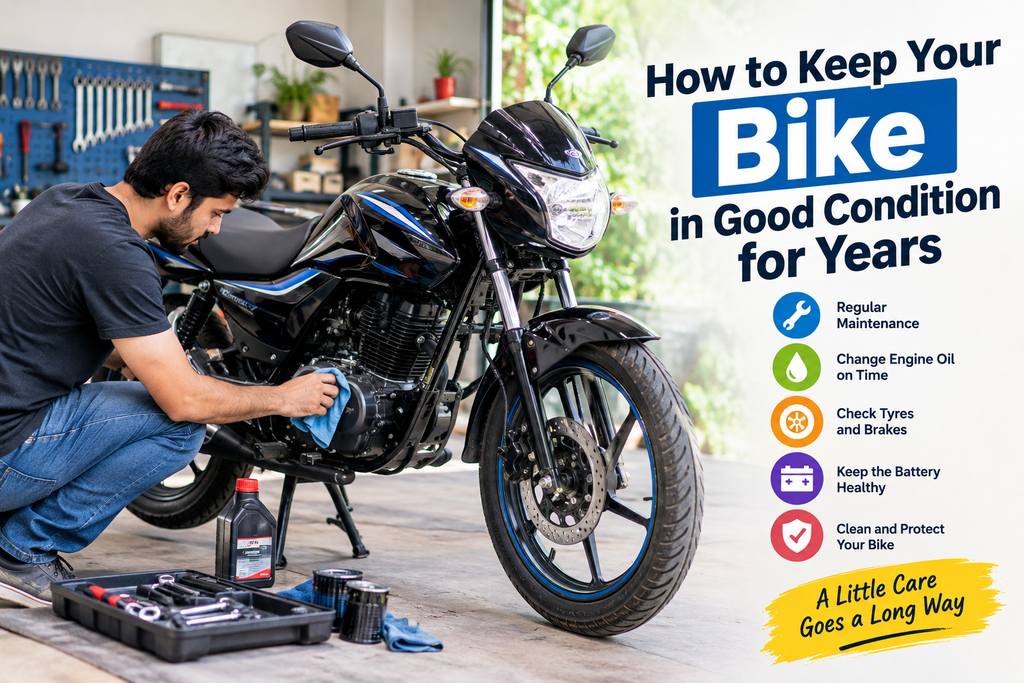
8. Wash Your Bike and Protect Its Finish
Regular cleaning helps your motorcycle look better and makes it easier to notice leaks, cracks, and damaged parts. Dust, mud, road salt, and moisture can gradually affect metal components and paintwork.
Use motorcycle suitable cleaning products, a soft cloth, and clean water. Avoid spraying high pressure water directly at electrical connections, wheel bearings, chain seals, and other sensitive areas.
After washing, dry the motorcycle properly and lubricate the chain if required. Keep cleaning products away from brake discs, brake pads, tyres, and other surfaces where they could reduce grip or braking performance.
If you ride in rainy weather, clean away accumulated dirt and dry exposed metal surfaces when practical. Store the bike in a covered, ventilated place whenever possible.
A clean motorcycle is not only attractive but also easier to inspect and maintain.
9. Check Lights, Cables, and Other Components
A motorcycle contains many smaller components that deserve attention. Headlights, indicators, brake lights, mirrors, cables, and switches all contribute to safe riding.
Before a journey, confirm that the lights work properly and the mirrors provide a clear view. Inspect visible wiring for loose connections or damaged insulation.
Check the clutch and throttle controls for smooth operation. The throttle should return freely when released. If a control sticks, becomes unusually stiff, or behaves unpredictably, have it inspected before riding.
Look for loose fasteners, damaged rubber parts, leaking fluids, and unusual noises. Do not tighten critical fasteners randomly because some require specific torque settings.
Regular inspection helps you identify small faults before they affect reliability or safety.
10. Ride Smoothly and Responsibly
Your riding habits have a major effect on motorcycle lifespan. Aggressive acceleration, harsh braking, excessive engine speed, and riding with an overloaded motorcycle can increase wear on important components.
Allow the engine to operate according to the manufacturer’s recommendations after starting, especially in cold conditions. Avoid prolonged idling when it is unnecessary, and do not rev the engine excessively while it is cold.
Use the correct gear for your speed and riding conditions. Accelerate smoothly, anticipate traffic, and maintain a safe following distance.
Avoid carrying more weight than your motorcycle is designed to handle. Excessive loads can affect suspension performance, braking, tyre wear, and stability.
Smooth riding can reduce unnecessary stress on the engine, transmission, brakes, and tyres while making everyday journeys more comfortable.
11. Store Your Motorcycle Properly
Proper storage is especially important when you do not ride your motorcycle every day. Leaving it exposed to rain, sunlight, dust, and moisture for long periods can damage its appearance and some components.
Whenever possible, park your bike in a dry, secure, and ventilated garage or covered area. Use a breathable motorcycle cover if you need to protect it outdoors, and make sure the bike is dry before covering it.
For long periods of storage, follow the manufacturer’s recommendations for battery care, fuel system protection, tyre pressure, and lubrication. Use a stable parking stand suitable for your motorcycle.
Before returning to the road, inspect the tyres, brakes, battery, lights, and fluid levels. Do not assume that a motorcycle is ready to ride simply because it was working well before storage.
12. Visit a Qualified Mechanic When Needed
Basic maintenance can save money, but some jobs require professional knowledge and specialized tools. Engine repairs, valve adjustments, suspension work, electrical faults, and complicated brake problems may need an experienced mechanic.
Schedule professional servicing according to the owner’s manual. Seek help promptly if you notice persistent overheating, oil leaks, unusual engine noises, starting problems, or a sudden change in handling.
When choosing a mechanic, look for someone familiar with your motorcycle’s make and model. Keep records of repairs and ask which parts were replaced and when the next service is due.
Trying to save money by ignoring a serious fault can eventually cost much more than fixing it early.
Conclusion
Keeping your bike in good condition for years depends on regular maintenance, careful riding, and timely repairs. You do not need to be a professional mechanic to take care of many everyday maintenance tasks.
Check the tyres, inspect the brakes, change engine oil on schedule, maintain the chain, protect the battery, and keep the motorcycle clean. Follow the manufacturer’s service recommendations and consult a qualified mechanic whenever a problem is beyond your experience.
In my opinion, consistency matters more than occasional intensive maintenance. Small habits performed regularly can help improve reliability, reduce avoidable repair costs, and extend the useful life of your motorcycle.
If you treat your bike with care, pay attention to warning signs, and maintain it according to the owner’s manual, you can enjoy safer and more dependable rides for many years to come.