Checking motorcycle tyre pressure is one of the simplest ways to improve riding safety, maintain good fuel efficiency, and extend tyre life. Many riders focus on engine oil, brakes, and chain maintenance but forget to check their tyres regularly. In my opinion, tyre pressure deserves the same attention because tyres are the only parts of a motorcycle that remain in direct contact with the road.
Incorrect tyre pressure can affect handling, braking, stability, and overall riding comfort. The good news is that checking motorcycle tyre pressure does not require advanced mechanical knowledge or expensive equipment. With a reliable pressure gauge and a few minutes of your time, you can complete this basic maintenance task at home.
In this guide, I will explain how to check motorcycle tyre pressure, find the correct pressure for your bike, avoid common mistakes, and keep your tyres in good condition.
Why Is Motorcycle Tyre Pressure Important?
Motorcycle tyre pressure plays an important role in the way a bike handles different road conditions. When the pressure is correct, the tyres can maintain their intended shape and provide the grip, stability, and performance expected by the manufacturer.
If the pressure is too low, the tyre can flex excessively while riding. This may increase heat buildup, rolling resistance, and the risk of tyre damage. Low pressure can also make steering feel heavy and affect stability, especially when carrying a passenger or luggage.
On the other hand, excessive tyre pressure can reduce the tyre’s ability to absorb road imperfections and may affect grip and ride comfort.
Maintaining the recommended motorcycle tyre pressure can help you achieve several benefits.
First, it supports predictable handling and safer braking. Second, it can improve fuel efficiency by reducing unnecessary rolling resistance. Third, it helps tyres wear more evenly when combined with proper alignment and regular maintenance.
I believe that checking tyre pressure before a long journey is particularly important because small problems can become more serious when riding for extended periods.
What Is the Correct Motorcycle Tyre Pressure?
Before checking your tyres, you need to know the recommended pressure for your motorcycle. There is no single pressure that works for every bike because the correct value depends on the motorcycle model, tyre specifications, load, and manufacturer recommendations.
You can usually find the recommended tyre pressure in the owner’s manual. Some motorcycles also have a pressure information sticker on the frame, swingarm, or another location specified by the manufacturer.
The manual may provide different recommendations for the front and rear tyres. It may also specify different pressures when riding with a passenger or carrying additional luggage.
For example, a motorcycle might require a different pressure in the front tyre than in the rear tyre. However, you should never copy pressure settings from another motorcycle simply because the bikes look similar.
Always follow the manufacturer’s recommended settings for your particular model and riding conditions.
It is also important to understand that the maximum pressure printed on a tyre is not necessarily the recommended operating pressure for your motorcycle. Use the vehicle manufacturer’s specifications unless the tyre or motorcycle manufacturer provides specific alternative instructions.
Tools Needed to Check Motorcycle Tyre Pressure
You do not need many tools to check motorcycle tyre pressure. A few basic items are enough for most motorcycles.
1. Tyre pressure gauge
A pressure gauge measures the air pressure inside the tyre. You can choose a digital gauge or a traditional dial gauge. Both can work well if they are accurate and suitable for your tyre valves.
2. Air compressor or tyre inflator
You will need an air source if the pressure is lower than recommended. A portable motorcycle inflator can be useful for home maintenance and emergencies.
3. Owner’s manual
Keep your motorcycle manual available so you can confirm the correct pressure for both tyres.
4. Valve cap
The valve cap protects the valve from dirt and moisture. Make sure it is clean and securely fitted after checking the pressure.
Having these tools ready makes the process quicker and helps you avoid unnecessary trips to a repair shop.
How to Check Motorcycle Tyre Pressure Step by Step
Checking motorcycle tyre pressure is straightforward when you follow the correct procedure.
Step 1: Park Your Motorcycle Safely
Start by parking your motorcycle on a stable, level surface. Switch off the engine and allow the bike to stand securely.
Make sure the motorcycle cannot roll or fall while you are checking the tyres. Use the side stand or center stand according to the motorcycle manufacturer’s instructions.
Before measuring the pressure, remember that tyre temperature matters. For the most accurate comparison with the recommended settings, check the tyres when they are cold, ideally before riding or after the motorcycle has been parked long enough to cool down.
Step 2: Find the Recommended Pressure
Check the owner’s manual or the manufacturer’s pressure label.
Look for the recommended front tyre pressure and rear tyre pressure. Write down both values if necessary so you do not confuse them.
Pay attention to any instructions about passengers or luggage. Some motorcycles specify different rear tyre pressures for different loads.
Do not estimate the pressure by looking at the tyre. A tyre can appear properly inflated even when its pressure is too low.
Step 3: Remove the Valve Cap
Locate the air valve on the front tyre. Carefully unscrew the valve cap and keep it somewhere clean.
The valve allows air to enter or leave the tyre. Avoid allowing dirt to enter the valve opening because contamination can interfere with the valve seal.
Repeat the same process for the rear tyre when you are ready to check it.
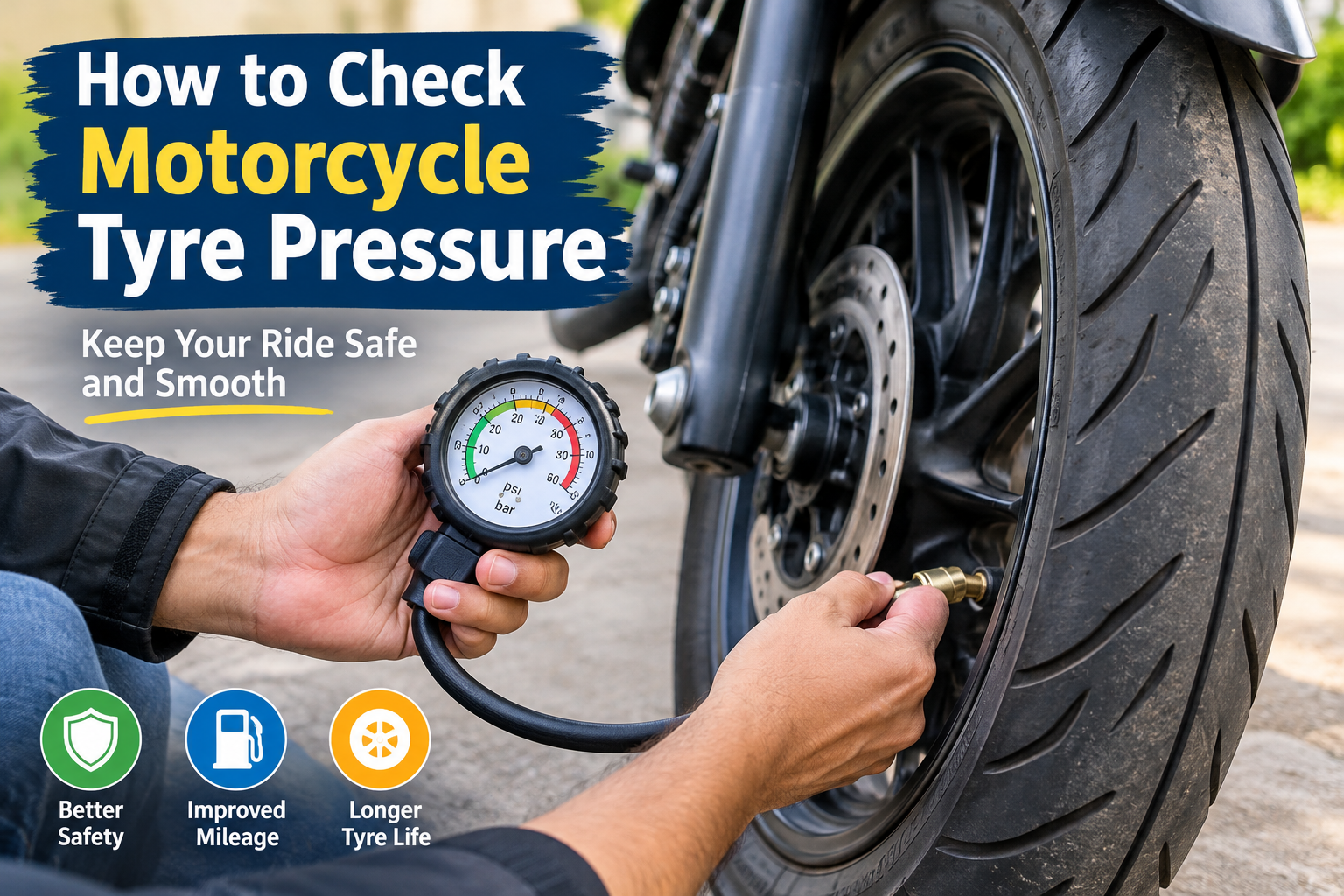
Step 4: Attach the Pressure Gauge
Place the pressure gauge firmly onto the valve stem. Press it straight onto the valve to create a good seal.
If you hear a brief hiss, a small amount of air may have escaped while the gauge was connecting. A continuous hiss usually indicates that the connection is not sealed properly.
Adjust the gauge until you obtain a stable reading.
Digital gauges generally display the measurement on a screen, while dial gauges use a needle. Read the value carefully and check whether the gauge uses PSI, bar, or another pressure unit.
Step 5: Compare the Reading With the Recommended Value
Once you have a stable measurement, compare it with the recommended pressure in your motorcycle manual.
For example, if your manual specifies 30 PSI for a particular tyre and your gauge reads 26 PSI, the tyre needs additional air to reach the specified cold pressure.
This is only an example. Your motorcycle may require a different setting.
Check the front and rear tyres separately because their recommended pressures may not be identical.
Step 6: Add Air if Necessary
If the tyre pressure is too low, connect a suitable inflator and add air gradually.
After adding a small amount, disconnect the inflator and measure the pressure again. Repeat this process until the reading reaches the recommended value.
Avoid adding too much air at once because it can be inconvenient to correct an excessive reading.
If the pressure is too high, carefully release a small amount of air using the appropriate valve method, then measure it again.
Always compare the final reading with the recommended cold pressure. Do not deliberately overinflate a tyre to compensate for the pressure increase that occurs as it warms during normal riding.
Step 7: Check the Rear Tyre
Repeat the same steps for the rear tyre.
The rear tyre often carries a significant portion of the motorcycle’s load, particularly when a passenger or luggage is present. This makes checking its pressure especially important.
Follow the manufacturer’s load recommendations rather than choosing a pressure based on appearance or personal guesswork.
Step 8: Refit the Valve Caps
After completing the checks, securely reinstall both valve caps.
Inspect the tyres for visible damage, cracks, embedded objects, unusual wear, or bulges. If you notice damage or the tyre repeatedly loses pressure, have it inspected by a qualified motorcycle technician.
Do not ride on a tyre that appears seriously damaged or cannot maintain a safe pressure.
When Should You Check Motorcycle Tyre Pressure?
The best time to check motorcycle tyre pressure is before riding, when the tyres are cold.
As tyres warm up during a journey, their internal air pressure normally increases. Measuring a hot tyre and immediately releasing air to reach the cold pressure recommendation can leave it underinflated after it cools.
For regular maintenance, I recommend making tyre pressure checks part of your weekly motorcycle inspection. Check them before long journeys and after noticing changes in handling or appearance.
You should also check the pressure after the motorcycle has been stored for an extended period.
If your bike is used daily, frequent checks can help identify slow leaks before they become more serious.
A simple routine can save time, reduce unexpected maintenance problems, and make riding more predictable.

Common Motorcycle Tyre Pressure Mistakes to Avoid
Even experienced riders can make mistakes when checking tyre pressure. Understanding these errors helps you maintain your tyres correctly.
Relying on Visual Inspection
Looking at a tyre is not enough to determine whether its pressure is correct. Use a reliable pressure gauge rather than judging inflation by appearance.
Checking Only One Tyre
Both tyres affect motorcycle handling. Always measure the front and rear tyres individually.
Using an Inaccurate Gauge
A damaged or unreliable gauge may give incorrect readings. Choose a quality gauge and compare it with another reliable instrument if you suspect a measurement problem.
Ignoring Temperature
Tyre pressure changes with temperature. Check cold tyres whenever possible and follow the manufacturer’s instructions when a cold measurement is not available.
Following Another Bike’s Pressure
Different motorcycles and tyre combinations can require different pressures. Always check the specifications for your own motorcycle.
Forgetting to Check for Damage
Correct pressure does not guarantee that a tyre is safe. Cuts, bulges, punctures, and worn tread can still create serious risks.
Signs That Your Motorcycle Tyre Pressure May Be Incorrect
Your motorcycle may show several signs when the tyre pressure is not suitable.
Low pressure can make steering feel heavy, increase tyre flex, and cause the motorcycle to feel less responsive. Excessive pressure may make the ride feel harsh over bumps.
You might also notice unusual tread wear or a gradual loss of stability. However, these symptoms can have other causes, including worn suspension components, wheel alignment problems, or damaged tyres.
If you notice a sudden pressure loss, repeated warning signs, or unusual handling, stop somewhere safe and inspect the motorcycle before continuing.
Never assume that adding air will solve every tyre problem. A puncture, damaged valve, or faulty rim may require professional repair.
How to Maintain Motorcycle Tyres for Longer Life
Checking tyre pressure is only one part of proper tyre maintenance.
Inspect the tread regularly and look for uneven wear, cracks, cuts, or objects embedded in the rubber. Keep your wheels and valves in good condition, and make sure the tyres are appropriate for your motorcycle.
Avoid overloading the bike beyond its specified limits. Excessive loads can affect tyre performance and increase mechanical stress.
Replace tyres when they reach the manufacturer’s wear limit or show damage that makes them unsafe. Even tyres with sufficient tread can deteriorate with age, so check the manufacturer’s guidance regarding inspection and replacement.
Good riding habits also matter. Avoid harsh acceleration, sudden braking, and unnecessary impacts with potholes whenever possible.
If you are unsure whether a tyre is safe, ask a qualified technician to inspect it.
Frequently Asked Questions
How often should I check motorcycle tyre pressure?
For regular use, a weekly check is a sensible routine. You should also check before long trips and whenever you suspect a leak. Follow any more specific maintenance schedule in your owner’s manual.
Can I check motorcycle tyre pressure at a petrol station?
Yes. A petrol station air pump can be useful if it is compatible with your motorcycle’s valves and provides a reliable reading. A personal gauge can help you verify the result.
Should motorcycle tyres be checked when hot or cold?
Cold tyres are preferred because manufacturer recommendations generally refer to cold pressure. If the tyres are hot, follow the manufacturer’s guidance rather than releasing air simply to match the cold specification.
Is front tyre pressure different from rear tyre pressure?
It can be. Many motorcycles have different recommended pressures for the front and rear tyres. Check your owner’s manual for the exact values.
Can incorrect tyre pressure reduce fuel efficiency?
Yes. Underinflated tyres can increase rolling resistance, which may reduce fuel efficiency. Maintaining the recommended pressure can help the motorcycle operate more efficiently.
Conclusion
Learning how to check motorcycle tyre pressure is an essential part of responsible motorcycle ownership. The process is simple, requires only basic equipment, and takes just a few minutes when you know what to do.
In my view, the most important habits are checking cold tyres, using a reliable pressure gauge, following the manufacturer’s recommended settings, and inspecting both tyres for visible damage.
Regular tyre pressure checks can support safer handling, better fuel efficiency, improved comfort, and longer tyre life. Instead of waiting until a problem appears, make this task part of your normal motorcycle maintenance routine.
A few minutes spent checking your tyres before a ride can help you identify problems early and enjoy greater confidence on the road.