SEO Title: How to Maintain a Bike Battery for Longer Life
Focus Keyword: How to Maintain a Bike Battery
Meta Description: Learn how to maintain a bike battery with simple cleaning, charging, storage, and inspection tips to improve performance and extend battery life.
Introduction
A bike battery is one of the most important parts of a motorcycle because it provides the electrical power needed to start the engine and operate different electrical components. When the battery is in good condition, starting the bike is usually quick and easy. However, when the battery becomes weak or poorly maintained, you may experience starting problems, dim lights, or electrical issues.
In my view, taking care of a bike battery is one of the simplest ways to avoid unnecessary repair expenses. Many riders only think about the battery when their motorcycle refuses to start. By that time, the battery may already be discharged or damaged. Regular inspection and proper charging can help prevent many common problems.
The good news is that bike battery maintenance does not always require expensive tools or professional assistance. With a few basic habits, you can keep your motorcycle battery in better condition and potentially extend its useful life.
In this guide, I will explain how to maintain a bike battery, identify common warning signs, charge it correctly, and avoid mistakes that can reduce its performance.
1. Understand Your Bike Battery Type
Before learning how to maintain a bike battery, it is important to understand which type your motorcycle uses. Different batteries require different maintenance methods.
Most motorcycles use one of the following battery types.
Conventional lead acid battery: This battery may have removable caps and requires periodic inspection of the electrolyte level. Some models allow distilled water to be added when necessary.
Maintenance free battery: These batteries are designed to reduce routine maintenance. They are generally sealed and should not be opened to add water.
AGM battery: An Absorbent Glass Mat battery is a type of sealed lead acid battery. It holds its electrolyte in special glass mats and normally does not require water refilling.
Lithium motorcycle battery: Some modern motorcycles use lithium based batteries. These require a compatible charger and specific handling precautions.
I recommend checking the owner’s manual before performing any maintenance. Never assume that every motorcycle battery needs water or that the same charger works with every battery type.
2. Keep the Battery Clean
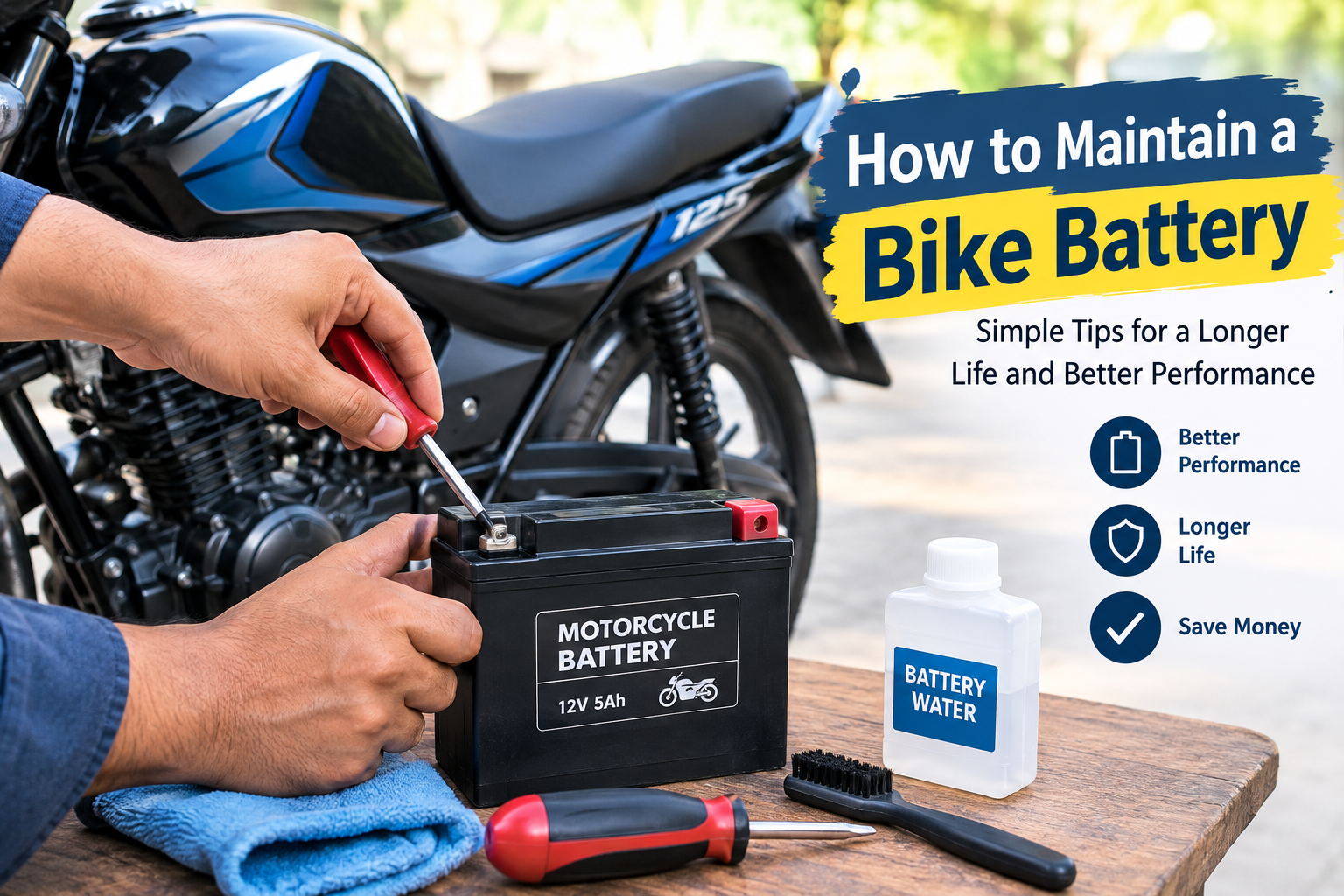
One of the easiest ways to maintain a bike battery is to keep its exterior clean and dry. Dust, mud, moisture, and dirt can collect around the battery terminals, especially if you ride in rainy weather or on dusty roads.
Over time, corrosion may develop around the terminals. This can interfere with electrical connections and make it difficult for the battery to deliver power efficiently.
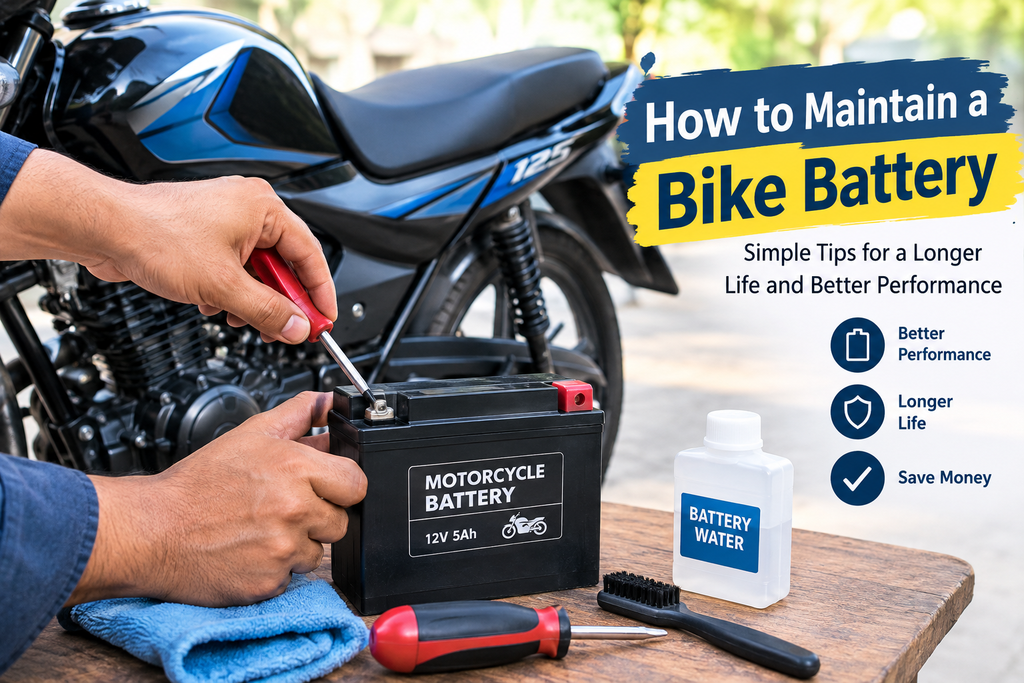
To clean the battery safely, switch off the motorcycle and remove the key. Follow the manufacturer’s instructions for accessing and disconnecting the battery. Use a suitable battery terminal brush and a clean cloth to remove dirt and corrosion.
Avoid allowing cleaning liquid to enter battery openings or electrical connectors. If you notice heavy corrosion, leakage, swelling, or damage, have the battery inspected by a qualified mechanic.
After cleaning, make sure the battery is dry and properly secured. A clean battery is easier to inspect and helps you notice potential problems early.
3. Inspect the Battery Terminals Regularly
Battery terminals connect the battery to the motorcycle’s electrical system. If these connections become loose or corroded, the motorcycle may struggle to start even when the battery itself is still usable.
I suggest checking the terminals during routine motorcycle maintenance. Look for white or bluish deposits, loose connections, damaged cables, or signs of overheating.
If a terminal is loose, follow the motorcycle manufacturer’s instructions to tighten it correctly. Do not overtighten the fasteners because this may damage the terminal or battery casing.
When disconnecting a conventional negative ground motorcycle battery, the negative terminal is generally removed first. When reconnecting it, the positive terminal is generally connected first and the negative terminal last. Always confirm the correct procedure in your owner’s manual.
Never allow a metal tool to bridge the positive terminal and the motorcycle frame. Doing so can cause a dangerous short circuit.
4. Charge Your Bike Battery Correctly
Correct charging is essential for maintaining a bike battery. A battery that remains discharged for long periods may lose capacity and eventually become unable to start the motorcycle.
If your bike is difficult to start, the starter turns slowly, or the lights appear unusually dim, the battery may need testing or charging.
Use a charger that matches your battery’s chemistry, voltage, and charging requirements. Many motorcycles use 12 volt batteries, but you should verify your model’s specifications before connecting a charger.
A smart motorcycle battery charger can be useful because it adjusts the charging process according to the battery’s condition and may provide a maintenance mode for storage.
Avoid using an unsuitable high current charger or leaving a battery connected to a charger that is not designed for continuous use. Follow the charging instructions carefully and charge the battery in a well ventilated area.
If a battery becomes unusually hot, swells, leaks, or produces an unusual smell during charging, stop the process if it is safe to do so and seek professional advice.
5. Avoid Leaving Your Bike Unused for Too Long
One common reason for a weak motorcycle battery is leaving the bike unused for several weeks or months. Even when the engine is switched off, some motorcycles consume a small amount of electricity through clocks, alarms, tracking devices, or other electronics.
The battery can gradually discharge during this period. If it stays discharged for too long, permanent damage may occur, especially in lead acid batteries.
If you know that you will not ride for an extended period, check the battery’s charge before storage. Depending on the motorcycle manufacturer’s recommendations, you may use a compatible smart maintenance charger.
Another option is to disconnect the battery when appropriate. However, this can reset certain electronic settings or affect security systems, so check the owner’s manual first.
I believe a simple storage routine is particularly helpful for riders who use their motorcycles only on weekends or during certain seasons.
6. Check the Electrolyte Level When Required
Some conventional lead acid motorcycle batteries require periodic electrolyte level inspections. If the electrolyte level drops below the recommended mark, the exposed plates may become damaged.
If your battery is designed for water maintenance, inspect the level according to the manufacturer’s instructions. Add only the recommended distilled water when necessary.
Never use ordinary tap water because its minerals and impurities can damage the battery. Do not add acid simply because the electrolyte level is low unless a qualified professional specifically instructs you to do so.
Maintenance free, AGM, and lithium batteries have different requirements. Do not open sealed batteries or attempt to refill them.
Always wear appropriate eye protection and gloves when working with serviceable lead acid batteries. Battery electrolyte is corrosive and can cause serious injuries.
7. Start and Ride Your Motorcycle Regularly
Regular riding can help keep the battery charged because the motorcycle’s charging system replenishes some of the energy used during starting. However, the amount of charging depends on the motorcycle, battery condition, electrical load, and riding duration.
Starting the engine for only a minute or two may not provide enough charging time to replace the electricity consumed during startup.
For this reason, I recommend riding the motorcycle for a reasonable period when practical, rather than repeatedly starting it for very short intervals. Always ride safely and follow local traffic rules.
If your motorcycle is frequently used for short trips, the battery may gradually become undercharged. A suitable smart charger can help when the motorcycle’s normal usage does not provide sufficient charging.
Remember that regular riding cannot repair a damaged battery or fix a faulty charging system.
8. Protect the Battery From Extreme Temperatures
Temperature can affect motorcycle battery performance and lifespan. Very high temperatures can accelerate battery deterioration, while cold weather can reduce the power available for starting the engine.
During hot weather, avoid leaving your motorcycle in direct sunlight for long periods when shaded parking is available. Make sure the battery is installed correctly and that the surrounding area is not exposed to abnormal heat.
In cold conditions, a weak battery may struggle to turn the starter motor. Check the battery before the weather becomes colder, especially if it is already several years old.
If you remove the battery for storage, keep it in a dry, secure location and follow the manufacturer’s temperature and charging recommendations.
Never place a battery near an open flame, heater, or source of sparks. Some batteries can release flammable gas under certain conditions.
9. Recognize the Signs of a Weak Bike Battery
Recognizing battery problems early can help you avoid being stranded on the road.
Common warning signs include:
- The starter motor turns more slowly than usual.
- The headlight becomes noticeably dim when starting.
- The motorcycle struggles to start after sitting unused.
- Electrical accessories behave inconsistently.
- The battery repeatedly loses its charge.
- The battery casing becomes swollen or shows signs of leakage.
These symptoms do not always mean that the battery needs replacement. Loose terminals, damaged wiring, a faulty starter motor, or a malfunctioning charging system can cause similar problems.
A mechanic can test the battery’s condition and check the motorcycle’s charging system. If the battery cannot hold a charge or fails a proper load or conductance test, replacement may be necessary.
10. Store Your Bike Battery Properly
Proper storage is especially important when you will not use your motorcycle for an extended period.
Before storing the battery, inspect it for damage and check its charge according to the manufacturer’s recommendations. Keep the battery clean, dry, and away from direct heat.
If the battery is removed, place it on a stable, nonconductive surface in a secure location. Keep metal objects away from the terminals to prevent accidental short circuits.
Use a compatible maintenance charger when recommended. Check the battery periodically rather than assuming it will remain charged indefinitely.
Do not store a damaged, leaking, or swollen battery indoors without professional guidance. Arrange safe inspection and disposal through an appropriate battery recycling service.
11. Avoid Common Bike Battery Maintenance Mistakes
Even riders who take care of their motorcycles can make mistakes that shorten battery life.
One mistake is ignoring a weak starting response until the motorcycle stops working. Another is using an incompatible charger or assuming that every battery needs distilled water.
Some riders also leave electrical accessories running when the engine is off, which can discharge the battery. Others attempt to repair damaged batteries instead of replacing them when necessary.
I recommend following the owner’s manual, using suitable equipment, and checking the battery whenever you perform routine motorcycle maintenance.
Never smoke near a battery or create sparks around it. If you are unfamiliar with battery servicing, asking a trained mechanic for assistance is the safer choice.
Frequently Asked Questions
How often should I check my bike battery?
A quick visual inspection every few weeks is a useful habit. Follow your motorcycle manufacturer’s schedule for terminal checks, electrolyte inspection, and electrical testing.
How long does a motorcycle battery last?
Battery life depends on battery type, climate, riding habits, charging performance, and maintenance. Many motorcycle batteries last around two to five years, although some fail earlier and others last longer.
Can I charge my bike battery at home?
Yes, in many cases. Use a compatible motorcycle battery charger, follow the manufacturer’s instructions, and charge in a well ventilated location. Avoid improvised charging methods.
Can a motorcycle battery recharge while riding?
Yes. A properly functioning motorcycle charging system normally replenishes battery power while the engine runs. However, short trips, excessive electrical loads, or charging system faults may prevent a full recharge.
Should I replace a battery that repeatedly goes flat?
Not necessarily. First, have the battery tested and check for electrical drains or charging system problems. If the battery is damaged or cannot hold a charge, replacement is usually the appropriate solution.
Conclusion
Learning how to maintain a bike battery can help you improve starting reliability, reduce avoidable repair costs, and keep your motorcycle ready for everyday use. Simple habits such as cleaning the terminals, checking the battery’s condition, charging it correctly, and storing it properly can make a meaningful difference.
In my opinion, the most important step is not waiting until the motorcycle refuses to start. Regular inspection helps you identify warning signs before they turn into bigger problems.
Always use maintenance methods suitable for your particular battery type, and consult a qualified mechanic when you notice damage or persistent electrical issues. With consistent care and the right charging practices, you can help your bike battery deliver reliable performance for as long as its condition allows.