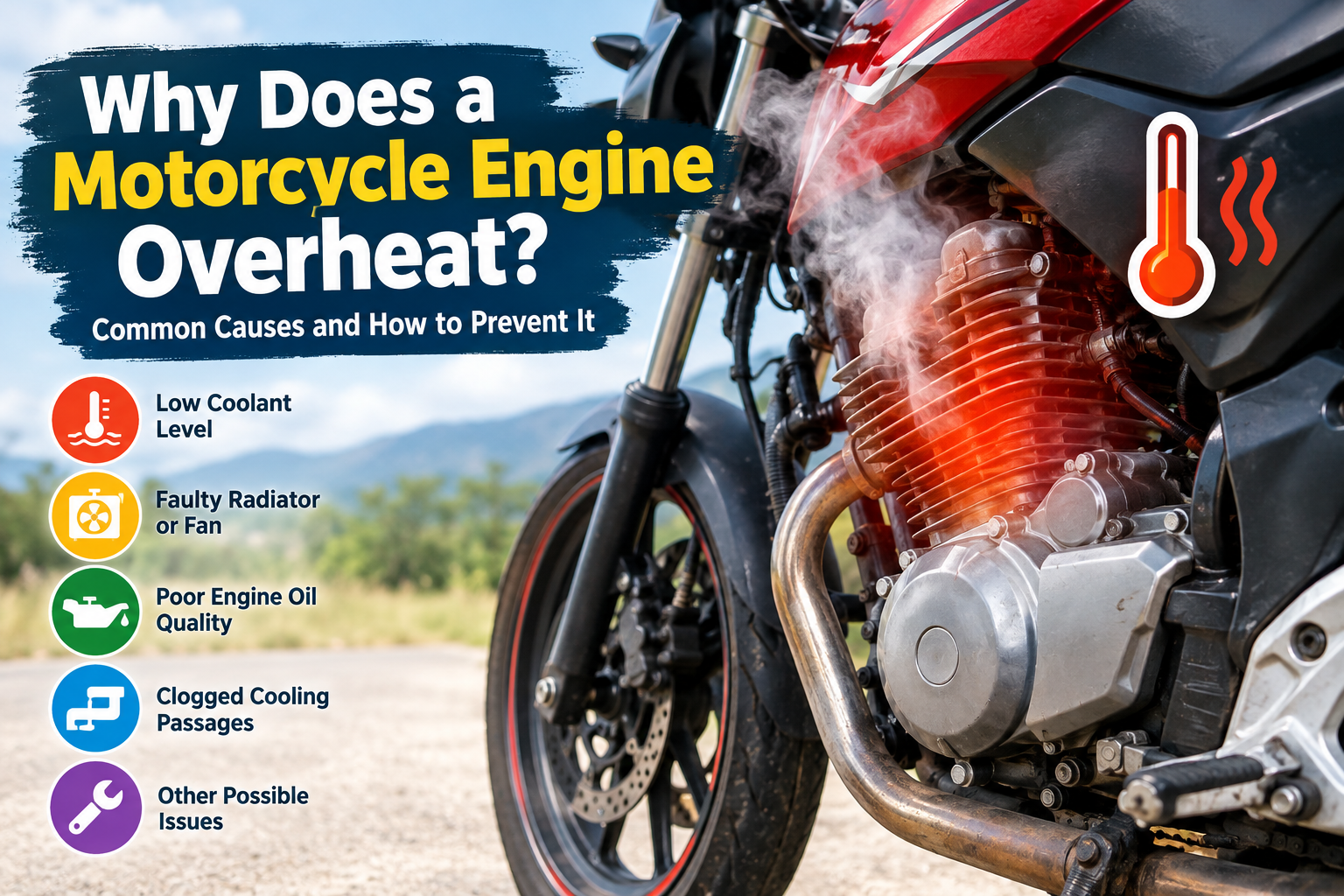
A motorcycle engine is designed to operate within a specific temperature range. During normal riding, the engine produces heat as it burns fuel and generates power. The cooling system and engine oil help control this heat and protect important components. However, when the temperature becomes too high, the motorcycle may lose performance, consume more fuel, or suffer serious engine damage.
Understanding why a motorcycle engine overheats can help riders recognize problems early and avoid expensive repairs. In my view, regular maintenance and paying attention to small warning signs are two of the best ways to keep a motorcycle running smoothly.
In this article, I will explain the common causes of motorcycle engine overheating, the warning signs to watch for, and practical ways to prevent the problem.
What Does Motorcycle Engine Overheating Mean?
Motorcycle engine overheating occurs when the engine temperature rises above its recommended operating range. Every motorcycle produces heat while running, but the cooling system must remove enough heat to maintain safe operating conditions.
Some motorcycles use air cooling, while others use liquid cooling. Air cooled engines release heat through metal cooling fins exposed to moving air. Liquid cooled motorcycles use coolant, a radiator, and related components to manage engine temperature.
If any part of this process stops working properly, the engine may become excessively hot.
A slightly warm engine is normal, especially during summer riding or heavy traffic. However, a temperature warning light, unusual engine noise, steam, or a sudden loss of power should never be ignored.
1. Low Engine Oil Level
One of the most common reasons a motorcycle engine overheats is insufficient engine oil. Engine oil lubricates moving parts and helps reduce friction between components such as pistons, bearings, and other internal surfaces.
When the oil level becomes too low, friction can increase. This creates additional heat and may cause excessive wear inside the engine.
I believe checking the engine oil regularly is one of the simplest maintenance habits every motorcycle owner should develop. A small check can help prevent a major mechanical problem.
How to prevent it
Check the oil level according to the instructions in your motorcycle owner’s manual. Keep the motorcycle positioned correctly when checking the level, because the method differs between models.
Use the recommended oil grade and change the oil at the specified intervals. If the oil level repeatedly drops, inspect for leaks or excessive oil consumption and have the motorcycle checked by a qualified mechanic.
2. Low Coolant Level
Low coolant is another common cause of motorcycle engine overheating, particularly in liquid cooled motorcycles. Coolant absorbs heat from the engine and transfers it to the radiator, where the heat can escape into the surrounding air.
When the coolant level drops, the cooling system may struggle to remove enough heat. This can cause the engine temperature to rise, especially during slow riding or hot weather.
Coolant may become low because of a leak, a damaged hose, a faulty radiator cap, or another cooling system problem.
How to prevent it
Check the coolant reservoir when the engine is completely cold. Keep the coolant at the level recommended by the manufacturer and use the correct coolant type.
Never open a hot radiator cap because pressurized coolant can cause severe burns. If the coolant keeps disappearing, arrange a professional inspection instead of repeatedly topping it up without identifying the cause.
3. Faulty Radiator or Cooling Fan
A radiator removes heat from the coolant before the liquid returns to the engine. If the radiator becomes blocked or damaged, its ability to release heat may decrease.
A cooling fan also plays an important role when a motorcycle moves slowly or remains stationary in traffic. If the fan motor, temperature sensor, fuse, or electrical connection fails, airflow through the radiator may be insufficient.
One useful observation is whether the motorcycle overheats mainly in traffic but runs at a normal temperature on open roads. This pattern may indicate a fan problem or restricted airflow, although other faults can produce similar symptoms.
How to prevent it
Keep the radiator clean and check for visible damage. Remove loose dirt and insects carefully without bending the delicate radiator fins.
If the cooling fan does not operate when expected, have its electrical circuit and temperature controls inspected. Do not assume that replacing the fan alone will solve the problem until the underlying fault has been identified.
4. Heavy Traffic and Hot Weather
Environmental conditions can also contribute to motorcycle engine overheating. During hot weather, the surrounding air is already warm, which reduces the temperature difference available for releasing engine heat.
Heavy traffic can make the situation worse. A motorcycle moving slowly receives less natural airflow than one traveling at a steady road speed. This is especially important for air cooled engines.
Long periods of idling, repeated acceleration, and carrying heavy loads can increase the engine’s heat production.
How to prevent it
Avoid unnecessary idling in traffic when it is safe and appropriate to switch off the engine. Allow the motorcycle to move freely when possible, maintain a suitable speed for road conditions, and take breaks during long rides in extreme heat.
If the temperature warning appears, pull over safely and follow the manufacturer’s instructions. Do not continue riding simply because the motorcycle still seems to run normally.
5. Poor Quality or Incorrect Engine Oil
Using the wrong engine oil can affect lubrication and heat management. Motorcycle engines require oil with specific viscosity and performance characteristics. Some motorcycles also use the same oil for the engine, gearbox, and wet clutch.
Oil that does not meet the manufacturer’s requirements may fail to provide suitable protection under demanding conditions.
Old oil can also collect contaminants and lose some of its protective properties over time.
How to prevent it
Choose engine oil that meets the specifications in your owner’s manual. Do not select oil based only on its price or brand name.
Change the oil and filter according to the recommended service schedule. If the motorcycle is frequently used for long journeys, heavy loads, or demanding riding conditions, ask a mechanic whether a different maintenance interval is appropriate.
6. Clogged Cooling Fins and Air Passages
Air cooled motorcycles depend on airflow across the cooling fins around the cylinder and cylinder head. Dirt, mud, grease, and debris can restrict this airflow and reduce the engine’s ability to release heat.
Even a motorcycle that looks clean from a distance may have dirt trapped between its cooling fins.
How to prevent it
Inspect the cooling fins periodically, especially if you ride on dusty roads. Clean them carefully using a suitable brush or gentle airflow.
Avoid aggressive cleaning methods that could damage components. If the cooling passages are heavily clogged, a mechanic can clean them safely.
7. Faulty Thermostat or Water Pump
Liquid cooled motorcycles rely on several components working together. The thermostat regulates coolant circulation according to engine temperature, while the water pump moves coolant through the engine and radiator.
If the thermostat becomes stuck closed, coolant circulation through the radiator may be restricted. A damaged water pump or worn pump components can also reduce coolant flow.
These problems may cause rapid overheating even when the coolant level appears normal.
How to prevent it
Pay attention to repeated temperature warnings, coolant circulation problems, or unexplained overheating. A mechanic can test the thermostat, water pump, and related components.
Replacing parts without proper diagnosis can waste money and leave the original problem unresolved.
8. Incorrect Fuel Mixture and Engine Tuning
The fuel and air mixture affects combustion inside the engine. An excessively lean mixture can increase operating temperatures under certain conditions. Incorrect ignition timing, fuel injection problems, and carburetor issues may also contribute to abnormal engine heat.
These problems can be difficult to identify without mechanical knowledge or diagnostic equipment.
You may notice rough idling, reduced acceleration, unusual exhaust behavior, or poor fuel economy alongside overheating.
How to prevent it
Keep the fuel system properly maintained and use the fuel grade recommended by the manufacturer. If the engine runs poorly or becomes unusually hot despite normal oil and coolant levels, ask a qualified mechanic to inspect the fuel delivery and ignition systems.
Avoid changing carburetor settings or engine tuning without understanding the correct specifications.
9. Riding With Excessive Load or High Engine RPM
Riding conditions have a direct effect on engine temperature. Continuously operating at very high engine speeds, accelerating aggressively, or carrying more weight than the motorcycle is designed for can increase heat production.
Riding in an unsuitable gear may also force the engine to work harder than necessary.
This does not mean that every high speed ride causes overheating. A properly maintained motorcycle should operate within its intended limits. The concern is excessive load combined with poor maintenance, extreme weather, or an existing mechanical fault.
How to prevent it
Use suitable gears, avoid unnecessary high RPM, and follow the motorcycle’s load limits. During long rides, pay attention to changes in performance and temperature.
If overheating occurs repeatedly under ordinary riding conditions, do not treat riding more gently as a permanent solution. Have the motorcycle inspected.
10. Signs That Your Motorcycle Engine Is Overheating
Recognizing the warning signs early can help prevent serious damage. Common symptoms include:
- A temperature warning light or gauge reading above the normal range.
- Steam or coolant escaping from the cooling system.
- Unusual knocking, ticking, or other abnormal engine noises.
- Reduced acceleration or noticeable power loss.
- A strong burning smell.
- Repeated coolant loss or visible leaks.
- An engine that runs poorly after becoming hot.
These symptoms do not always confirm overheating, but they indicate that the motorcycle needs attention.

What Should You Do When a Motorcycle Engine Overheats?
If you suspect that your motorcycle engine is overheating, safety should come first.
Step 1: Reduce the load on the engine and move to a safe place as soon as possible.
Step 2: Switch off the engine if the temperature warning is serious, steam is present, or the manufacturer recommends stopping.
Step 3: Allow the engine to cool naturally. Do not touch hot engine components or open the radiator cap while the system is hot.
Step 4: Once the motorcycle is completely cool, check for visible leaks and inspect the coolant or oil level if the owner’s manual explains how to do so safely.
Step 5: If the motorcycle overheats again, loses coolant, makes abnormal noises, or shows signs of serious damage, arrange professional assistance rather than continuing to ride.
Never pour cold water directly onto a very hot engine as a quick cooling method. Sudden temperature changes can damage components.
How to Prevent Motorcycle Engine Overheating
Preventive maintenance is usually easier and less expensive than repairing an engine damaged by excessive heat. Follow these practical habits:
- Check engine oil and coolant levels regularly where applicable.
- Follow the recommended oil and filter replacement schedule.
- Keep radiator fins and air cooling passages clean.
- Inspect coolant hoses and visible connections for leaks.
- Make sure the cooling fan operates correctly when required.
- Use the recommended fuel and engine oil specifications.
- Maintain the motorcycle according to its service schedule.
- Respond promptly to warning lights and unusual engine noises.
- Avoid riding with a known cooling system problem.
A consistent maintenance routine can improve reliability and help extend engine life.
Frequently Asked Questions
Why does my motorcycle overheat in traffic?
A motorcycle may overheat in traffic because of limited airflow, high ambient temperatures, a faulty cooling fan, low coolant, or an existing cooling system problem. If the issue happens repeatedly, arrange an inspection.
Can low engine oil cause motorcycle overheating?
Yes. Low engine oil can increase friction and reduce lubrication, causing additional heat and potentially serious engine damage.
Is it safe to ride a motorcycle that is overheating?
No. Continuing to ride with a serious overheating problem can damage the engine. Stop safely, allow the motorcycle to cool, and identify the cause before riding again.
How long should I wait for an overheated motorcycle to cool down?
There is no single safe waiting time for every motorcycle. Cooling depends on engine temperature, weather, and the motorcycle’s design. Wait until the engine has cooled completely before checking components that could expose you to hot fluids or surfaces.
Conclusion
Understanding why a motorcycle engine overheats helps riders protect their motorcycles and avoid unnecessary repair costs. Low engine oil, insufficient coolant, radiator problems, blocked cooling fins, faulty thermostats, and demanding riding conditions can all contribute to excessive engine temperature.
In my opinion, the best approach is to pay attention to early warning signs and maintain the motorcycle regularly rather than waiting for a major problem to appear. Check the fluids, follow the service schedule, and address unusual temperature changes promptly.
With proper maintenance and responsible riding habits, you can reduce the risk of motorcycle engine overheating and enjoy safer, more reliable journeys.