Introduction
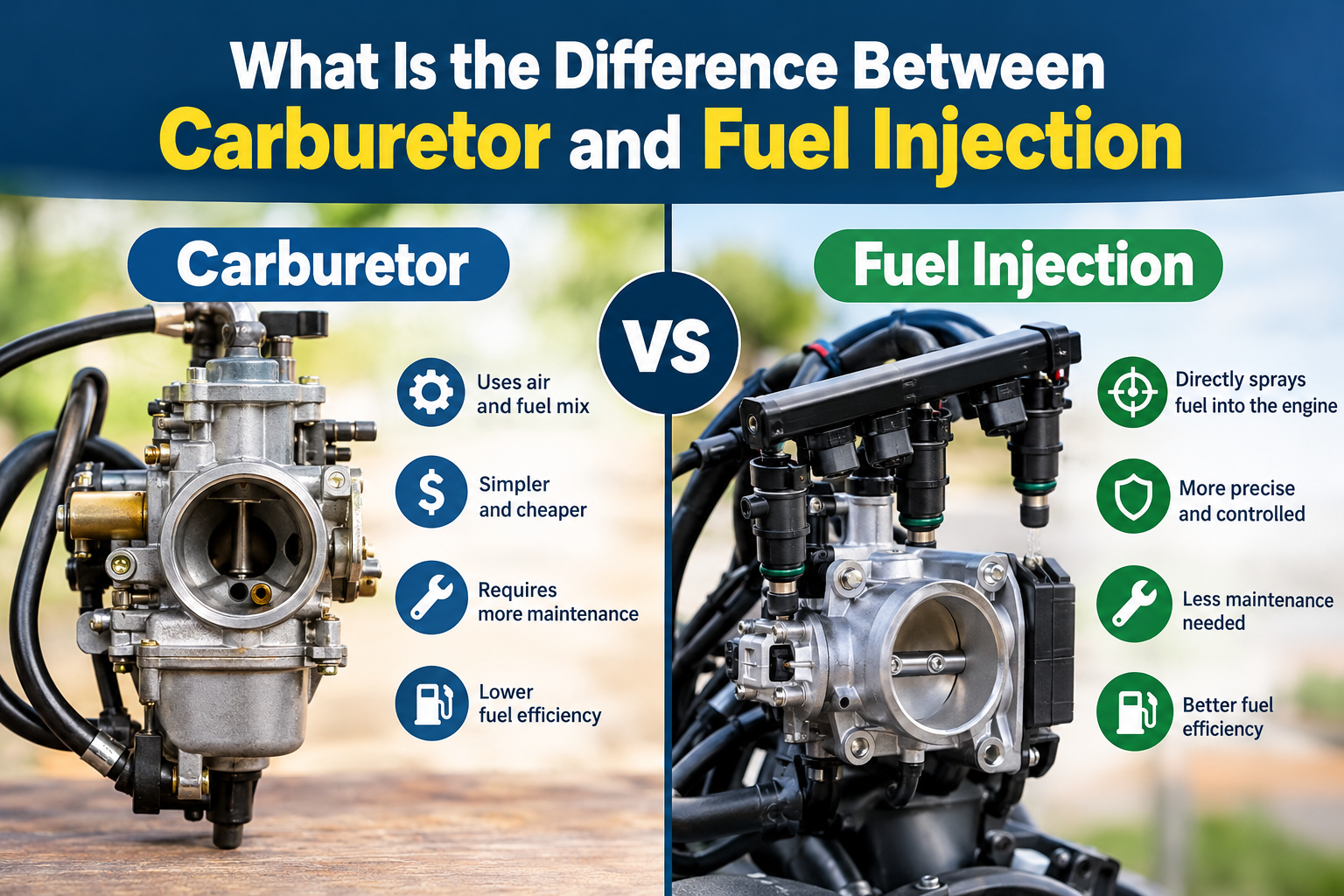
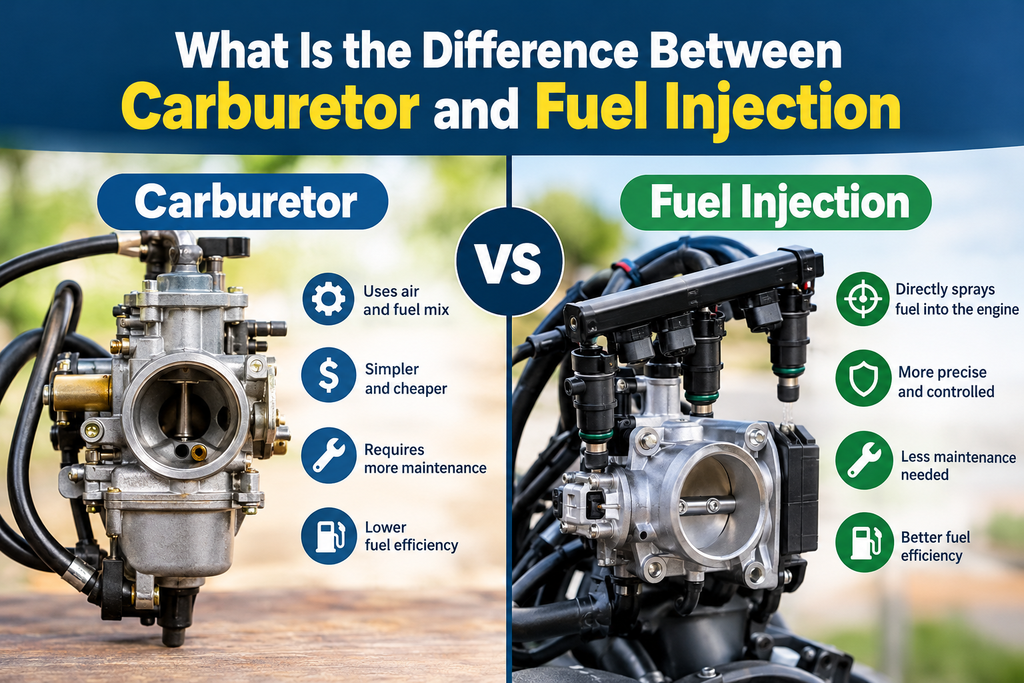
When learning about motorcycle engines and how they work, one of the most common questions is the difference between a carburetor and fuel injection. Both systems perform the same basic job, which is to supply fuel to the engine so it can produce power. However, the way they deliver fuel is quite different.
In my understanding, the main difference is that a carburetor mixes fuel with air mechanically, while a fuel injection system uses injectors and, in most modern vehicles, electronic controls to deliver the required amount of fuel. This difference affects fuel economy, engine performance, maintenance, starting, and overall riding experience.
Carburetors have been used in motorcycles and cars for many years. They are known for their simple design and relatively easy repair. Fuel injection has become increasingly common because it can control fuel delivery more precisely under different riding and driving conditions.
In this article, I will explain how both systems work, their advantages and disadvantages, and which option may be better for everyday motorcycle riders.
What Is a Carburetor?
A carburetor is a mechanical device that mixes fuel with air before sending the mixture into an engine. It was widely used in older cars, motorcycles, generators, and other petrol powered machines.
The basic working principle of a carburetor is relatively simple. As the engine draws air through the carburetor, air pressure changes inside a narrow passage called a venturi. This pressure difference helps pull fuel through small jets, allowing it to mix with the incoming air.
The mixture then travels into the engine cylinder, where it is compressed and ignited by the spark plug in a petrol engine.
One reason carburetors remained popular for so long is their straightforward construction. A mechanic who understands the system can often inspect its jets, clean its passages, adjust the settings, and identify common problems without specialized electronic diagnostic equipment.
However, a carburetor does not automatically measure every engine condition with the precision of a modern electronic fuel injection system. Temperature, altitude, engine load, and throttle position can affect how well the air and fuel mixture suits the engine.
What Is Fuel Injection?
Fuel injection is a system that delivers fuel into an engine through specially designed injectors. In most modern electronic fuel injection systems, an engine control unit, commonly called an ECU, uses information from various sensors to determine how much fuel the engine needs.
Depending on the system, these sensors may monitor engine temperature, air pressure, throttle position, oxygen levels, and other operating conditions.
The ECU processes this information and controls the fuel injectors. Each injector opens for a carefully controlled period, spraying fuel into the intake system or directly into the combustion chamber, depending on the engine design.
This process allows the engine to receive a more accurately controlled fuel supply across a wide range of conditions.
In my view, the biggest advantage of fuel injection is its ability to adjust fuel delivery automatically. A rider does not normally need to make manual mixture adjustments when weather or riding conditions change.
Fuel injection systems can also improve starting, throttle response, emissions control, and fuel economy when properly designed and maintained.
Main Difference Between Carburetor and Fuel Injection
Although both systems supply fuel to the engine, their methods of operation are different.
A carburetor relies mainly on airflow, pressure differences, and mechanical passages to draw and mix fuel. Electronic fuel injection uses injectors, and an ECU in electronic systems, to control fuel delivery more precisely.
Another important difference is adjustment. Carburetors may require cleaning or tuning if the engine runs poorly or if operating conditions change significantly. Electronic fuel injection can adjust fuel delivery automatically within the limits of its sensors and programming.
Fuel injection is generally more consistent, but it contains more electrical and electronic components. A carburetor is usually simpler to understand and can be easier to repair with basic mechanical knowledge.
Neither system is completely free from problems. A dirty carburetor jet can restrict fuel flow, while a clogged injector, faulty sensor, weak fuel pump, or wiring problem can affect a fuel injected engine.
Carburetor vs Fuel Injection: Key Differences
1. Fuel Efficiency
Fuel efficiency is one of the most important differences between carburetor and fuel injection systems.
A carburetor can provide reasonable fuel economy when correctly adjusted, but its mechanical design may not maintain the ideal mixture under every operating condition.
Electronic fuel injection can measure engine conditions and adjust the amount of fuel accordingly. This often helps reduce unnecessary fuel consumption, particularly during changing temperatures, acceleration, and varying engine loads.
However, actual fuel economy depends on the motorcycle model, engine condition, riding habits, traffic, and maintenance. Fuel injection does not guarantee better mileage in every possible comparison.
2. Engine Performance
Fuel injection generally offers more precise fuel delivery, which can contribute to smooth acceleration and consistent engine performance.
When a rider opens the throttle, the system responds using information from the relevant sensors and its programmed fuel maps. This helps the engine receive a suitable fuel supply for the current conditions.
A carburetor can also deliver strong performance when properly tuned. In fact, some enthusiasts appreciate carbureted engines because they can be mechanically adjusted to suit particular performance requirements.
For normal daily riding, however, modern fuel injection usually provides more consistent operation with less need for manual adjustment.
3. Starting in Cold Weather
Starting performance is another area where fuel injection often has an advantage.
Cold engines generally need a different air and fuel mixture than warm engines. Many carbureted motorcycles use a choke or enrichment mechanism to help the engine start in cold conditions.
Fuel injected motorcycles can use temperature sensors and electronic controls to adjust the starting mixture automatically.
This can make cold starts easier and reduce the need for manual intervention. Nevertheless, battery condition, fuel quality, engine maintenance, and the manufacturer’s design still play important roles.
4. Maintenance Requirements
Carburetors are mechanically simple, but their small passages and jets can become clogged by dirt, deposits, or fuel left sitting for long periods. This may lead to difficult starting, rough idling, or hesitation during acceleration.
Regular cleaning and correct adjustment can often restore proper operation.
Fuel injection usually needs less routine adjustment because its controls manage fuel delivery automatically. However, it still requires suitable maintenance, including attention to the air filter, fuel filter where fitted, fuel pump, injectors, and electrical connections.
If an electronic component fails, diagnosis may require a scan tool, wiring checks, or model specific technical information.
Therefore, a carburetor can be easier and cheaper to repair in some situations, while fuel injection may need less frequent manual tuning.
5. Repair Costs
The cost of repairing either system depends on the motorcycle, the availability of spare parts, and local mechanic rates.
Carburetor parts are often relatively inexpensive, and many mechanics are familiar with cleaning and repairing them. This can make older carbureted motorcycles economical to maintain.
Fuel injection components may be more expensive to replace, particularly when the problem involves the ECU, fuel pump, injector, or a specialized sensor.
On the other hand, replacing parts without a proper diagnosis can become costly in either system. I believe it is better to identify the actual fault before deciding which system is more expensive to maintain.
6. Performance at Different Altitudes
Air becomes less dense at higher altitudes. This changes how much oxygen enters the engine and affects the amount of fuel needed for efficient combustion.
A carburetor may run too rich or otherwise require adjustment when a motorcycle moves between significantly different altitudes.
Electronic fuel injection can compensate for changing air pressure when the system has the appropriate sensors and calibration. This helps maintain more consistent performance.
The degree of compensation varies between models, so not every fuel injected engine responds identically.
7. Environmental Impact
Fuel injection can help reduce fuel consumption and exhaust emissions by controlling the air and fuel mixture more accurately.
Modern systems work alongside other engine technologies, including catalytic converters and oxygen sensors, to meet emissions requirements.
Carbureted engines can operate cleanly when properly maintained, but they generally have less precise control over the mixture under changing conditions.
The environmental performance of a complete vehicle depends on much more than the fuel delivery system alone, including engine design, emissions equipment, maintenance, and applicable regulations.
Advantages of a Carburetor
Carburetors still have several practical benefits.
First, their construction is relatively simple. Riders who enjoy learning about engine mechanics may find them easier to understand and work on.
Second, carburetor repairs can be affordable when cleaning, jet replacement, or adjustment is all that is required.
Third, they do not depend on an electronic control unit to meter fuel. This can be useful for older motorcycles designed around simple mechanical systems.
Finally, carburetors remain suitable for many classic motorcycles and engines where originality, repairability, and traditional mechanical design matter.
Their main disadvantages include more frequent cleaning or adjustment in some conditions, less precise fuel control, and potentially more difficult cold starting.
Advantages of Fuel Injection
Fuel injection offers several advantages for modern motorcycles and cars.
It provides precise fuel delivery, can improve fuel efficiency, and generally offers reliable starting when the battery and fuel system are in good condition.
It can also compensate for changing engine conditions, helping maintain consistent performance and supporting emissions control.
Another benefit is reduced dependence on manual tuning during ordinary use. Most riders can operate a fuel injected motorcycle without needing to adjust the fuel mixture themselves.
The main disadvantages are system complexity and the potential cost of specialized repairs. Fuel injection depends on components such as injectors, sensors, wiring, and, in many systems, a pressurized fuel supply.
Which Is Better for Motorcycles?
The answer depends on what a rider needs.
For someone who owns an older motorcycle, prefers simple mechanical repairs, or wants to keep a classic machine original, a carburetor can be a practical choice.
For everyday commuting, changing weather conditions, convenient starting, and consistent performance, fuel injection is generally the better option in modern motorcycles.
For riders in Pakistan, it is also worth considering the availability of mechanics and spare parts for the specific motorcycle model. A well maintained carbureted motorcycle may be more practical than a neglected fuel injected one, particularly where specialized diagnostic support is limited.
At the same time, a properly maintained fuel injected motorcycle can be a good choice for regular commuting because of its precise fuel control and convenient operation.
Before purchasing a motorcycle, I recommend comparing the complete model rather than choosing solely by its fuel system. Mileage, reliability, parts availability, comfort, resale value, and repair costs all deserve attention.
Conclusion
The main difference between a carburetor and fuel injection is how fuel is delivered and controlled inside an engine. A carburetor uses airflow and mechanical pressure differences to mix fuel with air, while fuel injection uses injectors to supply a controlled amount of fuel.
Carburetors are valued for their simple construction, repairability, and suitability for older motorcycles. Fuel injection is generally preferred in modern vehicles because it provides more precise fuel control, convenient starting, and the potential for better fuel efficiency and lower emissions.
From my point of view, fuel injection is usually the more practical choice for a modern daily use motorcycle, while a carburetor remains useful for riders who value mechanical simplicity and easy access to traditional repairs.
Understanding these differences makes it easier to choose a motorcycle that matches your budget, riding style, and maintenance preferences.