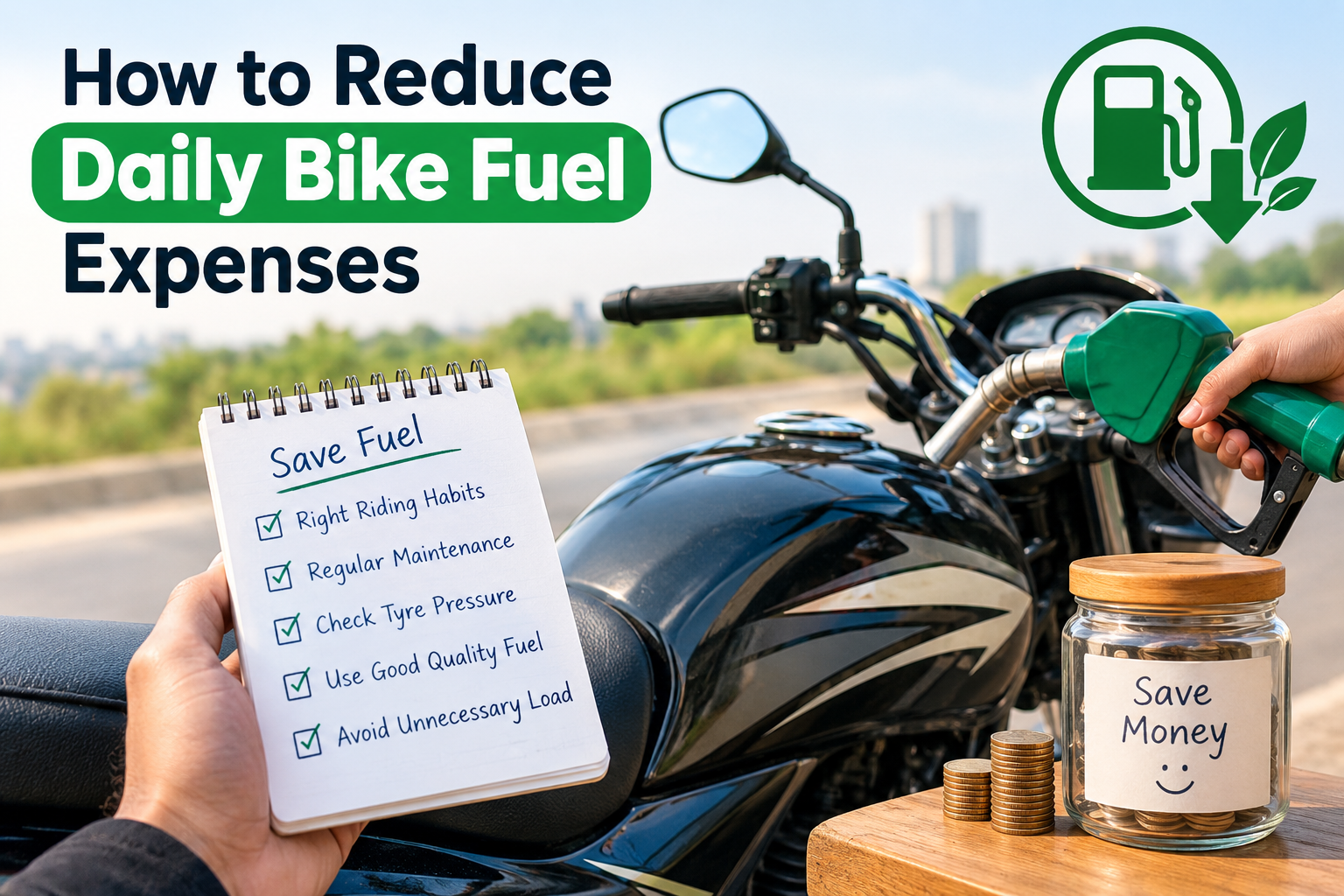
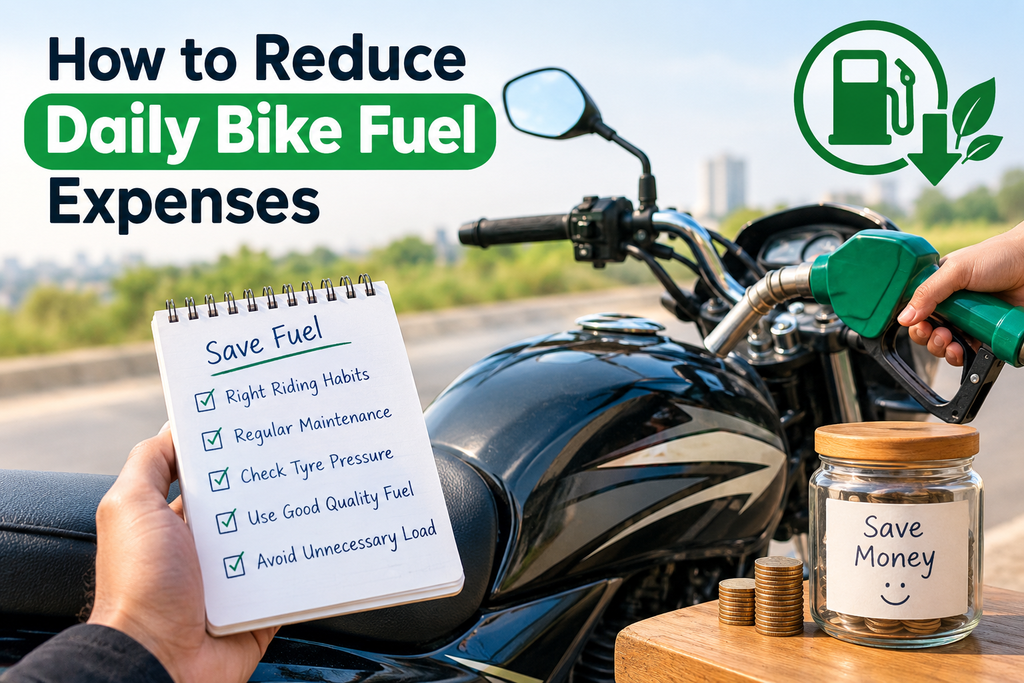
Daily bike fuel expenses can become a significant part of a monthly budget, especially for people who use their motorcycles to travel to work, attend classes, visit markets, or complete everyday tasks. When petrol prices increase, even a small amount of extra fuel consumption can affect household expenses. The good news is that a few practical changes in riding habits and regular motorcycle maintenance can help reduce fuel costs without making daily travel difficult.
In my opinion, saving fuel is not only about finding cheaper petrol. It is also about understanding how a motorcycle uses fuel and learning how to ride it efficiently. Many riders focus only on the price of petrol, while overlooking factors such as tyre pressure, engine condition, unnecessary acceleration, and traffic conditions.
If we pay attention to these small details, we can often improve motorcycle fuel efficiency and reduce unnecessary spending over time. In this article, I will explain some simple and practical ways to reduce daily bike fuel expenses while keeping your motorcycle safe and reliable.
1. Maintain a Steady Riding Speed
One of the simplest ways to reduce daily bike fuel expenses is to maintain a steady and suitable riding speed. Frequent acceleration and sudden braking can waste fuel, especially when riding through busy city streets.
When a rider repeatedly accelerates quickly and then brakes suddenly, the engine has to work harder to regain speed. This pattern can increase fuel consumption without saving much travel time.
I believe smooth riding is one of the most useful habits for everyday motorcycle users. Instead of racing away from traffic signals, accelerate gradually and maintain a reasonable speed whenever road conditions allow.
However, maintaining a steady speed does not mean riding too slowly or blocking other vehicles. Your speed should always match traffic conditions, road conditions, and legal limits.
By avoiding unnecessary speed changes, you can make your daily journeys smoother and potentially improve your bike’s fuel average.
2. Check Tyre Pressure Regularly
Tyre pressure plays an important role in motorcycle performance and fuel efficiency. When tyres are underinflated, rolling resistance can increase, making the engine work harder to move the motorcycle.
Many riders forget to check tyre pressure until a tyre looks visibly flat. This is not a reliable approach because a tyre can lose pressure without showing an obvious difference in appearance.
Make it a habit to check your motorcycle tyre pressure according to the manufacturer’s recommended figures. You can find these recommendations in the owner’s manual or on the motorcycle’s information label, where available.
Check tyre pressure when the tyres are cold for a more consistent reading. Avoid using a random pressure setting simply because another rider uses it. Different motorcycles and tyre sizes may require different pressures.
Correct tyre pressure can help improve handling, reduce unnecessary tyre wear, and support better fuel economy. It is a simple maintenance task that costs little or nothing if you have access to a reliable pressure gauge.
3. Keep Your Motorcycle Properly Maintained
Regular motorcycle maintenance is essential for controlling fuel expenses. A poorly maintained bike may consume more fuel because its engine and related components are not working as efficiently as they should.
Important maintenance tasks include checking engine oil, cleaning or replacing the air filter when required, inspecting the spark plug, and maintaining the chain according to the manufacturer’s instructions.
For motorcycles with a chain drive, a chain that is excessively tight, dry, or poorly maintained can create additional resistance. Keep it properly adjusted and lubricated using the recommended procedure.
Engine oil also matters. Use the oil grade specified for your motorcycle and follow the recommended replacement schedule. Using unsuitable oil or delaying necessary maintenance may affect engine performance.
I would recommend keeping a simple maintenance record with service dates and mileage. This makes it easier to identify upcoming service requirements and helps prevent small problems from becoming expensive repairs.
Remember that regular servicing does not guarantee a particular fuel average, but it can help your motorcycle operate as intended.
4. Avoid Unnecessary Acceleration
Aggressive acceleration is another common reason for increased motorcycle fuel consumption. Opening the throttle sharply whenever the traffic light turns green or a gap appears in traffic can waste fuel.
For everyday riding, gradual acceleration is usually more practical. Allow the motorcycle to build speed smoothly instead of demanding maximum power when it is not necessary.
This habit is particularly useful in urban areas where traffic frequently slows down. If you accelerate aggressively only to stop a few seconds later, you may use more fuel without making meaningful progress.
Smooth acceleration can also make riding more comfortable for you and any passenger. It reduces sudden movements and gives you more opportunities to respond safely to changing traffic.
However, do not accelerate so slowly that you create a hazard. The goal is controlled acceleration that suits the situation, not sacrificing road safety to save a small amount of petrol.
5. Plan Your Daily Routes Carefully
Route planning can make a noticeable difference to daily bike fuel expenses. A short route is not always the most economical route if it includes heavy congestion, frequent stops, poor road surfaces, or repeated detours.
Before leaving home, consider the traffic conditions and choose a practical route. If you regularly travel to work or college, compare the routes you use and observe which one offers a smoother journey.
You can also combine several errands into one trip. For example, instead of visiting the market in the morning and returning again in the evening for another small purchase, plan your shopping around your normal travel schedule when convenient.
This reduces repeated journeys and unnecessary kilometres.
In my view, route planning is especially helpful for riders who use their motorcycles every day. Even when each individual trip seems short, the total distance covered over a month can be substantial.
Avoid unfamiliar shortcuts that are unsafe or poorly maintained. Saving a little fuel is never worth taking unnecessary risks.
6. Avoid Carrying Unnecessary Weight
The weight carried by a motorcycle can affect how much effort is required to accelerate and maintain movement. Carrying heavy items that you do not need may increase fuel consumption, particularly during frequent stop and go riding.
Check your motorcycle’s storage areas and remove unnecessary tools, bags, or other objects. If you regularly carry equipment for work, keep only the items you actually need.
Passengers and luggage also add weight, so follow the motorcycle manufacturer’s load limits and make sure any luggage is secured properly.
This does not mean avoiding necessary passengers or essential belongings. It simply means removing avoidable weight and distributing the remaining load safely.
Small changes in weight may not produce a dramatic improvement on every motorcycle, but eliminating unnecessary loads is an easy habit that supports efficient riding.
7. Choose the Correct Gear
Riders using manual motorcycles should select gears according to their speed, engine response, and road conditions. Staying in an unnecessarily low gear at higher speeds can make the engine rev excessively, while using a gear that is too high at low speeds can cause the engine to struggle.
Both situations can make riding less efficient and may increase mechanical strain.
Learn the appropriate shifting pattern for your particular motorcycle. Change gears smoothly and avoid excessive engine revving when it is not needed.
You should also avoid forcing the motorcycle to accelerate in a gear that is too high. If the engine feels strained, shift down appropriately.
The ideal gear depends on the motorcycle’s design, engine size, and current riding conditions. Follow the owner’s manual and use a gear that allows the engine to operate comfortably.
Correct gear selection supports smooth riding and can help control daily fuel consumption.
8. Avoid Leaving the Engine Running Unnecessarily
Idling consumes fuel even when the motorcycle is not moving. If you leave your engine running during a long wait, you use petrol without covering any distance.
For example, a rider waiting outside a shop or meeting someone may leave the motorcycle running for several minutes without a practical reason.
Switching off the engine during an extended wait can prevent this unnecessary consumption, provided you are parked safely and doing so is appropriate for your motorcycle.
Avoid repeatedly switching the engine on and off during very brief stops without considering the manufacturer’s guidance. Frequent restarting may not be beneficial in every situation, particularly on motorcycles with different starting systems or battery conditions.
The practical approach is to avoid prolonged, unnecessary idling rather than worrying about every short pause.
9. Keep the Air Filter Clean
The air filter helps prevent dust and dirt from entering the engine. In dusty environments, the filter may become dirty more quickly than expected.
A clogged or excessively dirty air filter can affect engine performance and, depending on the motorcycle’s design and operating condition, may contribute to poor fuel economy.
Check the filter according to the recommended service interval. If you frequently ride on dusty roads, ask a qualified mechanic whether it needs more frequent inspection.
Some air filters can be cleaned, while others must be replaced. Follow the manufacturer’s instructions instead of applying the same cleaning method to every filter.
Do not ride without an air filter to improve fuel efficiency. This allows dirt to enter the engine and can lead to serious damage.
A properly maintained air filter helps protect the engine and supports reliable performance.
10. Buy Fuel From Reliable Petrol Stations
Fuel quality and consistency can influence how well a motorcycle performs. Choosing a reliable petrol station is therefore a sensible part of motorcycle ownership.
Look for established stations with properly maintained equipment and transparent pricing. Use the fuel grade recommended for your motorcycle rather than assuming premium petrol will automatically improve mileage.
Higher octane fuel is not necessarily more efficient for every motorcycle. If your engine is designed for regular petrol, paying extra for premium fuel may not provide a meaningful benefit.
Keep track of your fuel purchases and observe whether your motorcycle’s performance changes unexpectedly after refuelling. If you notice persistent problems, have the bike inspected rather than immediately blaming the fuel.
It is also helpful to calculate fuel economy over several refills instead of relying on a single trip. This gives you a more realistic picture of your motorcycle’s performance.
11. Check the Spark Plug and Engine Condition
The spark plug plays an important role in igniting the air and fuel mixture inside a petrol engine. A worn or unsuitable spark plug can contribute to starting difficulties, misfiring, and poor engine performance.
If your motorcycle has become difficult to start, feels unusually weak, or consumes more fuel than normal, a spark plug inspection may be worthwhile.
Other engine problems can also affect fuel consumption. Incorrect carburettor settings, fuel injection issues, dragging brakes, or mechanical wear may prevent the motorcycle from operating efficiently.
Avoid adjusting the carburettor or fuel injection system without the necessary knowledge and equipment. Incorrect adjustments can make performance worse and may create additional problems.
If basic maintenance does not improve fuel economy, ask a qualified mechanic to diagnose the issue.
Repairing a genuine mechanical fault can be more effective than repeatedly trying different riding tricks.
12. Monitor Your Bike’s Fuel Average
You cannot manage fuel expenses accurately if you do not know how much petrol your motorcycle consumes.
A simple way to calculate fuel economy is to record the distance travelled and the amount of fuel used.
For example, suppose you travel 300 kilometres using 6 litres of petrol. Your average fuel economy is:
300 kilometres ÷ 6 litres = 50 kilometres per litre
This calculation helps you compare your motorcycle’s performance over time.
For a more reliable result, use the same measurement method across several refills. If practical, fill the tank to the same level each time, record the odometer reading, and calculate the average after using a known quantity of fuel. Avoid overfilling the tank.
If your fuel average suddenly drops, consider changes in traffic, weather, riding style, tyre pressure, maintenance, and the condition of your motorcycle.
Monitoring fuel economy allows you to identify patterns instead of guessing whether a particular change has helped.
13. Reduce Unnecessary Short Trips
Very short trips can sometimes use more fuel per kilometre than longer journeys because the engine may not reach its normal operating temperature. Repeated starts and stops can also increase consumption.
Whenever practical, combine nearby errands into one journey or walk for very short distances if it is safe and convenient.
For example, if a shop is only a short walk away, walking may save petrol while providing some light physical activity.
However, do not make unnecessary detours simply to combine trips. The objective is to reduce total travel distance and avoid repeated journeys where possible.
This approach can be especially useful for households where several small shopping trips take place throughout the week.
14. Understand How Traffic Affects Fuel Expenses
Heavy traffic can make it difficult to achieve good fuel economy. Frequent braking, low speeds, waiting at signals, and repeated acceleration may increase fuel consumption.
Although you cannot always avoid congestion, you can make sensible decisions about when and where you travel.
If your schedule allows, consider travelling outside the busiest periods. Use safer routes with smoother traffic flow when they are practical, and leave enough space to respond gradually to changing traffic conditions.
Never ride aggressively to escape congestion. Weaving between vehicles, speeding through small gaps, and following other vehicles too closely can create dangerous situations.
Safe riding should always come before fuel savings. A few minutes saved on a journey are not worth the risk of an accident.
15. Calculate Your Monthly Fuel Budget
Creating a monthly fuel budget can help you understand the financial value of better riding habits.
Suppose your motorcycle travels 30 kilometres per day for 26 days each month. Your monthly distance is 780 kilometres.
If your bike averages 40 kilometres per litre, you would need approximately 19.5 litres for that distance.
If improved maintenance and riding habits help your actual fuel economy rise to 45 kilometres per litre, the same distance would require about 17.3 litres.
That is a saving of roughly 2.2 litres per month. Your actual monetary saving will depend on the petrol price and whether your motorcycle achieves that improvement.
You should treat this as an example, not a guaranteed result. Fuel economy varies between motorcycles, riders, and road conditions.
Record your monthly distance, fuel purchases, and total spending. Over time, these records can help you set a realistic budget and notice improvements.
Conclusion
Reducing daily bike fuel expenses does not require expensive modifications or complicated techniques. In many cases, the most practical improvements come from smooth acceleration, correct tyre pressure, regular maintenance, sensible route planning, and avoiding unnecessary journeys.
In my opinion, the best approach is to start with a few habits that are easy to maintain. Check tyre pressure regularly, keep the motorcycle serviced, monitor fuel average, and pay attention to how your riding style affects consumption.
If your bike suddenly starts using more petrol than usual, do not assume that fuel prices or traffic are the only reasons. Investigate possible maintenance issues and seek professional help when necessary.
Remember that fuel efficiency should never come at the cost of road safety. Always wear a suitable helmet, obey traffic laws, maintain a safe distance, and ride according to road conditions.
With consistent habits and proper motorcycle care, you can manage your fuel budget more effectively, reduce avoidable expenses, and keep your bike reliable for everyday travel.