Introduction
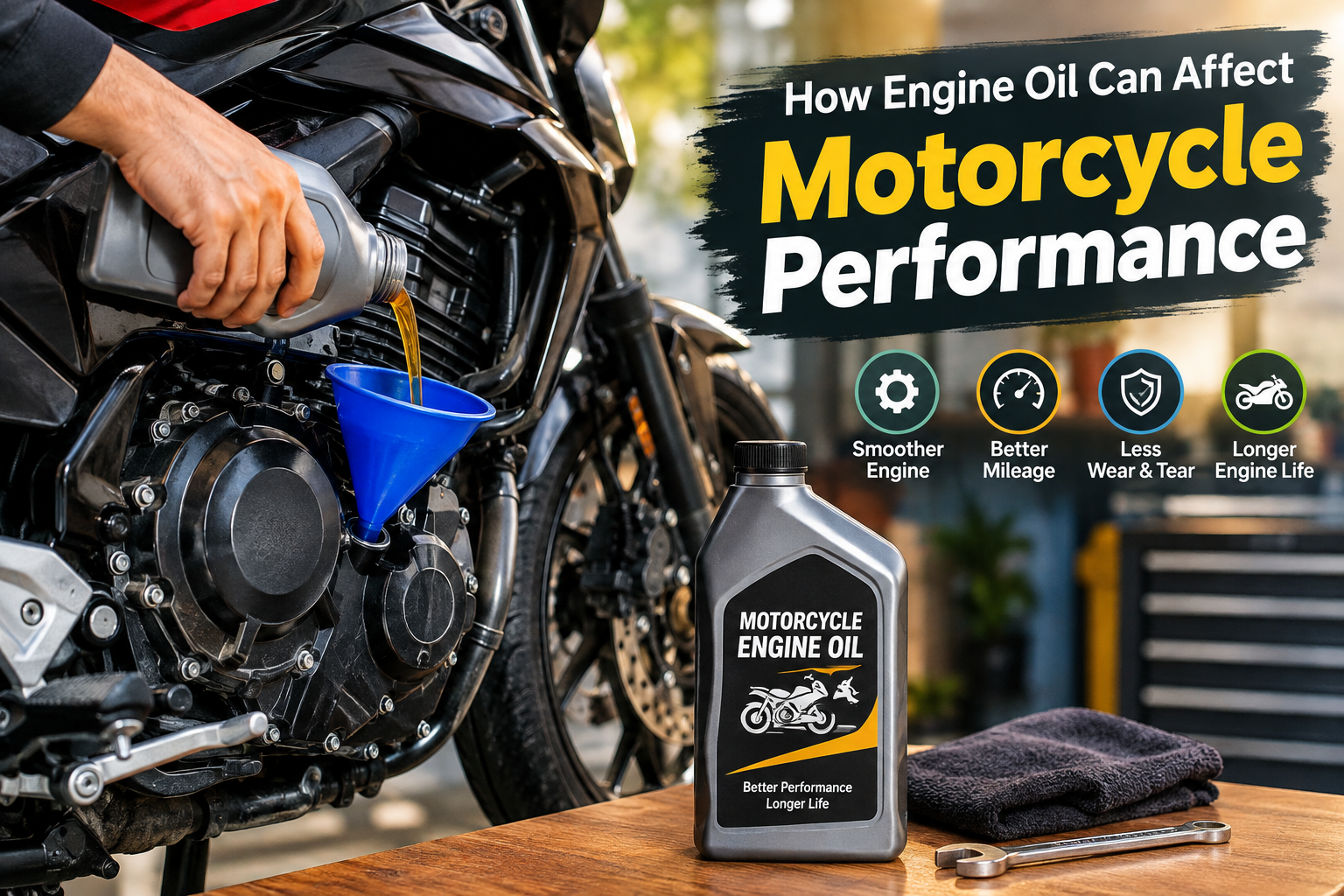
Motorcycle engine oil plays an important role in keeping an engine smooth, reliable, and efficient. Many riders focus on petrol quality, tyre pressure, riding habits, and regular servicing when they want better motorcycle performance. However, engine oil is another important factor that should never be ignored. The right engine oil helps reduce friction, control heat, protect engine components, and support the overall performance of a motorcycle.
In my opinion, understanding engine oil is one of the simplest ways to take better care of a motorcycle. A rider does not need to be a professional mechanic to understand the importance of oil changes and choosing the correct oil grade. A few basic maintenance habits can help prevent unnecessary engine wear and expensive repairs.
Whether someone uses a motorcycle for daily commuting, long distance travel, or occasional rides, engine oil deserves regular attention. In this article, I will explain how engine oil affects motorcycle performance, fuel economy, engine temperature, and long term reliability.
1. Engine Oil Reduces Friction Between Moving Parts
One of the main functions of motorcycle engine oil is to reduce friction between moving engine components. Inside an engine, parts such as pistons, crankshafts, bearings, and other moving components operate at high speeds. Without proper lubrication, these parts can rub against each other and create excessive friction.
Engine oil forms a protective film between these surfaces. This film helps moving components operate more smoothly and reduces direct metal to metal contact.
When a motorcycle uses suitable, good quality engine oil, the engine can operate more efficiently. Proper lubrication also helps protect important components from premature wear.
Old, contaminated, or unsuitable oil may not provide the same level of protection. Over time, this can contribute to increased friction and engine damage.
For this reason, I believe regular oil maintenance is more valuable than waiting until the engine starts making unusual noises. Preventing a problem is usually easier and less expensive than repairing damaged engine components.
2. The Right Engine Oil Can Support Better Fuel Efficiency
Fuel efficiency is an important concern for motorcycle owners, especially those who ride every day. Many people want to know whether engine oil can affect motorcycle fuel economy. The answer is yes, although the effect depends on several factors.
Suitable engine oil helps reduce friction inside the engine. When moving parts operate with less unnecessary resistance, the engine can use its energy more efficiently.
Oil viscosity also matters. Viscosity describes how easily oil flows at different temperatures. Oil that is too thick for a particular motorcycle may increase internal resistance, especially during cold starts. Oil that is too thin may fail to maintain the protective film required under certain operating conditions.
This does not mean that the thinnest oil always provides the best mileage. Every engine is designed to operate with specific oil grades and performance requirements.
If a rider wants to improve motorcycle fuel average, following the manufacturer’s recommended oil specifications is a sensible starting point. Maintaining correct tyre pressure, keeping the air filter clean, and avoiding unnecessary acceleration can also help improve fuel economy.
Engine oil alone cannot guarantee a major increase in mileage, but the correct oil can support efficient engine operation.
3. Engine Oil Helps Control Engine Temperature
Motorcycle engines produce considerable heat while running. Combustion, friction, and the movement of internal components all contribute to this heat. If the engine becomes excessively hot, its performance and durability may suffer.
Engine oil helps manage temperature by carrying heat away from lubricated components. Depending on the engine design, oil may also play a particularly important role in cooling internal areas that are difficult for air or coolant to reach directly.
Fresh oil with the correct specifications can perform its lubrication and heat transfer functions as intended. However, oil cannot prevent every overheating problem. A blocked cooling passage, faulty cooling fan, low coolant level, or damaged component may require separate attention.
Riders should pay attention to unusual temperature increases, burning smells, warning lights, or unexpected changes in engine behaviour.
In hot weather, especially during slow traffic, the engine may experience additional thermal stress. Using the recommended oil and maintaining the motorcycle properly can help it cope with normal operating conditions.
4. Oil Viscosity Affects Motorcycle Performance
Oil viscosity is one of the most important things to understand when selecting motorcycle engine oil. You may see grades such as 10W-30, 10W-40, or 20W-50 printed on an oil container.
These numbers describe how the oil behaves under specified temperature conditions. The first part, including the letter W, relates to cold temperature performance. The second number indicates the oil’s viscosity classification at operating temperature.
Different motorcycles require different oil grades because engines have different designs, clearances, and operating requirements.
Using oil that is too thick can make circulation more difficult under certain conditions and may increase internal resistance. Oil that is too thin may not provide sufficient protection under the engine’s intended operating conditions.
I would always recommend checking the owner’s manual before purchasing motorcycle engine oil. The correct choice should depend on the manufacturer’s specifications, expected temperatures, and intended use.
Do not select oil based only on its price, colour, or the belief that thicker oil is always better for an older motorcycle. If an engine has a specific problem, consult a qualified mechanic rather than changing oil viscosity without guidance.
5. Regular Oil Changes Protect Engine Components
Engine oil does not remain in perfect condition forever. As a motorcycle is used, the oil can collect contaminants and experience chemical changes caused by heat and normal operation.
Over time, these changes may reduce its ability to protect engine components effectively. Oil can also become contaminated by combustion byproducts, dust entering through the intake system, or other sources, depending on engine condition and maintenance.
Regular oil changes remove much of the old oil and its accumulated contaminants. This helps restore the intended lubrication performance when the correct replacement oil is used.
The recommended oil change interval varies according to the motorcycle model, engine design, oil specification, and riding conditions. Frequent short trips, dusty roads, heavy traffic, and demanding operation may affect maintenance needs.
Instead of following a single interval for every motorcycle, riders should consult the service schedule in the owner’s manual.
It is also important to replace or service the oil filter when required. A clean filter helps remove contaminants from the circulating oil, supporting the overall lubrication system.
6. Engine Oil Can Influence Smoothness and Noise
A motorcycle engine may feel different when its oil is old, low, or unsuitable. Some riders notice changes in mechanical noise, vibration, or general smoothness as maintenance becomes overdue.
Proper lubrication helps moving parts operate with less friction. This can support smoother operation and reduce wear-related noise.
However, engine noise should never be diagnosed through oil condition alone. Tapping, knocking, grinding, or sudden loud noises may indicate problems with valve components, bearings, the timing system, or other engine parts.
If the engine develops a new or unusually loud noise, check the oil level according to the manufacturer’s procedure and seek professional inspection when necessary.
If the oil level is below the recommended range, do not continue riding without addressing the problem. Low oil pressure or insufficient lubrication can cause severe damage in a short time.
Good engine oil supports smooth operation, but it is not a repair solution for worn or damaged components.
7. The Correct Oil Matters for Clutch Performance
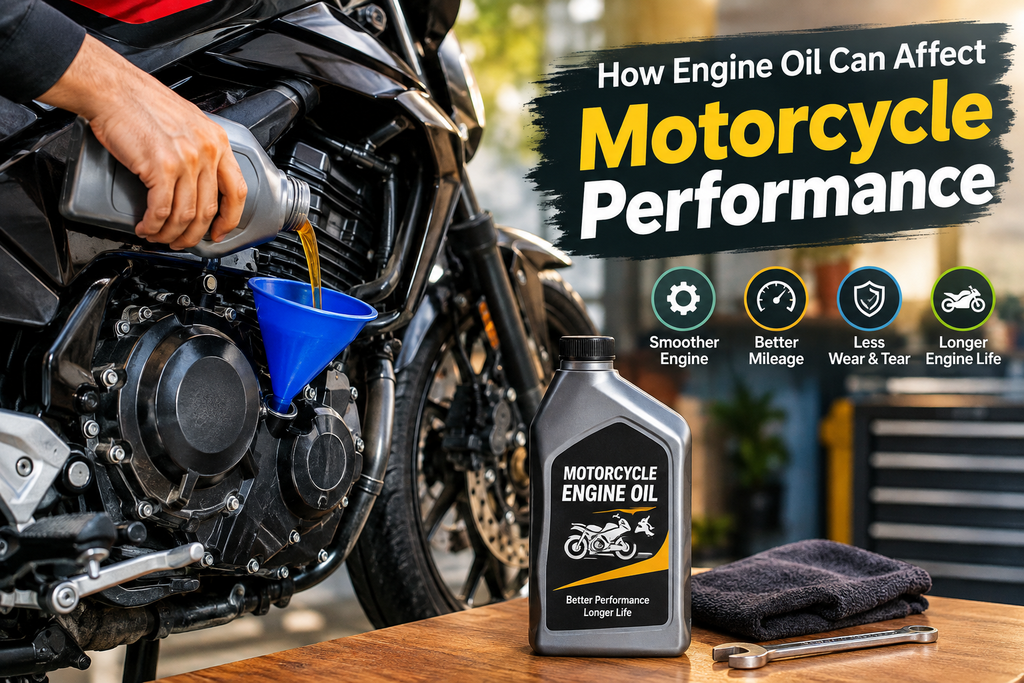
On many motorcycles, engine oil also lubricates the transmission and wet clutch. This means the oil must be suitable for more than just the engine.
A wet clutch operates with its friction plates immersed in oil. The oil must provide appropriate lubrication while allowing the clutch to engage properly.
Using automotive engine oil that contains friction modifiers may cause clutch slipping in motorcycles that require oil suitable for a wet clutch. This is not true of every automotive oil or motorcycle design, so the manufacturer’s specifications are essential.
Some motorcycles use separate lubrication systems for the engine and transmission, while others share oil between these components.
If a motorcycle experiences clutch slipping, difficult gear changes, or unusual transmission behaviour after an oil change, verify that the correct oil specification was used.
Choosing oil labelled for the appropriate motorcycle application can help avoid compatibility problems. Look for the viscosity grade and relevant manufacturer or industry specifications required by your motorcycle.
8. Low Engine Oil Levels Can Cause Serious Damage
Using the correct oil is important, but maintaining the proper oil level is equally necessary.
When the oil level falls too low, the lubrication system may struggle to supply sufficient oil to important components. This can increase friction, raise operating temperatures, and cause accelerated wear.
In severe cases, inadequate lubrication can result in engine seizure or extensive internal damage.
Oil consumption may occur naturally in some engines, but a sudden increase should be investigated. Leaks around seals, gaskets, drain plugs, or other engine components can also cause oil loss.
Riders should check the oil level at the interval recommended in the owner’s manual. The checking procedure varies by motorcycle, so follow the specified method for positioning the bike, warming or cooling the engine, and reading the dipstick or sight glass.
Avoid adding oil beyond the maximum mark. Overfilling can also create problems, including excessive internal pressure, oil aeration, or oil entering areas where it should not.
Maintaining the correct level helps the lubrication system work as intended.
9. Engine Oil Quality and Motorcycle Longevity
Motorcycle engine oil is available in mineral, semi synthetic, and fully synthetic formulations. These options differ in their base oils, additive systems, performance characteristics, and intended applications.
Mineral oil may be suitable for motorcycles whose manufacturers specify it. Semi synthetic oil combines mineral and synthetic base oils, while fully synthetic products are designed for particular performance requirements and may offer advantages under demanding conditions.
However, more expensive oil is not automatically the best choice for every motorcycle. Compatibility with the engine and compliance with the required specifications matter more than marketing claims.
Engine oil contains additives that help control oxidation, protect against wear, reduce deposits, and maintain suitable performance. The exact additive package varies between products.
Using suitable oil and changing it on schedule can help reduce unnecessary wear and support long engine life. It cannot eliminate all mechanical problems, because maintenance history, riding style, manufacturing quality, and operating conditions also matter.
For most riders, choosing an appropriate product from a reliable supplier and following the service schedule is a practical approach.
10. Common Engine Oil Mistakes Motorcycle Riders Should Avoid
Several simple mistakes can reduce the benefits of proper engine oil maintenance.
First, avoid choosing oil without checking the motorcycle’s specifications. An oil grade that works well in one bike may not be appropriate for another.
Second, do not ignore the recommended oil change interval. Oil condition can deteriorate even when the motorcycle appears to run normally.
Third, never assume that adding extra oil will provide extra protection. Overfilling can create mechanical problems.
Fourth, avoid mixing different oils unnecessarily. If topping up is required, use a compatible oil that meets the manufacturer’s specifications. If you are unsure what is already in the engine, ask a mechanic for advice.
Fifth, do not ignore oil leaks or repeatedly refill the engine without finding the cause of oil loss.
Finally, avoid relying entirely on the oil’s appearance. Dark oil is not necessarily unusable, and clean looking oil is not automatically suitable for continued use. Follow the maintenance schedule and investigate unusual smells, contamination, or unexpected changes.
These habits can help motorcycle owners avoid preventable maintenance problems.
11. Simple Tips for Better Motorcycle Performance
If you want engine oil to support reliable motorcycle performance, a few routine habits can make a difference.
- Check the engine oil level regularly using the correct procedure.
- Use the viscosity grade and specifications recommended by the manufacturer.
- Change engine oil at the recommended interval.
- Replace or service the oil filter when required.
- Inspect the engine for leaks around seals, gaskets, and drain plugs.
- Use oil from a trustworthy supplier to reduce the risk of counterfeit products.
- Pay attention to unusual engine noise, overheating, or changes in performance.
- Keep records of oil changes and other routine maintenance.
- Ask a qualified mechanic for advice if the engine consumes excessive oil or develops mechanical symptoms.
These practices are useful for motorcycles used for daily commuting as well as those used for longer journeys.
Conclusion
Engine oil has a direct role in motorcycle performance because it lubricates moving parts, helps manage heat, supports efficient operation, and protects important engine components from excessive wear. Its condition, viscosity, compatibility, and level can all influence how reliably a motorcycle operates.
In my view, engine oil maintenance is one of the easiest ways to protect a motorcycle over the long term. Riders do not need expensive modifications to maintain a healthy engine. Choosing the correct oil, checking its level, and changing it according to the manufacturer’s schedule are simple steps that can prevent avoidable problems.
It is also important to remember that engine oil is only one part of motorcycle maintenance. Tyre pressure, air filter condition, spark plugs, fuel quality, chain adjustment, and riding habits also influence performance and fuel economy.
By combining suitable engine oil with regular servicing, motorcycle owners can support smoother operation, dependable performance, and a longer engine life. The best approach is to follow the motorcycle manufacturer’s recommendations instead of relying on guesswork or choosing oil based only on price.
SEO Details for WordPress
SEO Title: How Engine Oil Can Affect Motorcycle Performance
Focus Keyword: How engine oil can affect motorcycle performance
Meta Description: Learn how motorcycle engine oil affects performance, fuel efficiency, engine temperature, clutch operation, and engine life with practical maintenance tips.
Suggested URL Slug: how-engine-oil-affects-motorcycle-performance
Suggested Tags: Motorcycle Engine Oil, Motorcycle Maintenance, Engine Performance, Motorcycle Fuel Efficiency, Oil Change Tips
Featured Image: Use the generated image above with the alt text: How engine oil can affect motorcycle performance and engine life.