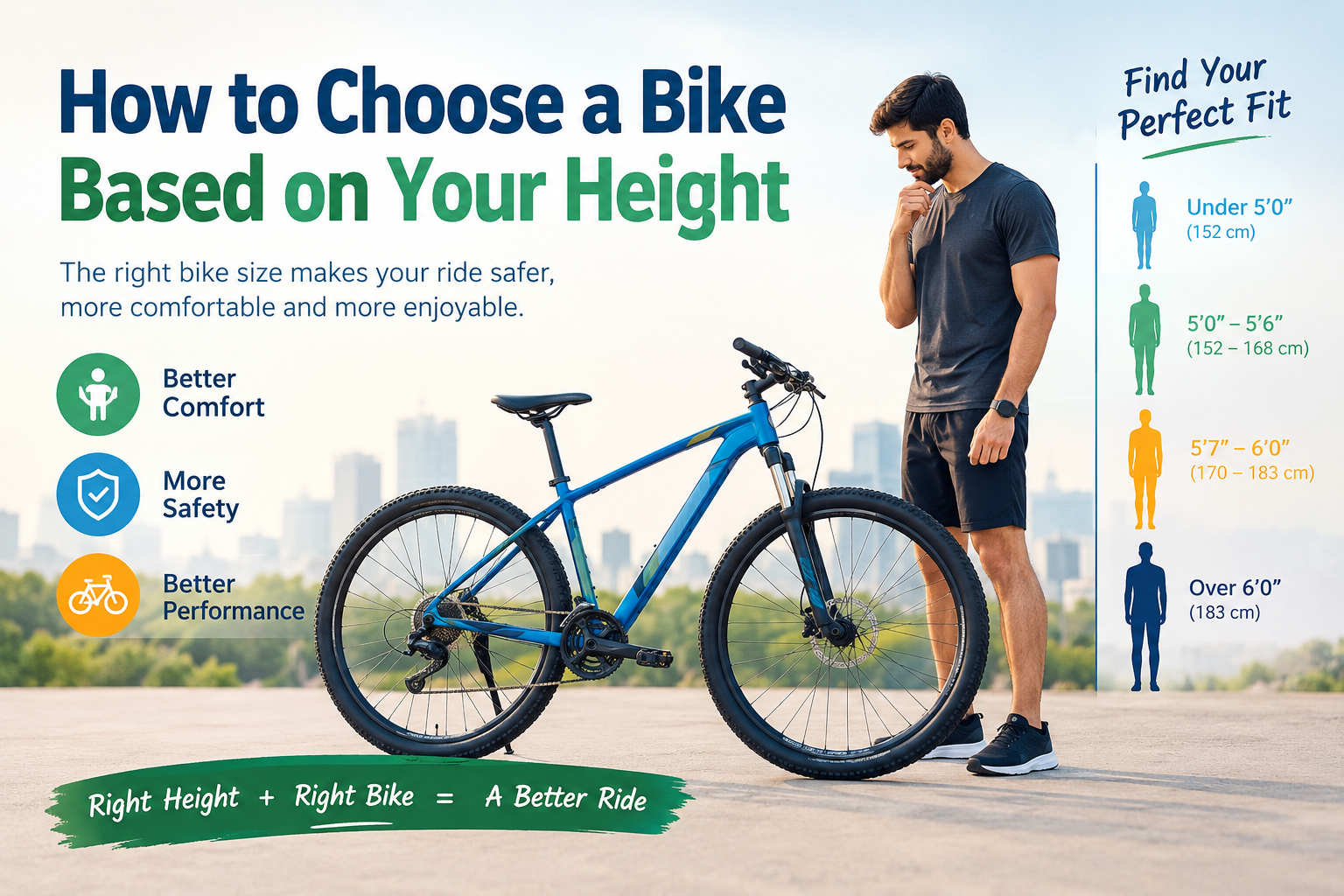
Choosing the right bike is one of the most important decisions for anyone who wants a comfortable, safe, and enjoyable riding experience. Many beginners focus on the bike’s price, design, color, or features, but they often forget one important factor: their height. A bike that does not fit your body properly can make riding uncomfortable and difficult, especially when you use it every day.
In my opinion, selecting a bike based on your height is a practical way to make a better buying decision. The right bike size can help you maintain a comfortable riding position, control the bike more easily, and enjoy longer journeys without unnecessary discomfort.
Whether you are buying your first bike, replacing an old one, or looking for a suitable option for daily commuting, understanding bike sizing can help you choose wisely. In this guide, I will explain how to choose a bike based on your height, which measurements matter, and what beginners should check before making a purchase.
Why Your Height Matters When Choosing a Bike
Your height plays an important role in determining whether a bike fits you properly. A bike that is too large may feel difficult to control, while a bike that is too small can make your riding position uncomfortable.
When a bike fits your body, you can reach the handlebars comfortably, operate the controls without stretching, and maintain a natural posture. You can also place your feet more confidently when stopping, depending on the bike type and your riding position.
For everyday riders, these details matter because a comfortable bike makes regular journeys easier. For beginners, the correct fit can also help build confidence while learning to ride.
However, height alone does not tell you everything. Your leg length, arm length, body proportions, riding experience, and intended use also influence which bike will suit you best.
Understand the Different Types of Bikes
Before selecting a bike based on your height, it is important to understand that different types of bikes use different sizing systems.
Mountain Bikes
Mountain bikes are designed for rough roads, trails, and uneven surfaces. They usually have wider tires and a frame built for stability. Their frame sizes are commonly described using inches or general size labels such as small, medium, and large.
Road Bikes
Road bikes are designed mainly for paved roads and efficient riding. They usually have lightweight frames and a riding position that may be more stretched out than that of other bikes. Frame sizes are often measured in centimeters.
Hybrid Bikes
Hybrid bikes combine features of road bikes and mountain bikes. They are useful for commuting, casual riding, and recreational trips. Many beginners find them comfortable because of their relatively upright riding position.
City and Commuter Bikes
City bikes are designed for everyday transportation. Depending on their design, they may offer upright handlebars, a comfortable saddle, and a frame that is easy to mount and dismount.
Motorcycles
If you are choosing a motorcycle rather than a pedal bicycle, you should also consider seat height, motorcycle weight, handlebar reach, and your ability to balance the bike while stationary. A motorcycle that fits your height but feels too heavy can still be difficult to handle.
Understanding these differences helps you avoid choosing a bike based only on a size label.
Check Your Height Before Buying a Bike
The first step is to measure your height correctly. Stand straight against a wall without wearing shoes. Keep your heels on the floor and look straight ahead. Mark the highest point of your head on the wall and measure the distance from the floor to that mark.
Write down your height in centimeters or feet and inches. You can then compare it with the manufacturer’s bike size chart.
Remember that manufacturers may use different measurements for similar bikes. A medium frame from one brand may not fit exactly like a medium frame from another brand.
For this reason, I recommend checking the official sizing chart for the exact model you are considering rather than relying on a general chart found online.
General Bike Size Guide Based on Height
The following table provides a starting point for selecting an adult bicycle. These ranges are approximate and may vary according to frame geometry and manufacturer recommendations.
| Rider height | Possible bicycle frame size |
|---|---|
| Under 5 feet | Extra small or small, depending on the model |
| 5 feet to 5 feet 3 inches | Extra small or small |
| 5 feet 3 inches to 5 feet 6 inches | Small or medium |
| 5 feet 6 inches to 5 feet 9 inches | Medium |
| 5 feet 9 inches to 6 feet | Medium or large |
| 6 feet to 6 feet 3 inches | Large or extra large |
| Over 6 feet 3 inches | Extra large or a model designed for taller riders |
These are general examples, not universal sizing rules. Road bikes, mountain bikes, hybrid bikes, and other bicycle types may require different frame sizes. Children’s bikes also use different sizing methods.
The best approach is to use the table as an initial guide and then confirm the fit using the manufacturer’s recommendations and a practical test ride.
Measure Your Inseam for a Better Fit
One of the most useful measurements when choosing a bicycle is your inseam. Your inseam is the distance from your crotch to the floor when you stand straight.
To measure it, stand barefoot with your feet slightly apart. Place a book between your legs and raise it gently until it feels similar to the pressure of a bicycle saddle. Measure from the top of the book to the floor.
Your inseam helps you understand whether a bicycle frame will provide enough clearance and whether you can achieve a suitable saddle height.
This measurement is particularly useful because two people with the same overall height may have different leg lengths.
For example, one rider may have longer legs and a shorter torso, while another may have shorter legs and a longer torso. Both riders might need different frame designs or adjustments even if their height is identical.
Choose the Correct Frame Size
The bicycle frame is the main structure of the bike, and its size affects your overall riding position.
A frame that is too large may force you to stretch toward the handlebars. This can lead to discomfort in your shoulders, neck, or back. You may also find it difficult to mount the bike or stop confidently.
A frame that is too small can make you feel cramped. Your knees may feel crowded, and your weight may not be distributed comfortably between the saddle and handlebars.
When choosing a bike frame, check the manufacturer’s sizing chart and consider both your height and inseam. If your measurements fall between two sizes, do not automatically choose the larger or smaller one.
Instead, compare the geometry of both sizes, including reach, seat tube length, and standover clearance. A knowledgeable bicycle shop can help you determine which frame is more suitable for your body and riding style.

Check the Saddle Height
Correct saddle height is another important part of choosing a bike based on your height.
If the saddle is too low, your knees remain excessively bent during pedaling. This can make riding less efficient and may cause discomfort over time. If it is too high, you may rock your hips from side to side or struggle to reach the pedals comfortably.
For a basic bicycle fitting check, sit on the saddle and place your heel on the pedal at its lowest position. Your leg should be nearly straight without forcing your hips to tilt. When you place the ball of your foot on the pedal in your normal riding position, your knee should have a slight bend at the bottom of the pedal stroke.
This is a useful starting point, although professional fitting methods may use different measurements depending on the rider and bicycle type.
Also, remember that adjusting saddle height cannot fix every problem caused by an incorrectly sized frame.
Make Sure You Can Reach the Handlebars
Handlebar reach affects your comfort and control. When choosing a bicycle, sit on the bike and check whether you can hold the handlebars without stretching too far or bending your back unnaturally.
Your elbows should generally remain slightly bent rather than locked. Your shoulders should feel relaxed, and you should be able to steer comfortably.
If the handlebars are too far away, you may experience tension in your back, neck, or shoulders. If they are too close, your riding position may feel cramped.
Some bicycles allow adjustments to handlebar height and stem length. However, these adjustments have limits. It is better to begin with a frame that fits your body than to depend on major modifications later.
Consider Your Riding Purpose
Your ideal bike size and design also depend on how you plan to use the bike.
For Daily Commuting
If you need a bike for work, school, shopping, or other regular journeys, prioritize comfort and control. A city or hybrid bike with a suitable frame and manageable riding position may be a good choice.
For Long Distance Riding
For long rides, pay close attention to saddle position, handlebar reach, and overall frame geometry. A comfortable fit becomes increasingly important as your riding time increases.
For Mountain Biking
Mountain biking often requires more room to move around the bike. Check the manufacturer’s recommendations for your height and riding style, and ensure you can control the bike confidently on uneven terrain.
For Beginners
If you are a beginner, look for a bicycle that feels predictable and easy to handle. You should be able to mount the bike, operate the brakes, and stop safely without feeling that the frame is too large or awkward.
Test Ride the Bike Before Buying
Whenever possible, take a test ride before making your final decision. A short ride can help you identify fit problems that are difficult to notice from measurements alone.
During the test ride, check whether you can reach the handlebars naturally, pedal without your knees feeling cramped, and steer without difficulty. Practice stopping in a safe area and make sure you can place your feet in a position that feels appropriate for the bicycle type.
For a standard bicycle, it is not always necessary to place both feet flat on the ground while remaining seated. Depending on the frame and saddle height, a rider may need to move forward off the saddle to place both feet down when stopping.
For a motorcycle, however, being able to manage the motorcycle’s weight and reach the ground confidently is especially important. Test the actual motorcycle rather than assuming a particular seat height will suit you.
If possible, compare two nearby sizes of the same model. The difference in comfort may be more noticeable than you expect.
Common Mistakes to Avoid When Choosing a Bike
Many beginners make avoidable mistakes when buying their first bicycle.
The first mistake is choosing a bike only because it looks attractive. A stylish design cannot compensate for an uncomfortable fit.
The second mistake is buying a bike based entirely on price. Saving money is important, but the bike should still meet your sizing, safety, and riding requirements.
Another common mistake is assuming that all brands use the same frame measurements. Sizing charts can differ, so always check the specifications for the exact model.
Some riders also ignore their inseam and focus only on overall height. This can lead to a poor fit because body proportions vary from person to person.
Finally, avoid assuming that a few saddle or handlebar adjustments will make every bike suitable. Adjustments can improve a good fit, but they cannot correct every issue caused by the wrong frame size.
Final Thoughts
Choosing a bike based on your height is an important step toward a more comfortable and enjoyable riding experience. In my view, beginners should focus on fit before choosing a bike for its appearance, extra features, or brand name.
Start by measuring your height and inseam, then compare those measurements with the manufacturer’s sizing chart. Check the frame size, saddle height, handlebar reach, and your ability to control the bike confidently. Most importantly, take a test ride whenever possible.
Remember that your height is only the starting point. Your leg length, body proportions, riding purpose, and personal comfort also influence the right choice.
By considering these factors before buying, you can make a more informed decision and find a bike that suits your needs. The right fit can make everyday commuting easier, recreational rides more enjoyable, and longer journeys more comfortable.
Frequently Asked Questions
1. How do I choose the correct bike size for my height?
Measure your height and inseam, then compare both measurements with the manufacturer’s sizing chart for your chosen bike model. A test ride can help confirm whether the frame and riding position feel comfortable.
2. Can a tall person ride a small bike?
A tall person may find a small bike uncomfortable because the frame can create a cramped riding position. It is usually better to select a size recommended for their measurements and riding style.
3. Is height enough to determine bike size?
No. Height is a useful starting point, but inseam, arm length, torso length, frame geometry, and intended use also influence bike fit.
4. What should beginners check before buying a bike?
Beginners should check frame size, saddle height, handlebar reach, brake accessibility, overall weight, and ease of control. They should also take a test ride if possible.
5. Does the same bike size fit every brand?
No. Different manufacturers may use different sizing systems and frame geometry. Always consult the size chart for the exact model before buying.