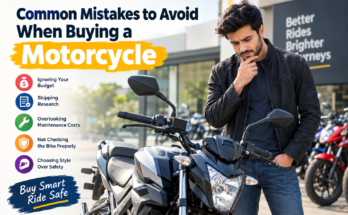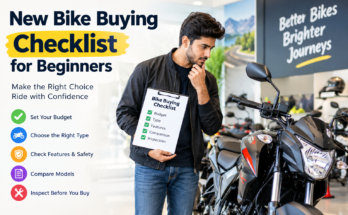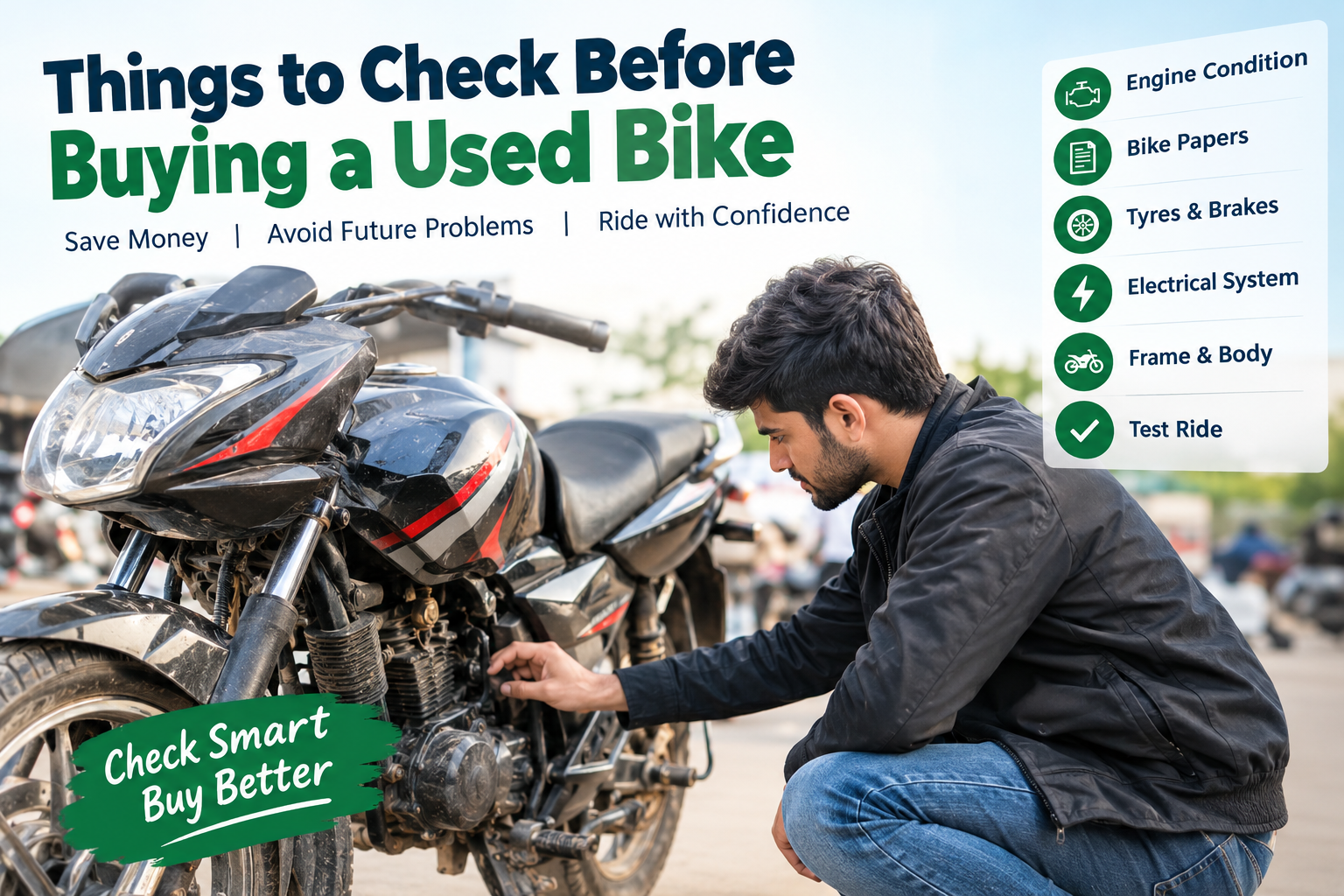
Buying a used bike can be a smart way to save money while getting reliable transportation for daily use. However, before purchasing a second hand motorcycle, it is important to inspect its condition carefully. A bike may look attractive from the outside but still have engine problems, worn tyres, damaged brakes, or incomplete documents.
In my opinion, the best way to buy a used bike is to focus on its overall condition rather than its appearance alone. A well maintained motorcycle can provide years of dependable service, while a poorly maintained one may require expensive repairs soon after purchase.
In this guide, I will explain the most important things to check before buying a used bike, especially for beginners who want to make a practical and budget friendly decision.
1. Check the Overall Condition
Start by walking around the motorcycle and inspecting its body, fuel tank, seat, mirrors, lights, and other visible parts. Look for scratches, dents, cracked panels, and signs of previous accidents.
Small scratches are normal on a used bike, but major damage may indicate that the motorcycle has been dropped or involved in a collision. Check whether the handlebar and body panels appear properly aligned.
2. Inspect the Engine
The engine is one of the most important parts of a motorcycle. Ask the seller to start the bike when the engine is cold and listen for unusual knocking, grinding, or rattling sounds.
Look for oil leaks around the engine and pay attention to excessive exhaust smoke. Persistent blue smoke may indicate that the engine is burning oil, while black smoke can suggest a fuel mixture problem.
If the engine struggles to start, stalls repeatedly, or produces unusual noises, ask a qualified mechanic to inspect it before buying.
3. Verify the Documents
Always check the motorcycle’s registration documents and confirm that the seller has the legal right to sell it.
Verify the engine number and chassis number against the official registration records. If you are buying a motorcycle in Pakistan, check the relevant provincial vehicle registration authority and follow the required ownership transfer procedure.
Never ignore missing documents or mismatched identification numbers. Confirm any outstanding dues and transfer requirements before making payment.
4. Examine the Tyres
Inspect both tyres for cracks, cuts, bulges, and worn tread. Damaged or excessively worn tyres can reduce grip and increase the risk of an accident.
Also check the wheels for visible damage or unusual wobbling. If the tyres need replacement, include that expense in your budget when negotiating the price.
5. Test the Brakes
Check the front and rear brakes separately. They should operate smoothly and provide consistent braking.
Look for damaged brake discs, fluid leaks, unusual noises, or excessive looseness in the brake controls. During a safe test ride, the motorcycle should slow down in a controlled manner.
Never compromise on brake condition simply to save money.
6. Check the Clutch and Gears
If the motorcycle has a manual gearbox, check whether the clutch operates smoothly and the gears engage properly.
Difficulty changing gears, repeated gear slipping, or grinding noises may indicate mechanical problems. Inspect the drive chain for rust, excessive looseness, and damaged links.
Ask a mechanic to assess any unusual behaviour before completing the purchase.
7. Inspect the Battery and Lights
Test the headlight, indicators, brake lights, horn, instrument panel, and electric starter if available.
Notice whether the motorcycle starts consistently. A weak battery may be responsible for starting difficulties, but a faulty charging system can produce similar symptoms.
Look for exposed wires, loose electrical connections, and poorly installed modifications.
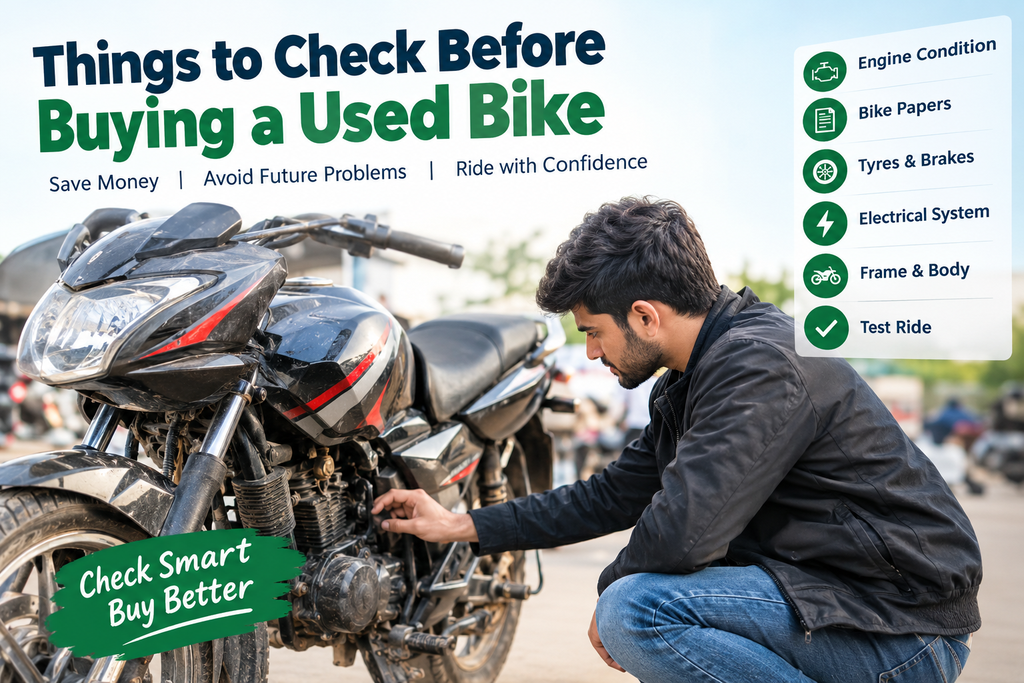
8. Check the Frame and Suspension
Inspect the frame for cracks, bends, severe rust, or unusual welds. These problems can indicate previous damage and may affect safety.
Check the front forks for oil leakage and inspect the rear suspension for visible damage. If the motorcycle feels unstable or makes unusual noises over normal road surfaces, arrange a professional inspection.
Structural damage should never be overlooked when buying a used bike.
9. Review Mileage and Maintenance History
Mileage can help you understand how much a motorcycle has been used, but it should not be the only factor in your decision.
Ask about previous repairs, oil changes, tyre replacements, and regular servicing. Maintenance receipts can provide useful evidence of how the motorcycle has been cared for.
A well maintained bike with higher mileage may be a better choice than a low mileage motorcycle that has been neglected.
10. Take a Safe Test Ride
A test ride can reveal problems that are difficult to identify while the bike is parked.
If you are licensed and legally permitted to ride it, wear suitable protective equipment and test the motorcycle in a safe area with the seller’s permission and appropriate coverage.
Pay attention to acceleration, gear changes, braking, steering, suspension, and unusual vibrations. If you are inexperienced, ask a qualified rider or mechanic to help assess the motorcycle.
11. Compare Prices
Compare the asking price with similar motorcycles of the same model, year, and general condition.
Consider the cost of repairs, registration transfer, replacement tyres, and routine maintenance. The cheapest motorcycle is not always the most economical choice.
Use genuine inspection findings to negotiate a fair price with the seller.
12. Check the Seller and Complete the Purchase Carefully
Ask why the seller is selling the motorcycle and whether it has experienced any major mechanical problems or accidents.
Be cautious if the seller refuses to show documents, avoids reasonable questions, or pressures you to pay immediately.
Verify ownership, agree on the transfer procedure, and obtain written proof of the transaction. Avoid paying the full amount before completing the necessary checks.
Conclusion
The most important things to check before buying a used bike are its engine, documents, tyres, brakes, clutch, electrical system, frame, and maintenance history. A careful inspection can help you avoid unnecessary expenses and choose a motorcycle that suits your daily needs.
Take your time, compare different options, and consult a qualified mechanic whenever you are unsure. A little preparation before buying can make a big difference in your safety, budget, and overall riding experience.